Jellyfish capture food with specialised feeding surfaces, often using stinging cells, and move it into a digestive cavity. Many eat zooplankton; others take fish, crustaceans or other jellies. There is no single prey list that fits every species and life stage.

How jellyfish catch prey

In cnidarian jellyfish, a cnidocyte is a specialised cell containing a stinging capsule called a nematocyst. Activation releases a rapidly everting thread that can help capture or subdue prey. The capsule is not a second independent cell, and the whole cell is not simply an explosive bag that bursts.
The Smithsonian’s explanation of jelly feeding describes how contact and chemical cues can activate this system. Tentacles, oral arms, mucus and water movement contribute differently among species.
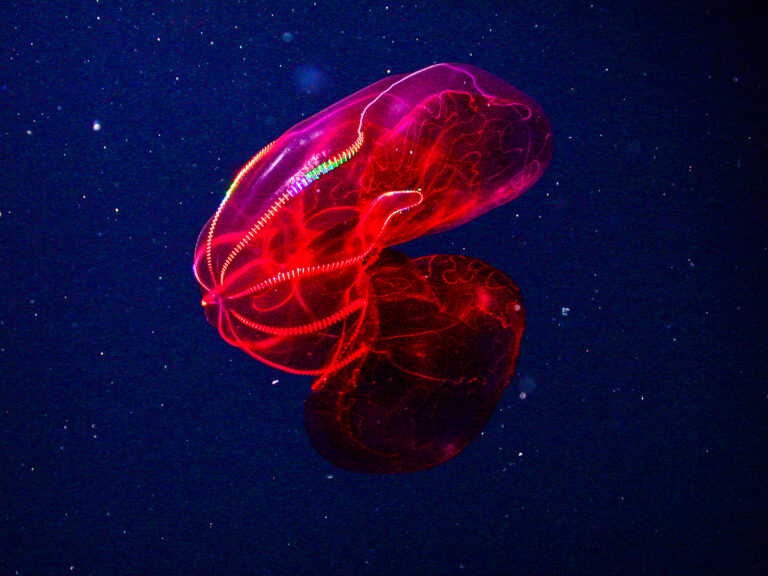
Comb jellies belong to a different group. Many capture prey using adhesive cells called colloblasts, so their sticky feeding apparatus should not be described as the same mechanism as a jellyfish sting.
Do jellyfish have mouths?
Yes. In many familiar medusae, food moves toward a mouth beneath the bell and into the gastrovascular cavity, where digestion occurs. Undigested material can leave through that opening. This is not a human-style digestive tube with a separate stomach, intestine and anus.
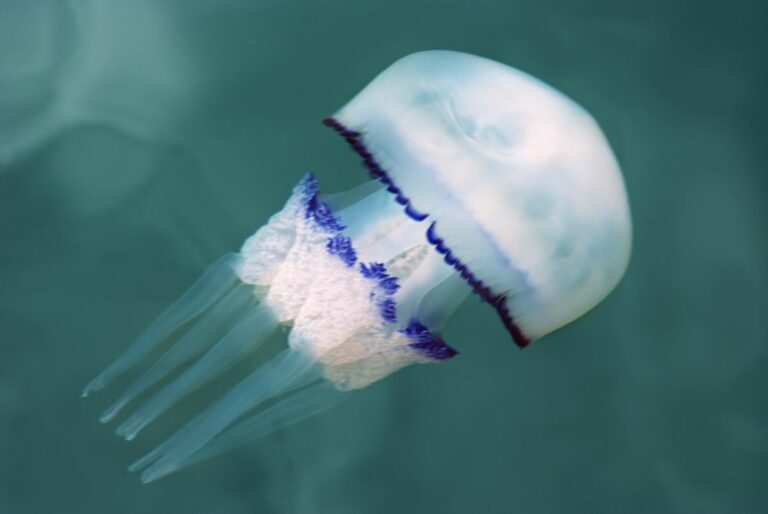
Feeding structures vary. Barrel jellyfish have elaborate oral arms and a different arrangement from jellies with long trailing tentacles. An apparent lack of a large visible mouth does not mean the animal absorbs whole prey through intact skin.
What do different jellyfish eat?
- Small plankton feeders: prey can include tiny crustaceans and other drifting animals.
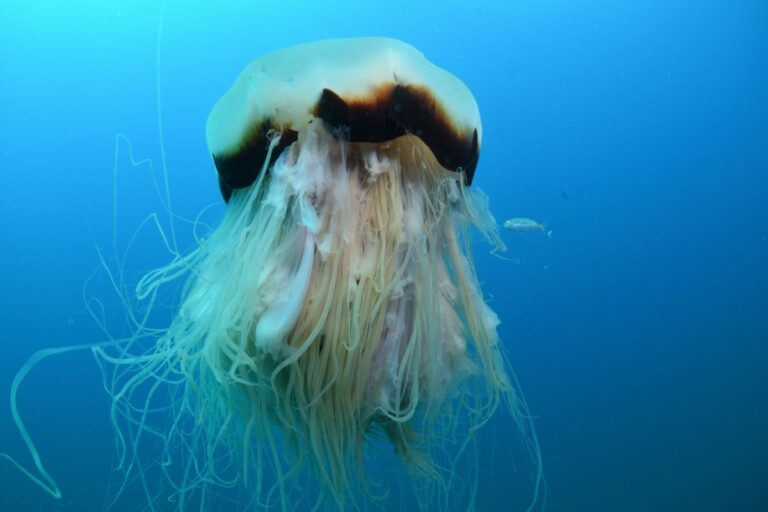
- Fish and crustacean predators: some species capture larger, actively moving prey.
- Jelly eaters: some specialise in other gelatinous animals.
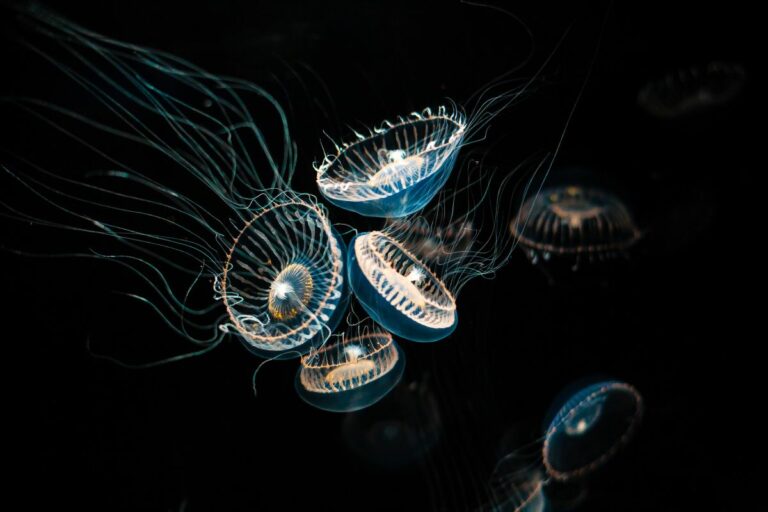
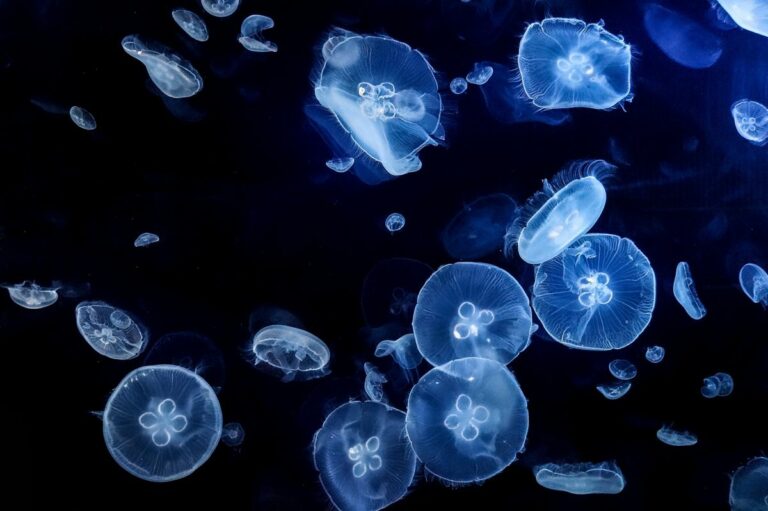
Monterey Bay Aquarium’s moon jelly account lists zooplankton and describes short tentacles sweeping food toward mucus around the bell. A long tangle of tentacles is not necessary for effective feeding.

The same aquarium describes the egg-yolk jelly, Phacellophora camtschatica, as a predator of other jellies. Eating another jelly is therefore not always an unusual last resort caused by starvation. It is only cannibalism when predator and prey belong to the same species.
Do jellyfish need sunlight to find food?
Zooplankton are animals, not microscopic plants that all require sunlight directly. Food webs can connect them to photosynthesis, but plankton and their predators are not restricted to sunlit surface water.
Jellies occur in different habitats and depths. Their feeding depends on prey encounters, local currents and species-specific behaviour rather than a universal habit of searching shallow water or visiting fish nests.
Can jellyfish see their prey?
Some can. NOAA describes the eyes and active swimming of box jellyfish. Saying all jellyfish lack eyes is incorrect. Other jellies use different sensory structures and feeding strategies; an absence of human-like eyes does not make them unable to detect their surroundings.
What does this mean for captive feeding?
A jellyfish needs food suitable for its species, size and life stage. A polyp or tiny juvenile cannot necessarily take the same prey as a large medusa. Uneaten food also affects water quality.
This overview is not a universal aquarium feeding recipe. Identify the species and use an established husbandry protocol before choosing prey or feeding frequency. Our jellyfish life-cycle guide explains the stages, while our jellyfish identification guide compares the groups.