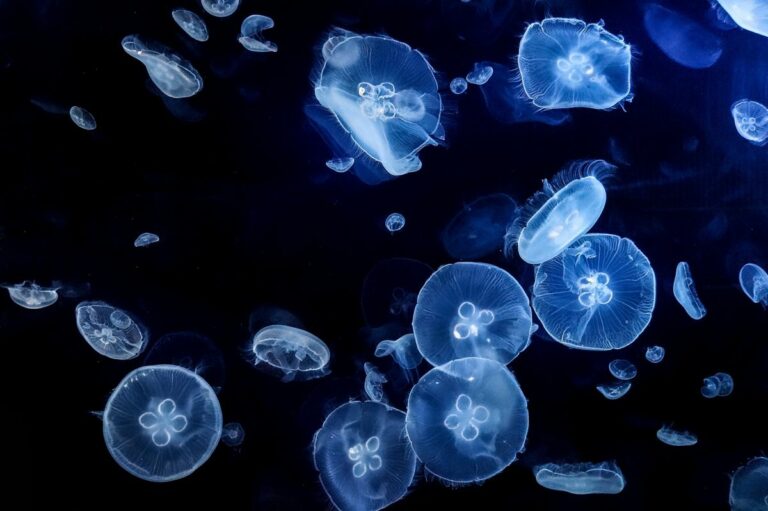
Many jellyfish reproduce sexually as swimming medusae and asexually as attached polyps. A familiar cycle is egg, planula larva, polyp, ephyra and medusa. That sequence describes many true jellyfish, but it is not a universal diagram for every animal called a jelly.

Sexual reproduction produces a new generation
Sexual reproduction combines eggs and sperm. Fertilisation and brooding methods differ among species: it is too broad to say all females release eggs into open water and every jelly spawns at dawn or dusk.
A fertilised egg can develop into a planula, a small ciliated larva. In the familiar polyp–medusa cycle, the larva settles on suitable substrate and develops into a polyp. Monterey Bay Aquarium’s life-cycle explanation follows this transition from a swimming larva to an attached stage.
Polyps can reproduce without fertilisation

A polyp resembles a tiny anemone, with a mouth and feeding tentacles. In species that reproduce by budding or similar asexual processes, it can produce genetically matching descendants without another egg being fertilised.
Polyps that originate from different fertilised eggs are not automatically clones of one another. “All polyps are identical” confuses a body form with a genetic relationship.
Some species also form resistant structures called podocysts. The Virginia Institute of Marine Science’s sea nettle account describes these as a way to persist through poor conditions and later resume polyp development. They are not a compulsory stage for every jellyfish.
Strobilation releases young swimming jellies

In many scyphozoan species, a polyp develops transverse divisions during strobilation. Young jellies called ephyrae separate and swim away. Their shape changes as they grow into the familiar medusa form.
The number released and the environmental triggers vary. VIMS describes a spring warming response in Chesapeake Bay sea nettles; that local example is not a universal instruction to warm every jellyfish culture to 62°F. Nor does every polyp produce exactly 10–15 ephyrae.
The medusa is the visible swimming stage

A medusa feeds, grows and may eventually reproduce sexually. It does not necessarily die immediately upon becoming a medusa or spawning once. Lifespan depends on species, life stage and conditions.
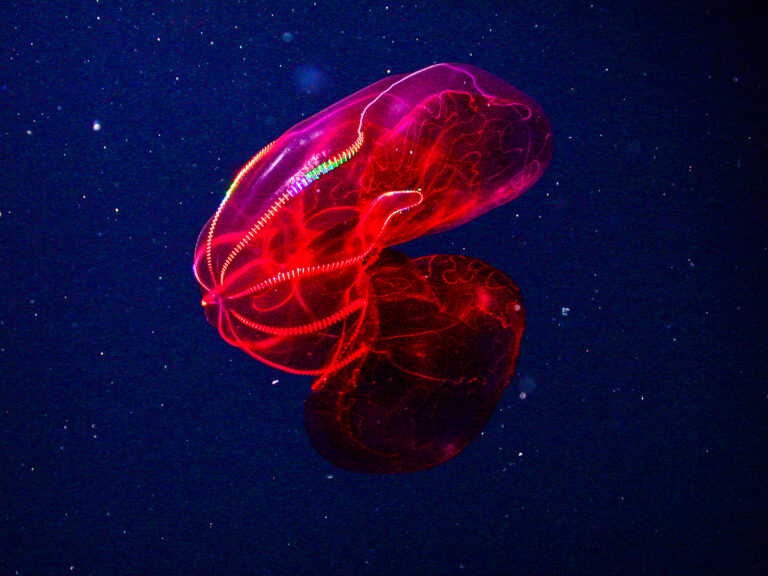
The Smithsonian’s jellyfish overview describes the diversity behind this general pattern, including differences between cnidarian jellyfish and comb jellies. Comb jellies are a different animal group; their reproduction should not be forced into the scyphozoan polyp–ephyra sequence.
Are jellyfish male or female?
Many species have separate sexes, while some are hermaphroditic. The answer needs a species name. Sex refers here to reproductive biology, rather than identifying an animal’s gender from its appearance.
Asexual descendants generally retain the parent’s genetic identity. Sexual offspring receive genetic material from gametes and should not all be described as clones or as necessarily having the same sex as one parent.
Where does the immortal jellyfish fit?
Turritopsis dohrnii is a hydrozoan capable of returning from a medusa to an earlier attached stage and producing polyps. This reversal is a different process from a scyphozoan polyp releasing ephyrae.
See our immortal jellyfish profile for the evidence and its limits. The nickname does not mean every jellyfish can reverse its life cycle or that these animals cannot die.
For identification, start with our guide to jellyfish types. A life-cycle explanation becomes more useful once the species or group is known.