For an established freshwater aquarium, maintenance means checking the fish and equipment, testing the water, removing waste, and replacing part of the water. You do not need to strip the tank or replace every filter cartridge each month.

Daily: check the fish and equipment
- Watch the fish before feeding. Look for unusual breathing, injuries, missing fish, or a change in appetite.
- Check the thermometer, filter flow, and water level. Investigate a sudden loss of flow rather than waiting for the next cleaning day.
- Remove uneaten food and dead plant material. Match portions to the species instead of using one feeding rule for every fish.
- Keep lighting on a timer with a dark period. Adjust intensity and duration to the plants and algae response.
Top-ups replace evaporated water; they do not remove accumulated waste. Treat replacement tap water with a conditioner suitable for chlorine and chloramine, following its label. Reef aquariums need a separate salinity and top-off routine.
Weekly: test before choosing the water change
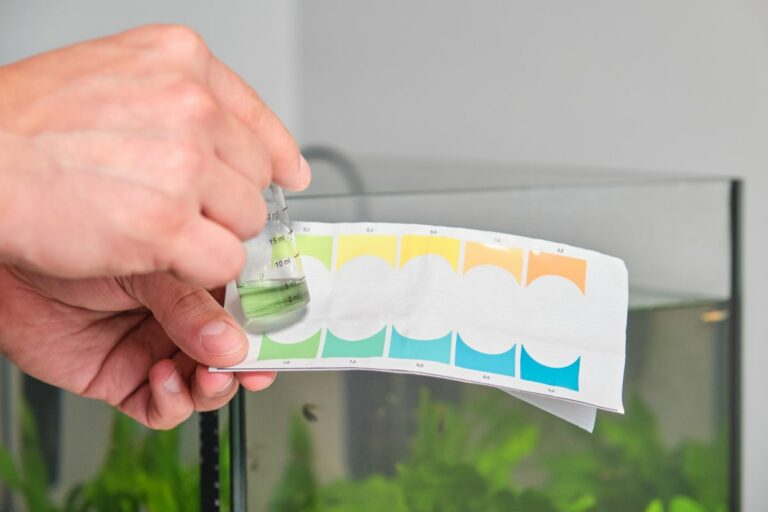
Record ammonia, nitrite, nitrate, temperature, and pH. In an established tank, ammonia and nitrite should be undetectable. Set the nitrate target around the animals you keep and your source water; there is no single safe limit for every aquarium.
A weekly partial water change is a useful starting routine. Adjust the amount and frequency to test results, stocking, feeding, and species needs. Do not wait for a scheduled cleaning if tests reveal a problem. Our water-parameter guide explains what the measurements mean.

Clean in this order
- Prepare dedicated buckets, a siphon, a suitable algae pad, conditioner, and a thermometer. Keep soap and household cleaners away.
- Follow the equipment instructions for disconnecting it before maintenance. Let a heater cool before exposing it to air.
- Wipe the viewing panes with a pad suitable for glass or acrylic. Remove loose debris without dismantling the aquascape.
- Siphon waste while removing water. Work through accessible gravel; hover above fine sand so you do not remove the substrate.
- Add conditioned replacement water close to the tank temperature. Pour slowly without disturbing the bottom.
- Restore equipment, check flow and leaks, and confirm the heater is submerged before restarting it.

Our fish-tank cleaning guide covers the cleaning steps in more detail.
Service the filter when flow drops
Check the intake and mechanical media for trapped waste. Gently rinse reusable sponges or biological media in removed aquarium water. Keep the media wet, and follow the filter instructions for servicing the impeller and tubing.
Do not discard functioning biological media on a monthly schedule. Replace it when it breaks down or the manufacturer requires it, while retaining established media where possible. Chemical media and disposable pads have different replacement requirements.
The RSPCA freshwater water-quality guide explains why preserving the biofilter matters. Read our nitrogen-cycle explanation before replacing established media.
Keep a short record
Log the date, test results, water-change amount, filter work, and unusual fish behavior. Use those records to adjust the routine. Persistent waste, algae, or poor water quality calls for checking feeding, stocking, lighting, and filtration rather than simply scrubbing harder.