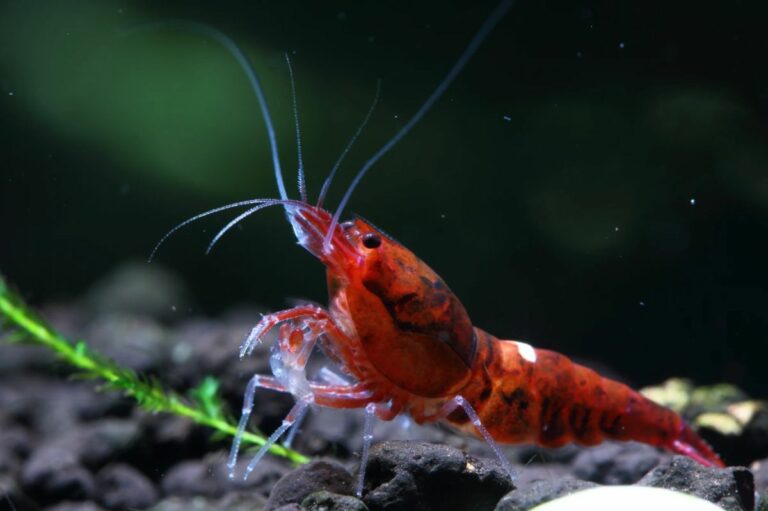
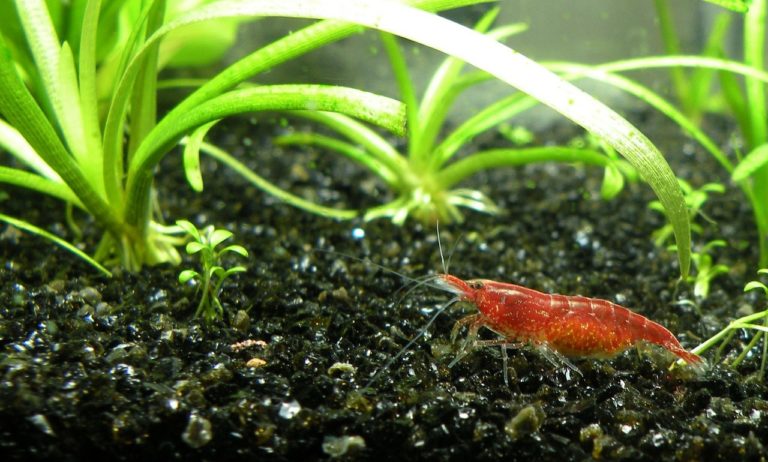
The breeder gives you a TDS number, and your new shrimp water matches it. That is useful information, but it does not establish that the two waters contain the same minerals—or that either aquarium is ready for shrimp.
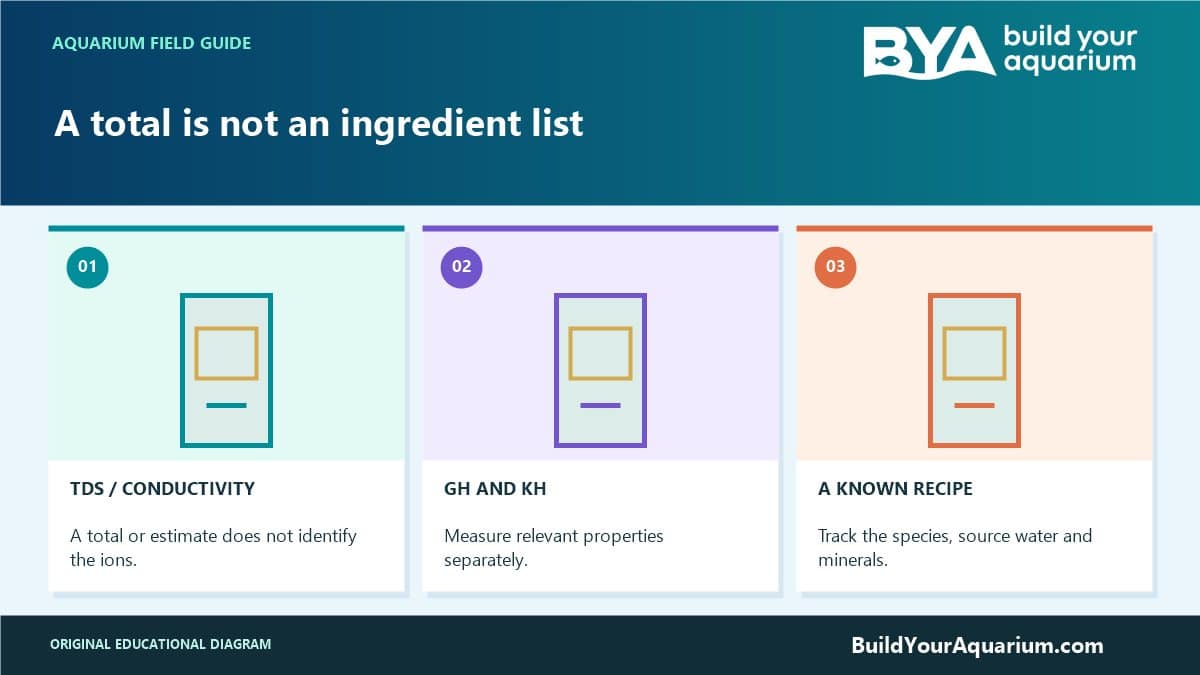
A handheld meter usually estimates a total
Hanna Instruments explains that conductivity is commonly used to estimate total dissolved solids. The relationship depends on the dissolved substances and the conversion factor used by the meter.
Two meters may display different estimated ppm values if their conversion factors differ. Check whether the reading is conductivity in microsiemens per centimeter or estimated TDS in ppm. Record the units and instrument settings rather than comparing unexplained numbers.
More importantly, a total does not identify individual ions. The same estimated TDS does not demonstrate the same calcium, magnesium or carbonate conditions.
Measure the properties the colony actually needs
Check GH, KH and pH separately, along with temperature and the usual nitrogen-cycle tests. Aquarium Co-Op’s chemistry guide distinguishes general hardness, carbonate hardness and pH. Those terms describe related but different aspects of water.
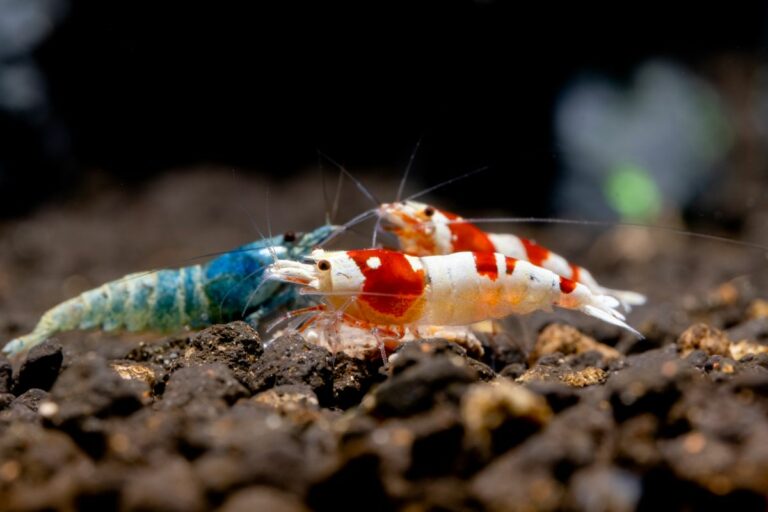
Ask the breeder which species or line is being kept and how its water is prepared. Cherry shrimp, crystal bee shrimp and Sulawesi shrimp should not inherit one generic mineral recipe simply because all are freshwater shrimp.
The Caridina comparison explains some of those differences. A product intended to raise GH alone is not interchangeable with one designed to alter GH and KH.
Use consistency as a check on a known routine
Once you have an appropriate source water and documented mineral recipe, conductivity or TDS can help flag a departure from the usual batch. Measure the source water, record the product and amount, mix as directed, and confirm the properties relevant to the animals.
Do not add unknown salts simply to reach the breeder’s total. Likewise, a low TDS reading is not an ammonia test and does not prove that a new aquarium is biologically established.
Use the shrimp setup guide for cycling, mature grazing surfaces and predictable maintenance. The number on a small meter becomes most useful when it belongs to a preparation routine you understand, not when it replaces that routine.