Choose an aquarium heater using two numbers: the tank’s water volume and the temperature rise needed above the coldest normal room temperature. A wattage recommendation without that temperature difference is only a rough starting point. Check the sizing chart for the exact model before buying.

Work out the temperature rise first
Choose a target temperature suitable for all the animals you intend to keep. Then measure the room overnight or during its coldest normal conditions. For example, maintaining 78°F in a room that drops to 68°F requires a 10°F rise, approximately 5.6°C. The same tank in a 60°F room needs considerably more heating.
Use the tank volume and that temperature rise in the manufacturer’s chart. Aqueon’s equipment guide includes a heater chart with different temperature-rise columns. This is more useful than multiplying every tank by one fixed watts-per-gallon figure.
Allow for an open top, drafts, a cold exterior wall, and any heated sump volume. These affect heat loss or the volume being heated. A heater also needs to fit physically while meeting its minimum water-depth requirement. A high-wattage model that cannot be installed correctly is the wrong choice.
Choose an installation that fits your equipment
Partially immersed hanging heaters: Follow the marked waterline. Do not assume that a heater clipped to the rim can be fully submerged.

Submersible heaters: These offer flexible placement, but permitted orientation and immersion depth remain model-specific. Our submersible-heater guide covers the features to check. Keep the heating section clear of substrate and decorations.

Under-substrate heating cables: These are a specialized installation, not a reason to assume the whole water column will stay at the required temperature. Check what temperature control and additional water heating the system requires.

Filters with integrated heaters: Confirm the heater’s rating separately from the filter’s flow rating. A filter suitable for the tank does not automatically guarantee enough heating capacity for a cold room.

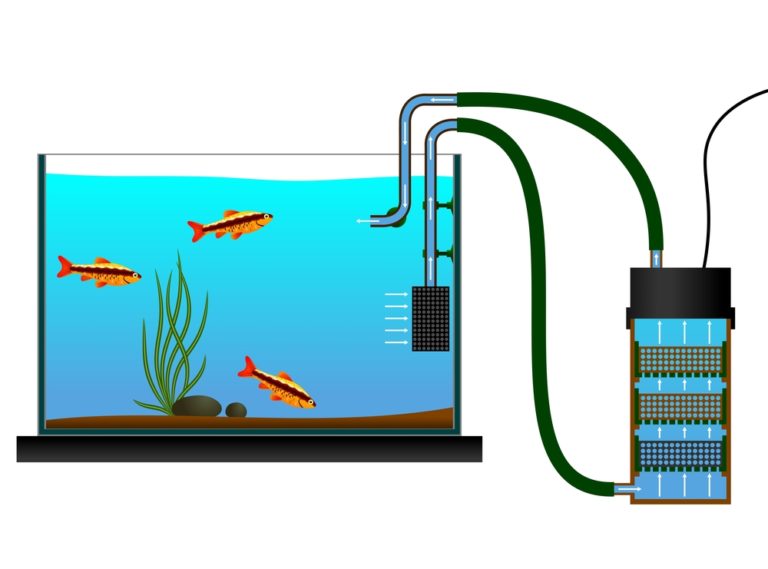
External inline heaters: Match the hose diameter, flow requirements, orientation, and aquarium rating. They depend on the connected circulation system; do not operate one without the required water flow.

Heaters in a sump: Use a compatible submersible model in a chamber with a dependable water level and adequate flow. Account for the complete system volume. A sump hides the heater but does not remove the risk of running it dry.

One heater or two?
Two appropriately selected heaters can distribute heat across a large system and provide some backup if one stops heating. Add their wattages when checking total capacity. Splitting the load does not guarantee protection against overheating if a thermostat sticks on; an independent temperature controller can provide another layer of control when correctly specified and installed.
Check performance after installation
Use a separate thermometer away from the heater to check the actual water temperature. Compare readings across the tank if you suspect uneven heating. Improve circulation before assuming that a cold corner needs a more powerful heater.
Leave a thermostatically controlled heater connected during normal overnight operation. Disconnect it before draining water, and follow its manual’s cooling and restart intervals. For example, the EHEIM thermocontrol e instructions require cooling in the water before removal. Include heater and thermometer checks in your maintenance routine.