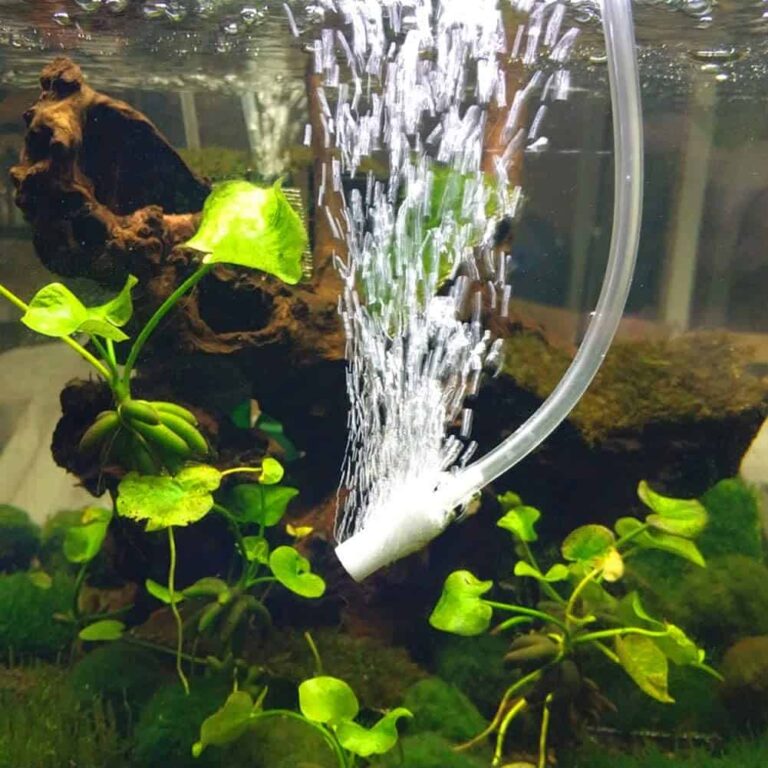
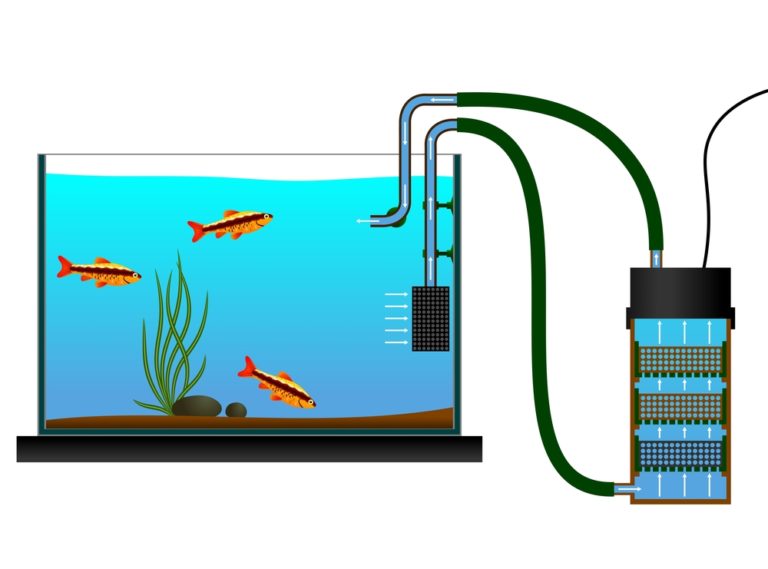
An air pump can keep running quietly for months without drawing much attention. When it stops, an airline that descends below the aquarium’s water level can become a route for water to siphon toward the pump. A small check valve is meant to help prevent that backflow.
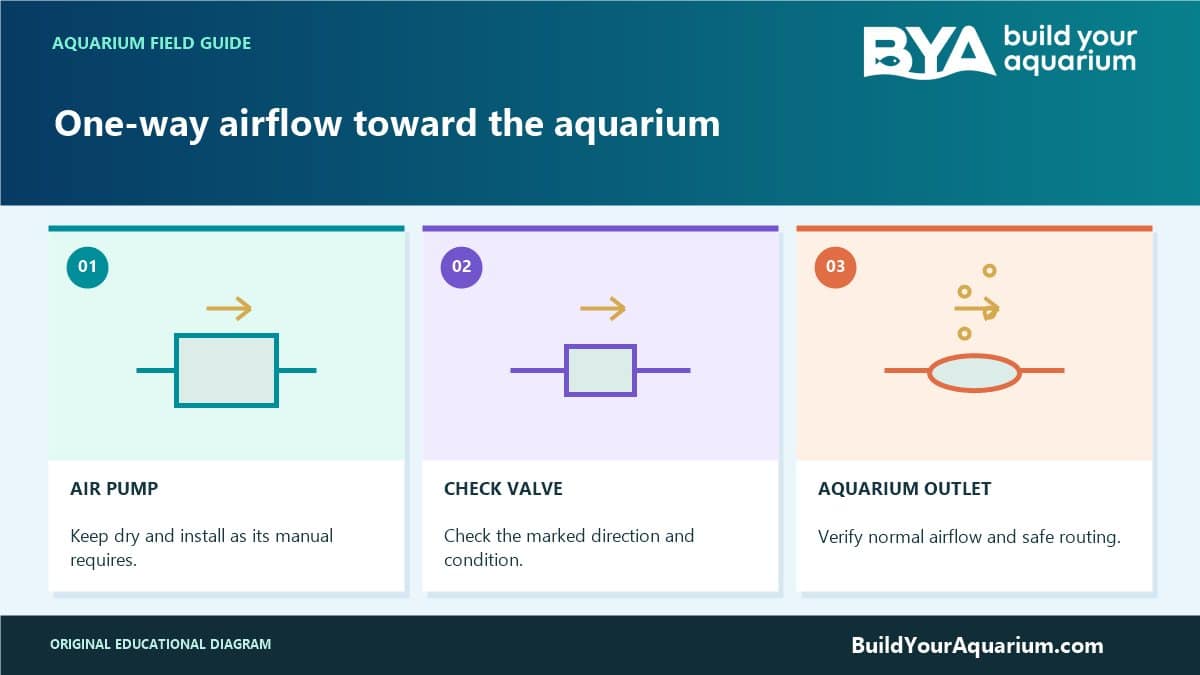
Check the pump’s position and instructions
The Tetra APS instructions recommend a check valve between the aquarium and pump when the pump is below the water level. The installation diagram and directions for your own model should determine the arrangement.
A check valve is directional: air must pass toward the aquarium while reverse flow is restricted. Look for the manufacturer’s flow marking and verify it before connecting the line. Keep a photograph of the installed direction beside the model’s instructions so it can be checked after the tubing is moved. A backward valve can stop useful airflow.
Our air pump comparison covers equipment choices. The protective fittings and tubing still need checking even when the pump itself has enough output.
A fitting is not a reason to ignore the whole airline
Inspect tubing for loose joints, kinks and damaged sections. Keep the pump dry, ventilated and positioned as instructed. Electrical cords need appropriate routing and a drip loop; an airline valve does not replace electrical precautions.
Use parts intended for aquarium air systems and the pressure involved. Follow the valve manufacturer’s inspection or replacement guidance. A cheap part left unexamined for years should not be treated as an infallible safeguard.
Check the air stone and any sponge filter too. Restricted outlets and dirty components can reduce circulation. The air-stone guide explains maintenance and placement considerations.
Test before relying on the setup
During a supervised equipment check, confirm that the pump supplies air normally and that the installation behaves as its instructions describe when stopped. Do not disconnect protective parts near electrical equipment to perform an improvised experiment.
If airflow is weak after adding a valve, verify direction, tubing and outlet resistance instead of simply removing the safeguard. Check compatibility with the pump and any gang valves or multiple outlets.
The goal is a complete arrangement that keeps circulating when powered and protects against predictable backflow when it is not. A pump check should include the small fittings between the motor and the aquarium.