A red devil cichlid is a large, powerful territorial fish best planned as a single specimen. A juvenile that tolerates companions may attack them after maturing. Provide its adult aquarium and a reliable separation plan before buying it.

Red devil or Midas?
The true red devil is Amphilophus labiatus, native to Lakes Nicaragua and Managua. The related Midas cichlid, A. citrinellus, is a different species. Ornamental stock may be crossed or mislabeled, so orange color and a forehead hump do not establish a purebred identity.

The Midas species account describes its more thickset build. Ask a specialist breeder for provenance if accurate identification or breeding lines matter. Do not label unknown offspring as pure A. labiatus.
Adult aquarium and safe layout
Red devils can exceed 12 inches. The species profile recommends at least a 150 × 45 cm base for one fish. A wider six-foot aquarium provides more useful turning and swimming room. A standard narrow 55-gallon aquarium is not an adult home.

Use sand and a few secure, smooth structures, with sheltered areas as well as open space. Red devils dig and move objects: place heavy rocks securely before adding sand, avoid unstable stacks, and protect heaters and pipework. Fit a secure cover. Robust attached plants may survive some individuals, but no plant is guaranteed to withstand an adult.
Water and filtration

Common care ranges are 22–28°C, pH 6–8 and 5–25°dGH. Keep conditions stable and suitable for the source stock rather than forcing the highest pH possible. Not all rocks buffer water, and some substrates may alter chemistry more than intended.
Complete the nitrogen cycle before stocking. Maintain zero ammonia and nitrite, good surface movement and adequate biological filtration. Measure nitrate and remove waste through regular partial water changes. Clean clogged mechanical media without replacing or sterilizing the whole biological filter at once.
Feeding
Offer an appropriately sized complete cichlid food, with varied aquatic foods and vegetable ingredients rather than a meat-only diet. LiveAquaria’s feeding guidance includes prepared foods with occasional frozen-food supplements. Judge a complete food by its nutritional purpose and the fish’s condition, not by a rule that every grain ingredient is useless.
Watch portion size, remove leftovers and track body condition. Live feeder fish are unnecessary and may introduce parasites or other infections. Do not use mammal or poultry meat as a staple.
Tank mates: solitary housing is the practical default
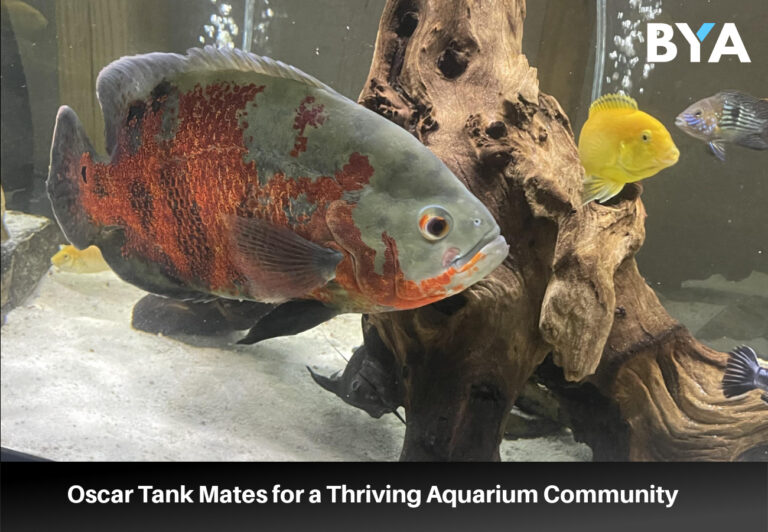
Other aggressive fish are not automatically safe. A red devil can injure a Jack Dempsey, convict or another red devil, and a stronger rival can injure it. Pleco armor and a danio’s speed do not make either fish immune.
Mixed setups require much more space than a single-fish aquarium and continuous observation. Rearranging decorations may disrupt territories, but cannot guarantee safe introductions. Separate fish immediately if one is pinned into a corner, cannot eat, loses scales or develops torn fins. Do not wait for them to “work it out.”
Breeding requires protection for both adults
Red devils lay eggs on a cleaned surface and may defend eggs and fry intensely. Even an established pair can turn on one another. Use a secure divider and an established backup aquarium; never remove a divider simply because the fish have stopped displaying at it.
For anyone deliberately breeding identified stock, arrange fry accommodation and homes first. A group of juveniles is not a permanent community, and forcing two adults together to produce a pair can cause serious injury. Sexing clues such as size, fin extensions and forehead development are less reliable in immature or hybrid fish.