The colors on a multi-test strip all look acceptable, yet the fish are breathing unusually fast. Before deciding the water is fine, read the list of substances the strip actually measures. Ammonia may not be on it.
Six results do not mean every important result
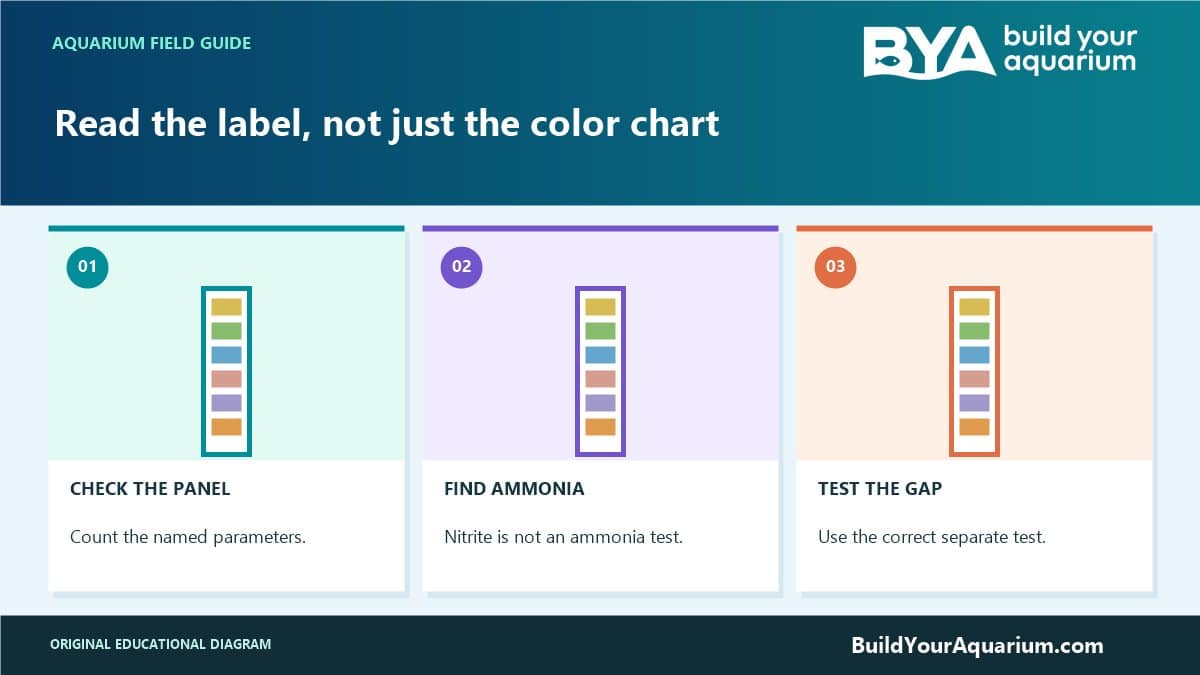
“Six in one” describes the number of tests included, not a standard package shared by every brand. A panel may cover nitrate, nitrite, pH, GH, KH and chlorine while leaving ammonia out. Nitrite and nitrate readings cannot substitute for an ammonia measurement.
Aquarium Co-Op’s testing guide lists its ammonia test separately from its multi-test strips. Check your own package rather than assuming its arrangement matches a photograph online.
Use the water-parameter guide to make a list of the tests your particular aquarium needs. A marine tank or specialist shrimp colony may require additional measurements.
Check the method as well as the coverage
Follow the named test’s immersion, mixing and reading times. Keep strips dry in their original container and check the expiry date. Photographing a strip long after the specified reading window does not preserve the original result.
If a result conflicts with the animals’ condition, repeat it correctly and use an appropriate independent test when needed. Good-looking water is another observation, not a chemical measurement. Include any recent filter-media replacement in your notes so a testing problem and a possible loss of biological filtration are investigated separately.
Distress still needs prompt attention
Check temperature, circulation and aeration while investigating. Test ammonia and nitrite directly rather than waiting for the next scheduled maintenance day. The ammonia response guide explains how to assess a positive result and its cause.
A complete testing routine begins with the right questions. The number printed on the box cannot tell you whether you have asked them.