A newly planted Cryptocoryne looks healthy for several days, then its leaves soften and collapse. Pulling out the whole plant can remove the part that still has a chance to recover.
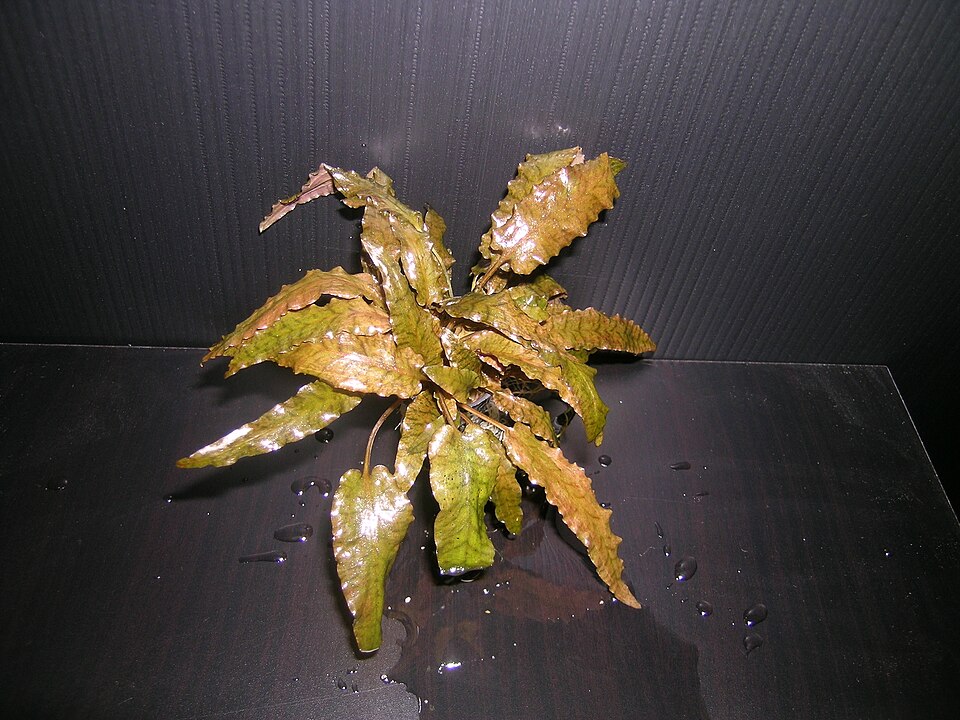
Crypt melt describes leaf loss associated with a change in conditions. It is a reason to inspect the plant, not proof that every leafless crown is alive or that every collapse is harmless.
Check what remains
Aquarium Co-Op’s crypt-melt guide explains the transition from nursery growth above water to growth underwater. Healthy roots can produce new shoots after the original leaves disappear.
Remove clearly deteriorating foliage with suitable scissors. Avoid repeatedly digging up the plant to check whether it has started again. A disintegrating or foul-smelling base needs a different assessment from a firm plant that has simply lost older leaves.
The brown-leaf troubleshooting guide helps separate decaying tissue from a coating on otherwise intact leaves.
Keep the recovery period predictable
Check recent changes in lighting, temperature, fertilization and placement. Correct an obvious problem, but avoid moving the plant between several corners while also changing every setting.
Provide suitable nutrition for a rooted rosette. Use the fertilizer guide to distinguish substrate feeding from water-column products. More fertilizer is not automatically better when the plant has little active foliage.
Photograph the next shoots
Compare the planting over weeks rather than expecting replacement leaves by tomorrow. Keep the crown positioned appropriately and clear loose debris without burying it.
If several established plants collapse alongside distressed animals, investigate the aquarium’s water and equipment promptly. “Crypt melt” should not become a label that stops you checking the rest of the system.