You build a hill at the back of an aquascape, fill the tank and wait for the plants to spread. Weeks later, the hill is lower and the foreground is deeper. The layout did not need more decoration; it needed a way to hold the substrate where you placed it.
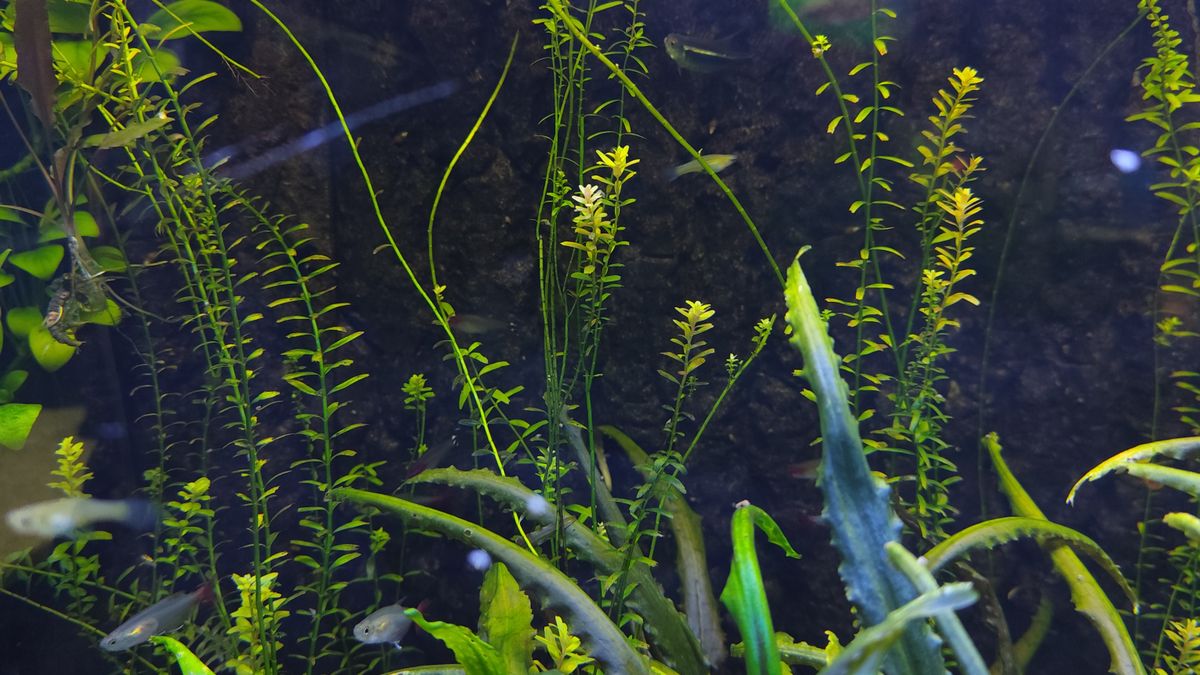
In an r/Aquascape question, u/Educational-Mix152 described a new ten-gallon layout with stone and Fluval substrate and asked how to stop a slope becoming flat. The discussion illustrates a structural problem that planting alone does not immediately solve.
Separate the visible hill from its support
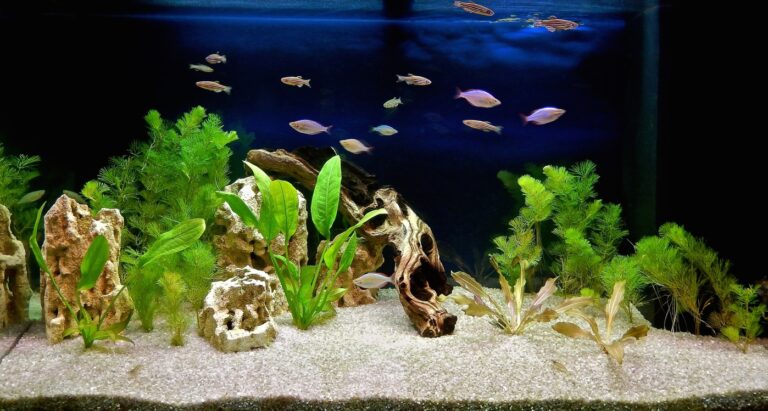
A deep pile of loose grains can move when water is added, animals dig or tools disturb it. A modest gradient is easier to maintain than a steep unsupported bank. Plan retaining hardscape or aquarium-suitable dividers before planting, with the actual substrate and aquarium dimensions in mind.
Support heavy rocks securely according to the tank manufacturer’s guidance. Do not rely on a loose slope as the only support beneath a tall stack. Check contact points, stability and access for maintenance using the aquascaping setup guide.
Fill gently and leave room to work
Tropica recommends gentle filling onto a saucer to avoid stirring up the bottom during planting. A forceful stream aimed at the hill can undo a careful arrangement before roots have developed.
Keep plants moist while the water level is low. Check the slope from the front and sides before continuing. If cosmetic sand meets aquasoil, consider how you will prevent mixing and remove stray grains without repeatedly excavating the planting area.
The substrate comparison helps separate the roles of sand, gravel and active soil. Different grain shapes and densities do not settle or behave identically.
Expect the living layout to change
Root growth may help an appropriate planted area hold together over time, but that is not an instant retaining wall. Digging fish, burrowing invertebrates and repeated uprooting can change the surface. Choose livestock with the intended layout in mind.
If a bank keeps collapsing, reduce its angle or rebuild its support rather than adding another heap on top. Preserve space for feeding, circulation and cleaning. The strongest composition is one you can still service after the plants have grown in.