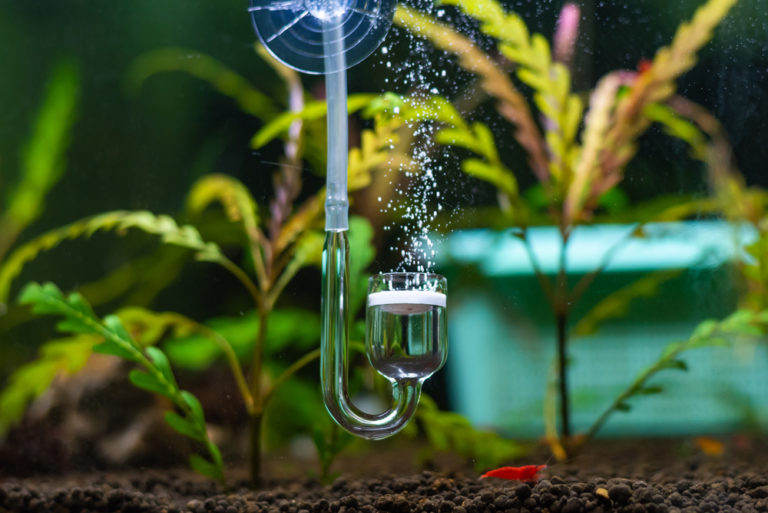
You open a cup of tiny aquarium plants and find the roots embedded in jelly. That material helped support them during tissue culture. It is packaging for the growing stage, not something you need to bury with the plants.
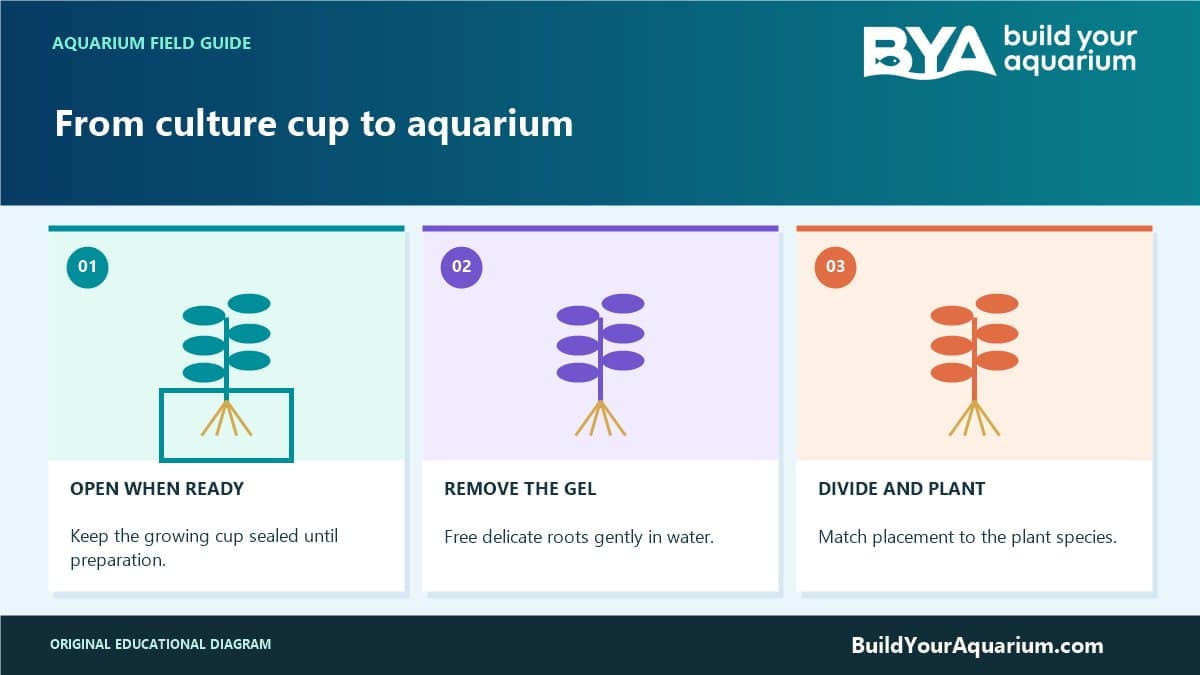
Prepare the planting area first, then gently remove the growing medium and divide the plant. The small portions need suitable placement more than they need their original cup kept together.
Keep the cup closed until you are ready
Buce Plant’s storage guidance distinguishes sealed tissue-culture cups from ordinary bundled plants. It recommends keeping the cups sealed before planting, away from direct sunlight and temperature extremes. Opening one to inspect it does not preserve the original closed growing environment indefinitely.
Have clean tools, a small bowl and an accessible planting area ready. Check the species label: a carpet plant, a rosette and an Anubias rhizome cannot all be installed in the same way. Our planted aquarium setup guide helps match the plant to the conditions you can provide.
Free the plant without pulling it apart
Ease the plant from its container and loosen the gel in water, following the supplier’s preparation instructions. Work it away gently rather than tugging a root bundle through a hard clump. Remove deteriorating material and separate the growth into manageable pieces with roots or growing points appropriate to that species.
Buce Plant’s preparation guide treats tissue culture separately from pots, mesh and attached plants. A treatment suggested for an ordinary purchased plant should not automatically become an extra chemical dip for every culture cup.
Give the pieces room to establish
Tropica’s planting instructions vary by growth form. Stem plants are separated and planted individually; carpet plants are divided into portions. A single dense plug can leave inner growth crowded and make it harder to establish an even foreground.
Use tweezers carefully, keep plants moist while working and refill gently so the substrate stays in place. Keep crowns and rhizomes positioned for the species. The carpet plant comparison explains why a moss covering is different from a rooted lawn.
After planting, watch for new growth and remove decaying leaves. A tissue-culture label describes how the plant was produced; it does not guarantee that your light, carbon supply or aquarium is ready for every species.