The eastern mud turtle, Kinosternon subrubrum, stays small, but its enclosure needs more thought than a shallow aquarium with a floating dock. This is a turtle that uses both water and land. Plan a secure, filtered habitat with room to walk, hide, burrow and leave the water completely.

Size and identification
Adults commonly measure about 3–4 inches (7.5–10 cm) in shell length; larger individuals occur. Expect a long commitment rather than a short-lived beginner pet.
The upper shell is usually plain brown, olive or nearly black. The lower shell has two hinges. Hatchlings look different from adults, and a small brown turtle should not be identified from color alone. The Virginia Herpetological Society account explains the shell and head features that distinguish it from similar mud and musk turtles.
Ask for the scientific name and captive-breeding records before acquiring one. “Mud turtle” covers several species with different identification and care details.
Habitat: land is part of the enclosure

In the wild, eastern mud turtles use shallow, slow-moving wetlands and also travel over land. Vegetation, soft ground and cover are important parts of their habitat. A captive setup should offer choices rather than force the turtle to remain exposed in open water.
The Zilla care sheet, developed with the Madison Area Herpetological Society, recommends both land and water accommodation. A broad enclosure around the footprint of a 40-gallon breeder is a useful starting point for one adult; a substantial land section reduces the space available for swimming, so a larger enclosure can be more practical.
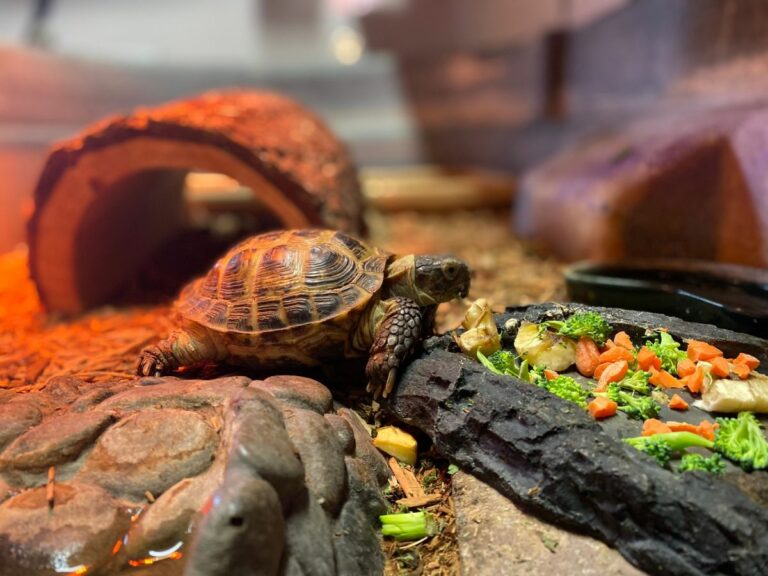
Provide damp, diggable ground and a sheltered retreat, alongside an accessible dry area. A narrow floating basking platform alone does not replace this land habitat. Keep the enclosure ventilated and escape-proof, with secure ramps and no gaps where a turtle can become wedged.
Water depth and filtration

Start with easily accessible water and several routes to the surface. Secure branches, gently sloping ramps and resting shelves let the turtle breathe without an uninterrupted swim. Adjust depth to its size, strength and observed behavior; a hatchling or weak animal needs particular care.
A nominal tank volume is not the amount of water actually present in a divided enclosure. Choose filtration for the working water volume and waste load, and avoid a strong current that pushes the turtle away from its resting places.
Cycle the biological filter before relying on it. Test ammonia and nitrite, remove leftovers promptly and use conditioned replacement water. Clear-looking water can still have a water-quality problem. Our turtle tank cleaning guide explains routine maintenance without repeatedly sterilizing the filter.
Heat and UVB
Water around 74–78°F (23–26°C) is a practical starting range. Provide a warmer basking area around 90°F (32°C), with cooler retreats available. Measure temperatures where the animal actually sits; room temperature alone does not tell you the water or basking temperature.
Provide suitable UVB lighting during the day as well as warmth. Follow the exact lamp and fixture instructions for distance and screening, and provide shade. Glass or plastic between the lamp and turtle can block useful UVB. See our turtle UVB guide for placement and replacement considerations.
Feeding without turning it into a grazing diet
Eastern mud turtles are omnivores with a strong interest in animal foods. A diet consisting mostly of leafy vegetables is not a good default for this species.
Use an appropriate formulated aquatic turtle food alongside varied, suitably sized invertebrates such as earthworms and snails from safe sources. Offer appropriate plant foods too, but do not assume a slider’s adult feeding proportions apply. Feeder fish are not a requirement, and dried shrimp alone is not a balanced staple.
Adjust portions and frequency to age, condition and the food’s instructions. Discuss calcium and other supplements in the context of the whole diet and UVB provision, rather than automatically dusting every meal.
Housing alone and handling

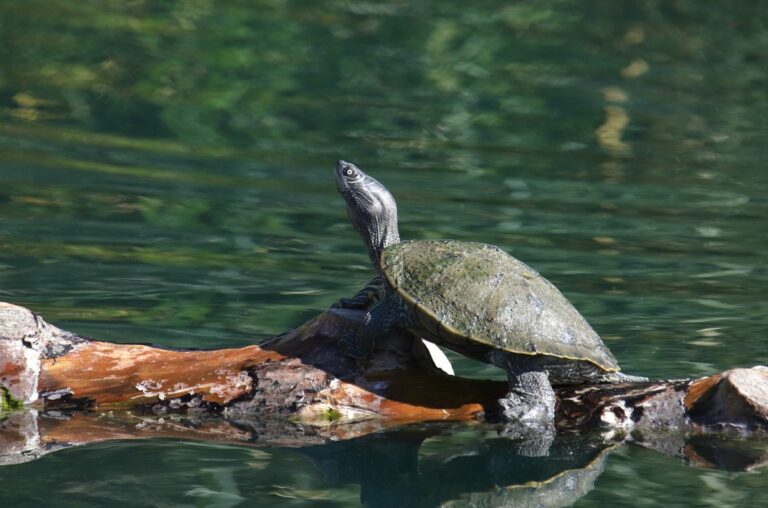
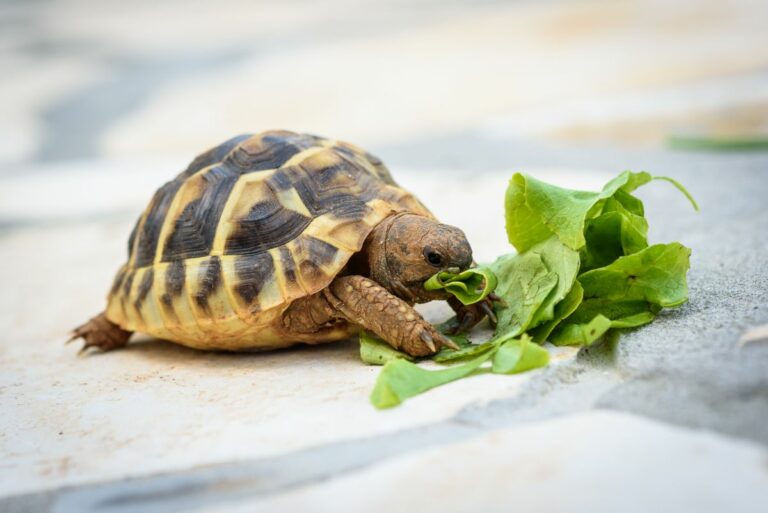
The photograph above is credited to a report about a Florida mud turtle; it should not be used as the identification reference for K. subrubrum.
Keeping one turtle is the simplest arrangement. A male and female can still injure or harass each other, and extra space does not guarantee compatibility. Fish and shrimp may become food.
Keep handling brief and necessary. A turtle can bite or release musk when disturbed. Before acquiring one, check the rules that apply to your location and source; a general care article cannot establish that a particular animal is legal to collect, sell or keep.