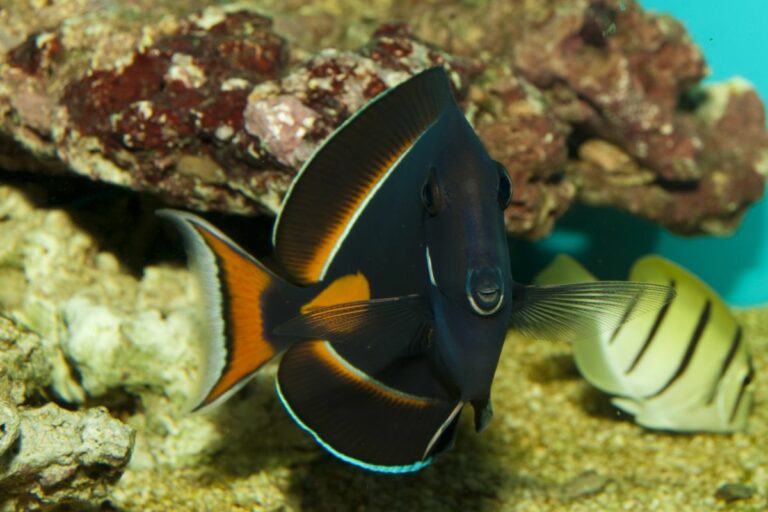
The black tang, Zebrasoma rostratum, is a large marine grazer with a dark body, long snout and pale marking near the tail spine. Its rarity in the trade does not change the basics: it needs a spacious mature aquarium, an appropriate algae-rich diet and careful management of territorial behaviour.

Identification and adult housing
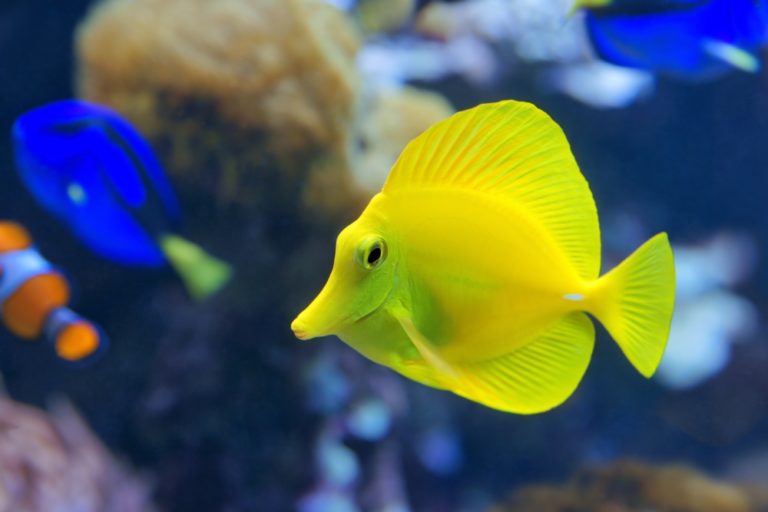
Also called the black longnose tang, this surgeonfish belongs to the same genus as yellow and scopas tangs. A dark scopas tang or a hybrid should not automatically be sold or identified as pure Z. rostratum.
Plan for an adult roughly 20–23 cm long, rather than the small fish offered for sale. LiveAquaria’s black longnose tang profile specifies a 180-gallon or larger aquarium. Swimming length, turning room and territory matter alongside volume.
Provide stable rockwork with shelter and grazing surfaces, while leaving an open swimming route. A sump improves system capacity but does not turn a short display into a suitable adult swimming space.
Stable water and a healthy arrival

Use a mature, well-oxygenated marine system. Around 24–25°C, stable salinity near 35 ppt and a pH appropriate to a normal marine community are sensible planning conditions. Confirm the source water before acclimation and measure salinity with a calibrated refractometer or suitable hydrometer, not a hygrometer.
Ammonia and nitrite should be undetectable. Monitor nitrate and other parameters according to the whole system; there is no evidence for a universal rule that a reading just above 10 ppm nitrate suddenly harms every black tang.
Observe appetite, body condition, breathing and the long snout before purchase. Shop observation helps, but does not replace quarantine or establish freedom from disease. Price is not a health test, and this species is not appropriate for cycling a new aquarium.
What to feed
Provide regular marine algae or plain, unseasoned nori, plus an appropriate prepared marine herbivore food. Offer manageable portions and check that the fish is actually grazing and maintaining body condition.
Small meaty foods may be accepted, but they should not displace the plant-rich component. Maidenhead Aquatics’ husbandry account recommends varied green foods and opportunities to graze.
Do not assume display algae or a refugium provides an endless complete food supply. Edible algae can be depleted, while a large quantity of unwanted algae may still be unsuitable food. Our macroalgae guide explains some of the differences.
Tank mates and reef compatibility
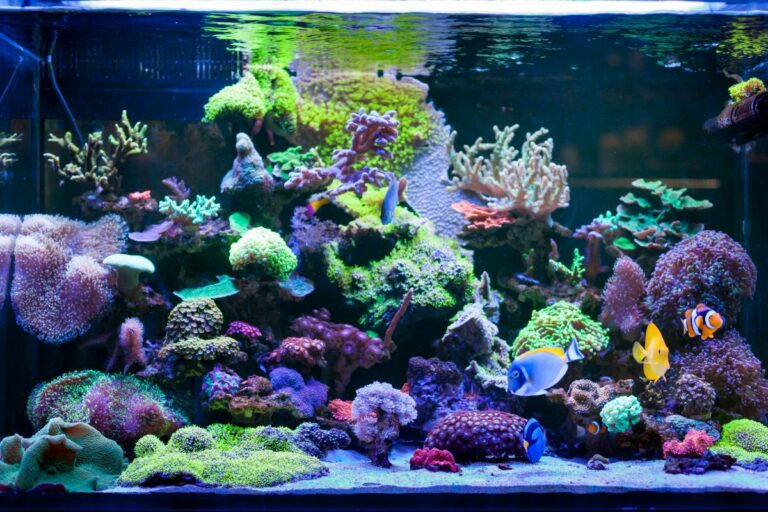
The simplest plan is one tang in a compatible large community. Other Zebrasoma can provoke territorial conflict, and different genera are not guaranteed safe merely because they look different.
Adding a territorial fish later can reduce some introduction problems, but it does not prove that the tank is cycled or prevent all aggression. Provide a separation plan and intervene if chasing prevents another fish from feeding or resting.
Black tangs are generally compatible with corals, but occasional nipping is reported. Watch the individual rather than promising that every coral or sessile invertebrate is untouchable. Handle cautiously around the sharp tail spines.
Has the black tang been cultured?

Yes. On May 7, 2026, Quality Marine announced successful culture of black longnose tangs at QM Labs. The company described raising the fish through larval stages and transitioning them onto prepared foods, with initially very limited availability.
That producer announcement supersedes blanket claims that the species has never been bred in captivity. It does not make home breeding straightforward or mean every fish offered for sale is cultured. Ask about the actual animal’s origin and feeding history.
Choose the species only if its adult requirements fit your system. Its colour and price do not make it a substitute for a more suitable fish or a solution to an algae problem.