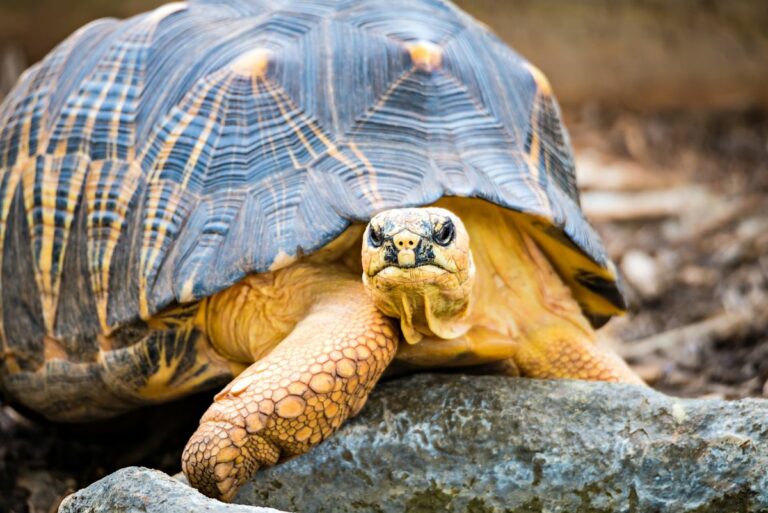
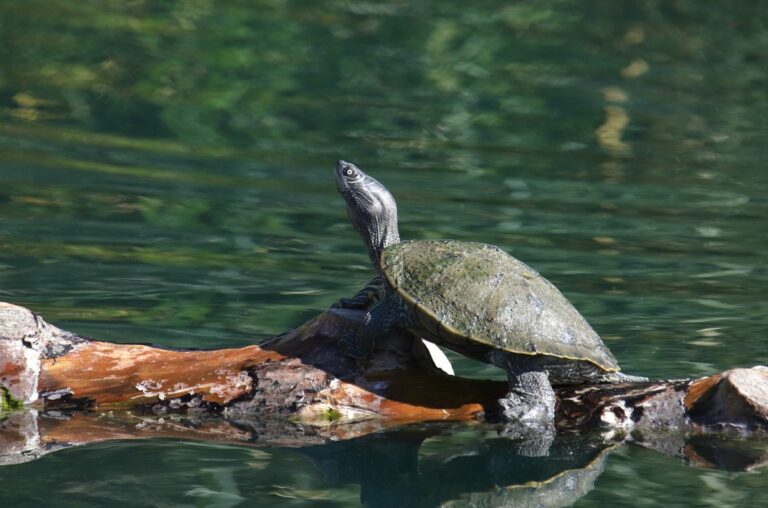
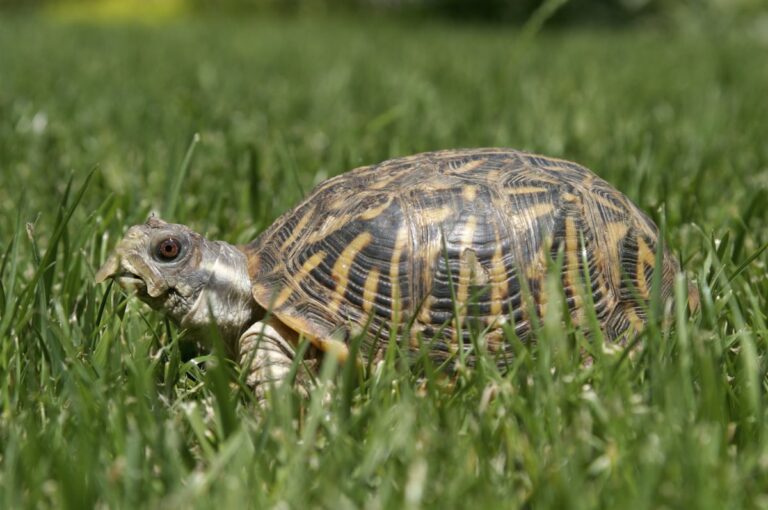
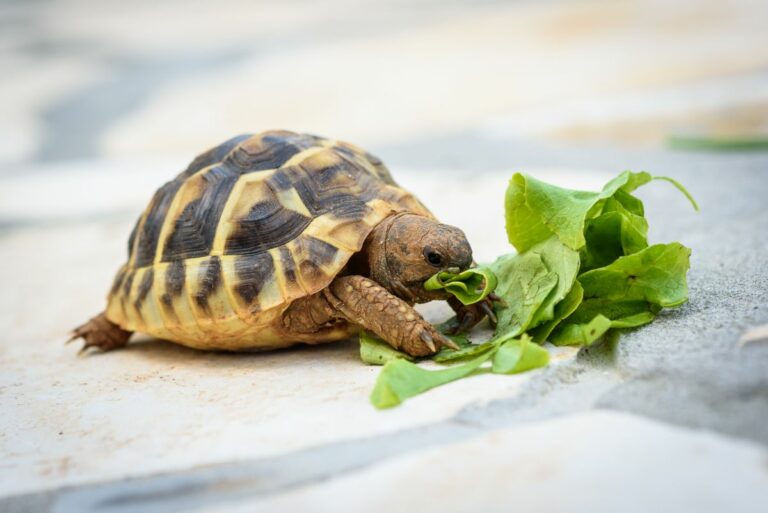
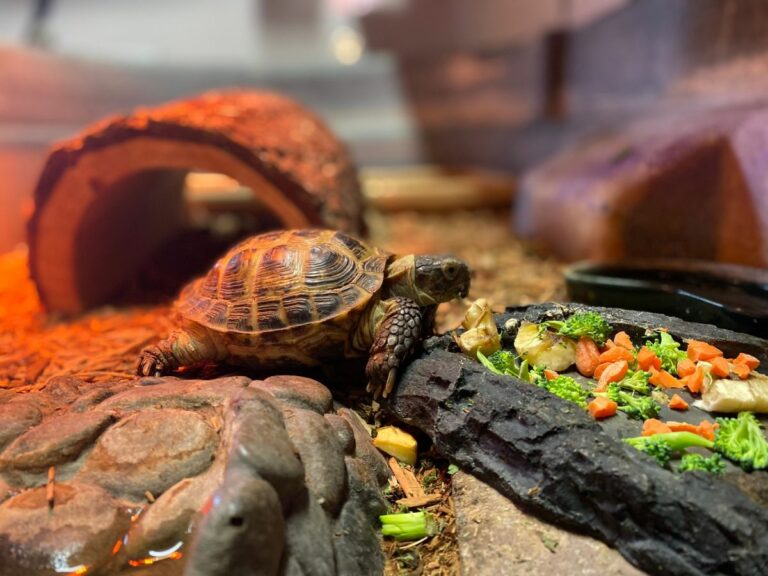
The spur-thighed or Greek tortoise, Testudo graeca, is a variable group whose origin matters for care. Identify the animal before deciding on adult housing, moisture or winter dormancy. It is different from the much larger African spurred tortoise, Centrochelys sulcata.

Size and identification
Spurs near the thighs give this tortoise its common name. Shell color and markings vary widely, so color alone cannot reliably identify a subspecies or prove where an animal originated.
Many adults reach roughly 6–10 inches (15–25 cm) in shell length, with larger individuals and substantial differences among forms. Females are often larger than males. Ask for scientific identification, breeding records and an adult size estimate instead of relying on a shop’s “small Greek tortoise” label.
Expect decades of care. A rare maximum lifespan is less useful for planning than arranging reliable lifetime housing and a successor keeper if necessary.
A fibrous plant diet

Feed Greek tortoises as herbivores. Offer varied, correctly identified edible weeds, leaves and flowers, with suitable greens such as dandelion, endive, escarole, collard or mustard greens. Collect only from places free of pesticide, herbicide and other contamination.
The Tortoise Trust species account emphasizes natural plant foods and rejects animal-protein feeding. Occasional wild consumption of an animal item does not justify adding meat, cat food or dog food to a captive grazing diet.
Fruit is unnecessary as a routine food. An appropriate high-fiber tortoise food can support a feeding plan, but a fixed “20% pellets” rule is not required for every animal. Assess calcium and vitamins against the complete diet and UVB provision.
Provide suitable food daily during active maintenance and adjust portions to growth and body condition. Do not automatically apply an aquatic turtle’s two-or-three-meals-per-week schedule.
Origin changes seasonal care

The range spans parts of North Africa, southern Europe and western Asia. Different populations experience different climates. A long subspecies list does not help if the actual animal’s identity and provenance remain unknown.
Some forms undergo winter dormancy; others should not receive the same cooling schedule. Have a reptile veterinarian and experienced keeper establish a plan based on identification, health and local conditions. Never hibernate a sick, dehydrated or poorly conditioned animal.
Winter care needs preparation, not simply putting the tortoise outside or switching off the lamps. The British Chelonia Group care sheet explains the importance of housing and planned seasonal management.
Space, substrate and water

For a typical adult, a roughly 6 × 3-foot (1.8 × 0.9 m) enclosure is a useful planning scale, with more room for a large animal. Check floor space rather than aquarium gallons. Include covered retreats, safe digging substrate and changes in terrain without trapping or overturning hazards.
Provide a stable shallow drinking and bathing dish with an easy exit. The turtle must be able to rest with its head comfortably above water. Young animals need particular care; a safe water dish and supervised soaking serve different purposes.
Keep sheltered moisture available without leaving the entire substrate cold and waterlogged. Good ventilation, drainage and age-appropriate humidity matter more than one number measured above the animal.
Outdoor pens need suitable weather, shade, secure barriers against digging or climbing out, and protection from predators. Have adequate indoor accommodation ready for unsuitable conditions.
Warmth, UVB and daily checks
For an actively maintained animal, provide a localized basking area roughly 90–95°F (32–35°C), with a cooler retreat around 70–77°F (21–25°C). Adapt the plan to the identified form and age. Measure actual conditions at animal level rather than uniformly heating the enclosure.
Use appropriate daytime UVB with shade available and a normal dark period. Follow the exact lamp and fixture guidance; our UVB lighting guide explains placement and replacement. The Tortoise Table routine-care guide also stresses measurements and record keeping.

A photograph cannot diagnose a shell problem. Track weight, appetite, activity and shell condition. Persistent nasal discharge, abnormal breathing, weakness, shell lesions or a newly soft shell needs reptile veterinary assessment.
Companions and acquisition
Housing one tortoise avoids mating pressure and many conflicts. Males can ram and bite, so a “passive” label does not establish compatibility. Do not mix species, and keep new arrivals separate pending veterinary advice.
Check current possession, sale and transport rules and obtain documented lawful captive-bred or rescue animals. Leave wild tortoises in their habitat. Never release a captive animal into the wild.