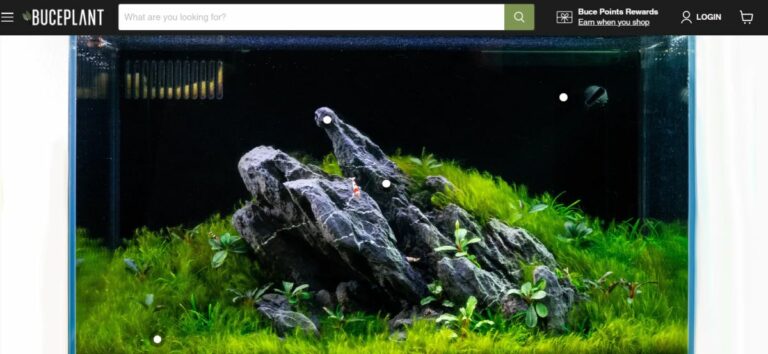
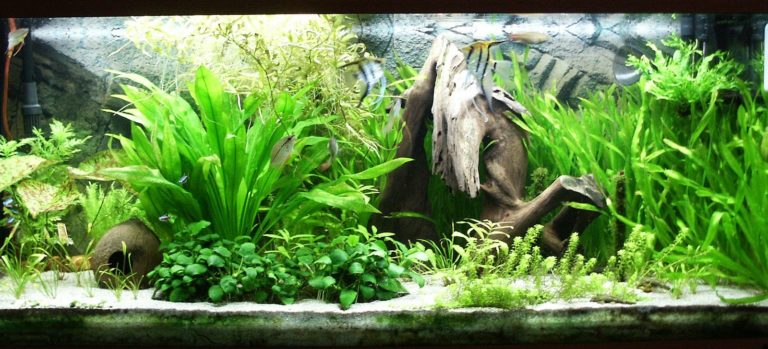
The carpet has spread across the soil, and the dry-start tank finally looks finished. Flooding it changes the growing environment. A convincing lawn above water is not proof that the plants—or the biological filter—are ready for a stocked aquarium.
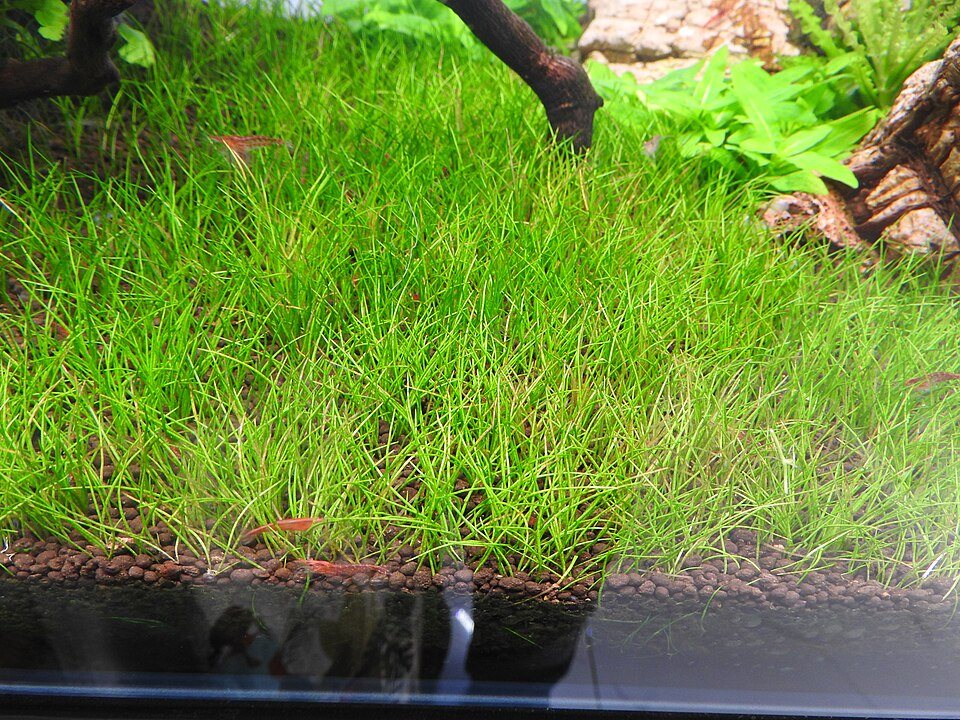
Look for establishment, not just green coverage
A dry start allows suitable plants to grow in a moist, humid setup before the aquarium is filled. Buce Plant’s dry-start guide describes waiting for rooting and spreading before flooding. The method needs species that can handle the chosen growing conditions; it is not a general prescription for every aquarium plant.
Check anchoring gently and remove deteriorating growth. Bare patches, loose tufts or mold deserve attention before filling. A calendar alone cannot tell you whether the plants have established.
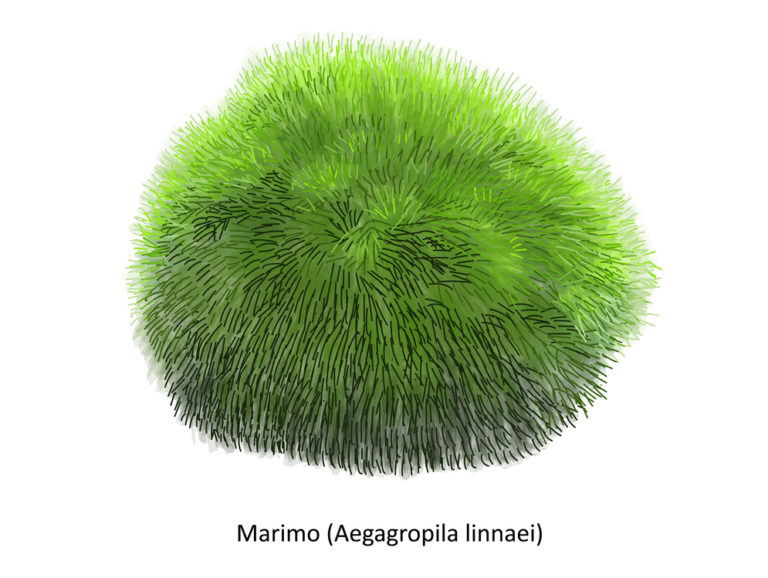
Our carpet plant guide compares growth habits. A rooted Eleocharis planting and a moss-covered support require different handling even when both create a low foreground.
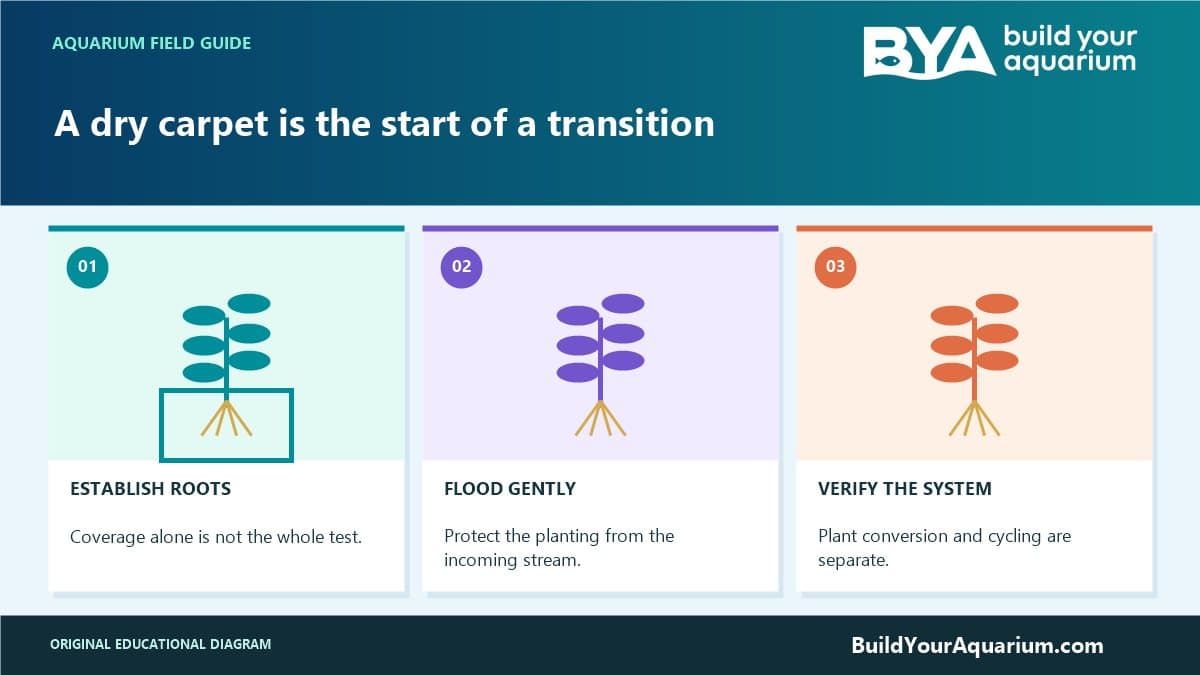
Flood without lifting the planting
Prepare the water and equipment in advance. Add water slowly using a suitable diffuser so the stream does not excavate soil or lift the carpet. Inspect the layout as the level rises and secure any displaced portions rather than burying them under another layer.
Once filled, run the planned filtration and circulation. Match lighting and any CO2 system to the submerged setup instead of assuming the dry-start routine transfers unchanged. Keep monitoring equipment and water conditions while the planting adapts.
Plant conversion and aquarium cycling are separate
Some existing foliage may change or deteriorate as the plants establish underwater. Remove decaying material carefully and judge the next growth rather than assuming every old leaf will remain identical.
The presence of a carpet does not verify the biological filter. Follow the fishless cycling guide and confirm that the system handles its ammonia source appropriately before adding animals. Soil, plant debris and other organic material can affect the starting conditions. Check the specific soil’s preparation and water-testing instructions as well as the planting.
Plan livestock introductions around the aquarium’s readiness, not the day the display first looks attractive. Successful flooding is a transition to manage. It becomes the beginning of submerged maintenance, not the end of the setup process.