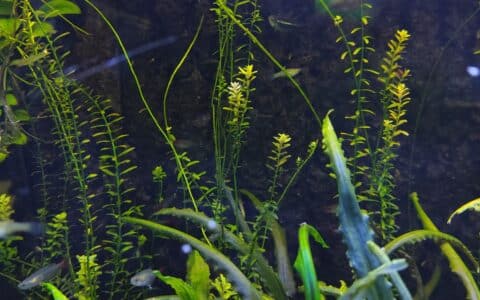
A stem plant reaches the surface while its lower section becomes sparse. Cutting a few centimeters from the top may control the height, but it can leave the same bare base in view. Sometimes the healthy upper growth is the useful material for rebuilding the group.
Identify the growth form before cutting
This approach applies to suitable stem plants, not every plant with a long leaf stalk. A detached sword leaf or a piece of Java fern leaf is not handled like a Hygrophila stem cutting.
Tropica’s trimming guide describes cutting the longest stem shoots above lower leaves and replanting the off-cuts. Its instructions distinguish stems from plants that spread through runners or other growth forms.
Choose firm, healthy top growth. Remove damaged material and make a clean cut with suitable aquarium scissors. Prepare enough bare lower stem for planting without burying a bundle of leaves.
Replant a group with space between stems
Place appropriate cuttings individually rather than forcing the whole bunch into one hole. Arrange shorter and taller pieces deliberately, leaving light and circulation around the developing group.
Assess the old bases separately. Healthy rooted portions of suitable species may branch after trimming; deteriorating sections may need removal. Avoid ripping out every established root system merely to make the layout look newly planted.
Our water wisteria guide provides a species example. Check the actual plant’s response instead of assuming every stem will branch or root at the same speed.
Find out why the bottom became sparse
Look for shade from neighboring plants or the group’s own canopy. Check whether enough suitable light reaches the lower leaves and whether the planting has outgrown the available space.
Review nutrition with the fertilizer guide, but do not use a bare stem as proof of one particular deficiency. Light distribution, growth habit, recent adaptation and overall plant condition can all affect its appearance.
Collect loose clippings before they enter intakes, and dispose of unwanted aquatic plants responsibly. Photograph the replanted group and compare new growth over time. A successful trim should produce a maintainable planting, not simply reset the countdown until the top reaches the surface again.