

A BioCube combines an aquarium, rear filtration chambers and hood lighting, but a marine setup still needs suitable water, temperature control, testing and a verified biological filter. Identify your exact model before installing equipment or ordering parts.

1. Position and check the aquarium
Use a level support designed for the filled aquarium’s weight, with access to the rear chambers and electrical connections. Inspect the tank, pump and plumbing, then follow the Coralife instructions for your model for assembly and the initial leak check. Keep the aquarium away from direct sunlight and heating or cooling drafts.
Plan the equipment before filling. Confirm that the heater and any optional skimmer fit, remain at their required water depth and can be removed for maintenance. Our BioCube accessory checklist separates essential supplies from optional upgrades.
2. Prepare water, substrate and rockwork
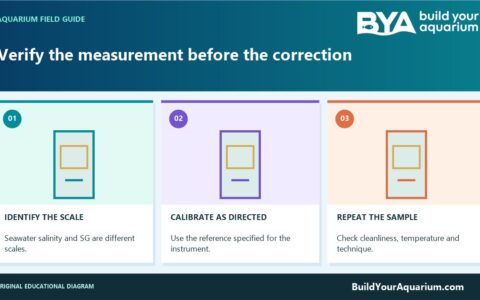
Mix a complete marine salt with suitable source water in a separate container, following its instructions. Verify salinity with an appropriately calibrated instrument and bring the water to the intended temperature. Account for water displaced by rock and substrate rather than treating nominal tank size as actual water volume.

Choose aquarium-suitable rock and build a stable layout with space for circulation and glass cleaning. Keep rockwork away from the glass and equipment. Live rock can introduce established organisms, including unwanted hitchhikers; dry rock develops biological filtration as the system matures.
Live sand is optional, and neither live sand nor live rock guarantees that the aquarium is immediately ready for livestock. Follow the particular substrate’s handling instructions.
3. Set up filtration and circulation
Install the pump, media and other components in the arrangement specified by the aquarium manual. Keep the intake and return unobstructed and set the operating water level correctly.
Mechanical media collects debris and needs cleaning. Established biological media converts ammonia through the nitrogen cycle; bioballs are not inherently poisonous “nitrate factories.” Chemical media serves specific purposes and does not replace the biological filter. Avoid removing all established biological surfaces during an upgrade.
Run the system and verify circulation, temperature and normal water levels. Check that it restarts correctly after a supervised power interruption.
4. Establish and verify the biological filter
Use a fishless cycling method suited to the materials in your tank. Test rather than relying on a fixed two- or three-week wait. A zero ammonia reading in water that has never had an ammonia source does not demonstrate processing capacity.
Follow the method’s completion checks, then correct water conditions with properly prepared replacement saltwater as needed. Do not add fish simply to provide ammonia for a new tank.
5. Stock for the actual display

Choose species by adult size, temperament, swimming space and diet. Broad categories such as “wrasses” or “damsels” include animals with very different requirements. Make a specific stocking plan, quarantine new fish separately and add livestock gradually.
For corals, confirm stable conditions and appropriate lighting and flow. Calendar age alone does not establish readiness. Start with species you can maintain and leave space for growth; review the tradeoffs in our soft coral guide before choosing spreading colonies.
6. Establish a maintenance routine
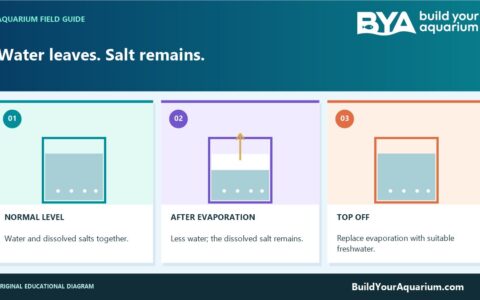
Check temperature, animal behavior and water levels daily. Replace evaporation with suitable freshwater, not saltwater. Clean trapped debris and service the pump and media before flow deteriorates.
Base water-change frequency and volume on stocking, feeding and measured conditions. Prepare saltwater separately and match relevant parameters. Keep records so changes in nitrate, phosphate or salinity lead to a clear adjustment rather than an arbitrary maintenance schedule.
The Biocube32 lighting Is adequate for low PAR level corals,Coralife claims a PAR level of 60,actually it’s much less, woefully inadequate for sps..if I decide to add sps,acro corals I will have to replace the hood with a screen top and a more powerful led,I have a Red Sea reef 50 on hand..
For a fish only tank it’s good as is.
I recommend a Tunze nano skimmer or the IceCap K50..Both fit nicely without the hood.
Filter chamber 2 can be used as a fefugium with proper lighting and clean algae..get mine from Bulkreefsupply.com.
Nice looking tank,ideal for beginners,office tank or those just want a marine tank that won’t cost a small fortune.
Sum it up as a nice mid nano size tank.
ive read many different opinions about stocking, from 1 inch of fish per gallon to 1 inch per 5 gallons….also about tank volume for a fish ie 70 gallons for a dwarf angel (had a dwarf in a 32 gal bio and was fine) are some of these opinions based on amount of maintenance and attention required or maybe just the luck of the draw when stocking
First I’d like to say, this was very informative and I appreciate all the information. The one question I have is, what about the water? Do I buy a mix or do I buy the gallons of salt water? Let me know what you think and how I should go about it.