A sponge filter draws aquarium water through foam, trapping particles and giving beneficial microbes a surface to colonize. It is useful where gentle flow and an intake that is safer for fry or shrimp matter more than hiding the equipment. It can be a tank’s main filter if its capacity matches the livestock and feeding load.

What you need to run one
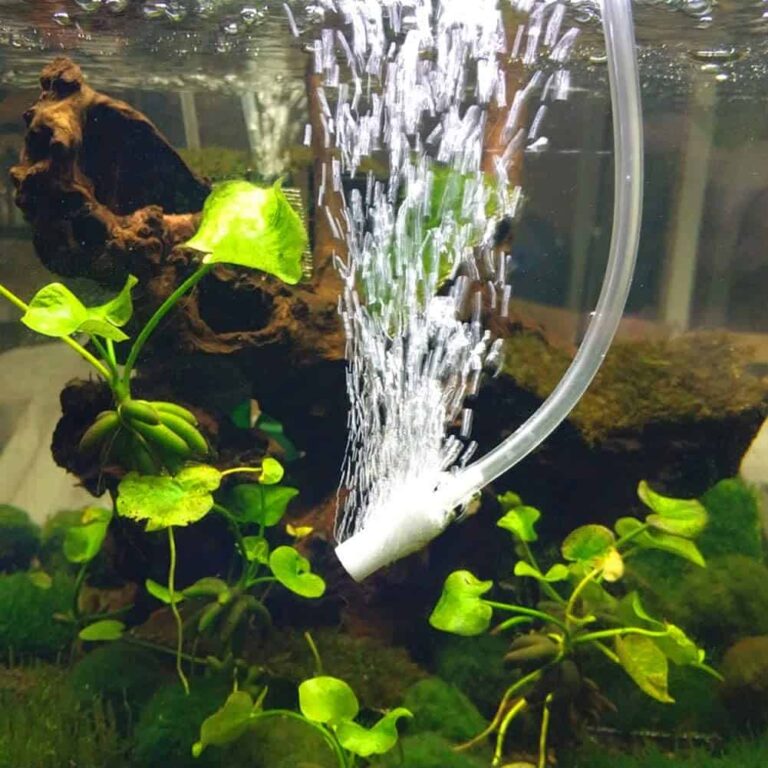
Most models need an air pump, airline tubing, and the filter itself. Rising bubbles lift water through the tube, drawing replacement water through the sponge. Check the manufacturer’s assembly instructions: some designs accept an internal air stone, while others do not need one.
Keep the pump above the waterline or fit a correctly oriented check valve to help prevent water siphoning into it. Set the outlet so it moves the surface without pushing fish around. A bubbling filter should also circulate water through the sponge; bubbles alone do not prove that a clogged or incorrectly assembled filter is working properly.
Where sponge filters work well
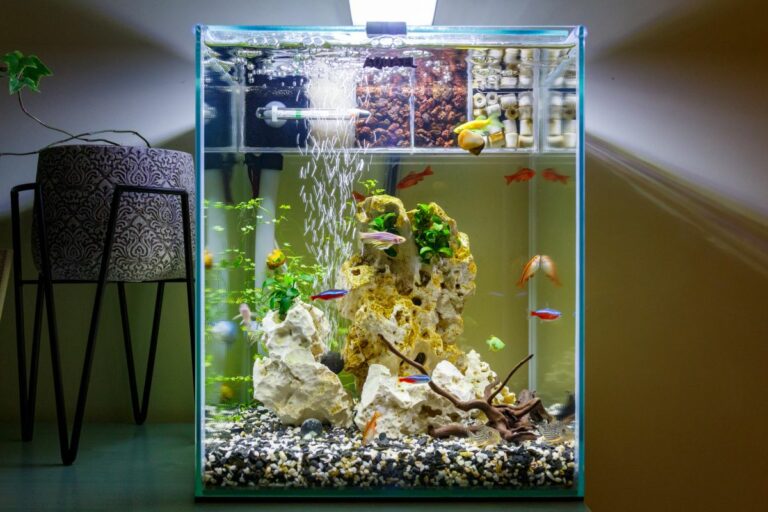
They suit breeding tanks, shrimp tanks, quarantine tanks, and many lightly or moderately stocked community aquariums. Their broad foam intake reduces concentrated suction. Fine foam catches smaller particles but may clog sooner; coarse foam is easier to keep flowing but may leave more fine debris suspended.
The sponge provides mechanical filtration and, once established, biological filtration. A new sponge is not instantly cycled. Follow the nitrogen cycle and test ammonia and nitrite before relying on it for a full fish population.

Know the limits before choosing one
A basic sponge has no separate chamber for carbon or other chemical media. It also takes up tank space, and the pump and bubbles can be audible. Large fish, heavy feeding, or a long aquarium may need more filtration or better circulation than one small sponge can provide. Choose capacity for the actual tank rather than assuming every sponge suits every aquarium.
A sponge fitted over another filter’s intake is a prefilter, not a separate air-driven unit. It protects the intake and catches debris, but needs cleaning before it restricts that filter’s flow.
Clean for flow, not a spotless appearance
Clean when flow falls or debris builds up, rather than replacing the sponge on a fixed monthly schedule. Disconnect the air supply, lift the filter into a container, and squeeze or rinse the foam in removed aquarium water or dechlorinated water. Remove enough waste to restore flow; do not use soap or disinfectant. Aquarium Co-Op’s filter-cleaning guidance describes this approach.

Replace foam when it loses its structure or starts breaking apart. Where possible, establish replacement media alongside the old filter before removing it. Cleaning a sponge does not replace water changes and waste removal.
During a power outage
An air-driven sponge loses active flow when its air pump stops. Keeping it submerged does not guarantee that the tank remains adequately filtered or oxygenated. A compatible battery air pump can keep it running. Reduce feeding, monitor the fish and water quality, and test ammonia and nitrite after a prolonged interruption.