The heater is set to 25°C, but the thermometer reads 22°C. Turning the dial up repeatedly may seem sensible until you discover that the thermometer was wrong.
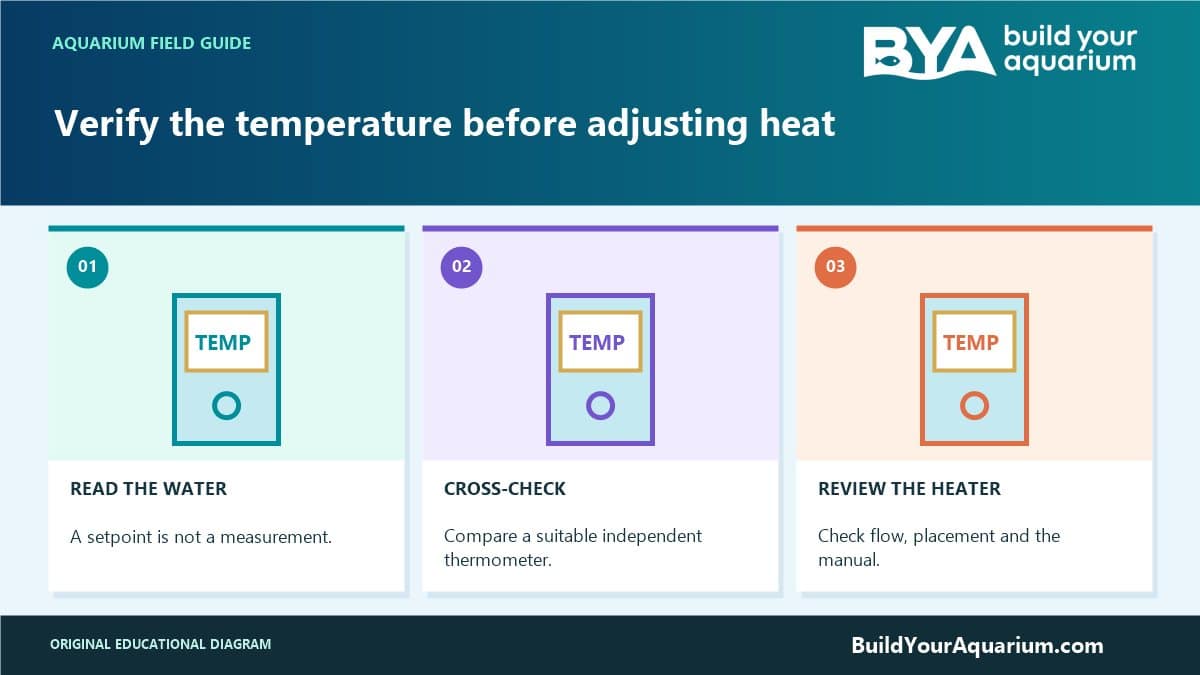
A heater setting is a target. A thermometer reading is a measurement with its own placement and accuracy limits. Neither deserves automatic trust because it has a digital display.
Compare like with like
Check a suitable independent thermometer in the aquarium. Allow it to settle as instructed and compare readings taken at similar depths and locations. Do not compare an external glass strip in a draft with a submerged probe beside the heater and assume the difference describes the entire tank.
The Merck Veterinary Manual recommends independent temperature monitoring. Keep a simple record of measured temperatures rather than only noting the heater’s dial position.
Inspect the system around the heater
Check that the heater remains within its required water level and orientation, with appropriate circulation. Check the thermometer’s battery, sensor position and condition too.
Our heater selection guide covers installation differences. The heater-sizing guide explains why tank volume alone does not determine whether a heater can maintain the target in a cold room.
Correct deliberately once the reading is dependable
Judge the measured temperature against the species’ requirements. Avoid abrupt temperature swings or compensating for a suspected fault by continually increasing the setpoint.
A damaged heater, persistent overheating or an unexplained large difference needs investigation. Follow the manufacturer’s shutdown and replacement instructions. Keep monitoring through the next heating cycle; one matching pair of readings does not show how the equipment behaves over a whole day. Record the time and probe position with each value so a location change is not mistaken for a temperature trend.