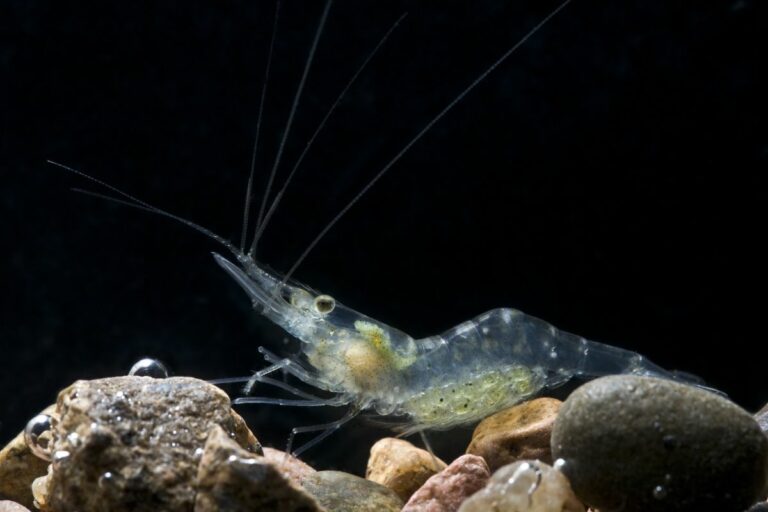
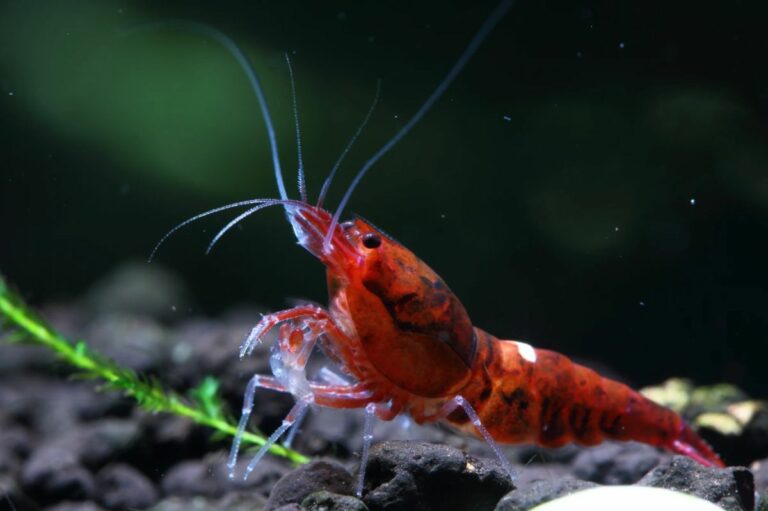
The filter still hums, but its return is weaker than it was last week. In a shrimp tank, the first restriction may be the small protective sponge on the intake rather than the filter’s main media.
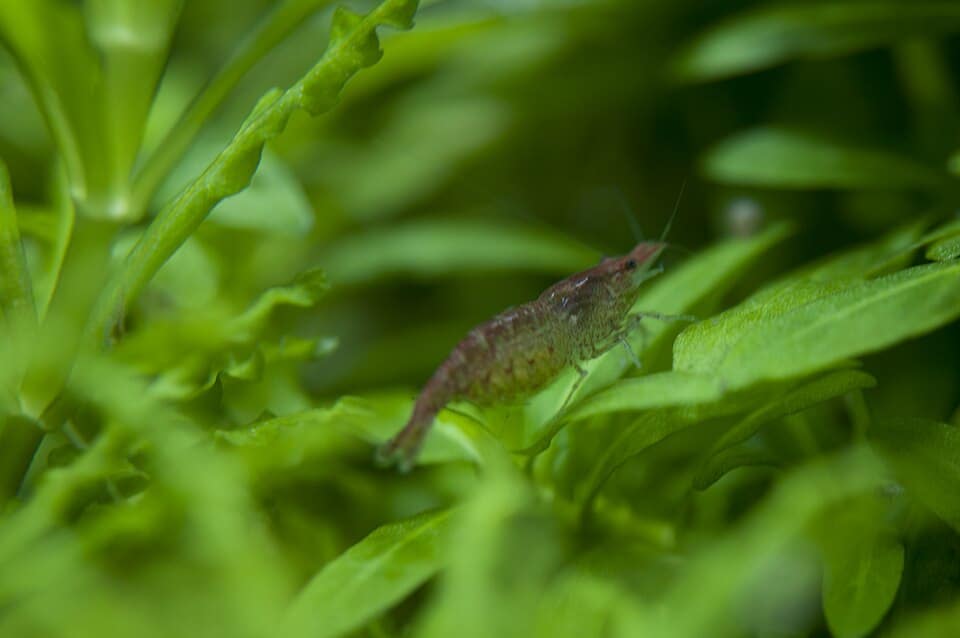
That sponge serves a useful purpose. Removing it permanently because it collects debris also removes a layer of protection for small animals.
Check fit before judging the material
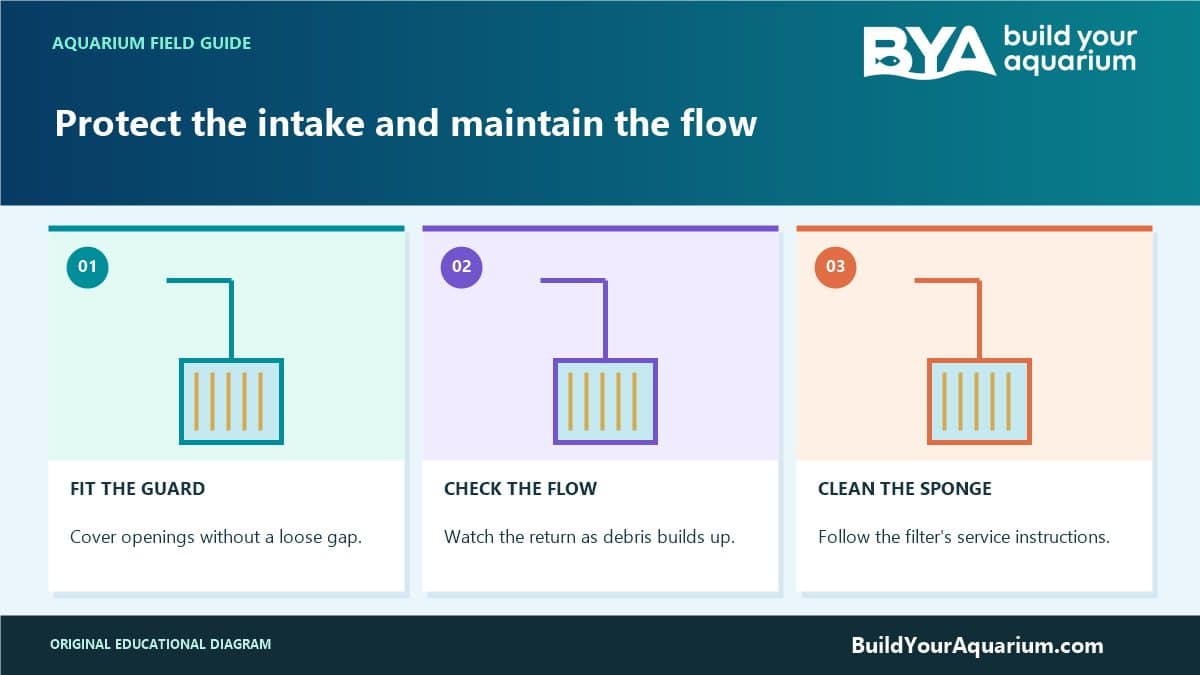
Aquarium Co-Op’s pre-filter sponge description explains how an intake guard keeps animals and debris out of larger openings. Choose a design that fits the intake and the livestock; no single pore size guarantees protection for every newly hatched animal.
Inspect for gaps, movement or a guard that can slide off. Our shrimp setup guide covers gentle filtration and planning around young shrimp.
Compare flow with the normal return
Look at the outlet during routine checks. A running motor is not proof that adequate water is moving. Check the operating water level, hose arrangement and obvious restrictions too.
Before servicing, follow the filter’s shutdown instructions and inspect the sponge for shrimp. Clean it appropriately in water suitable for preserving its established biology, without detergents. Do not replace all the main media simply because the outer guard was dirty.
Make servicing easy enough to repeat
Position the guard where you can remove and inspect it without dismantling the aquascape. A finer material can clog sooner, so choose around both protection and the maintenance you can provide.
The sponge-filter guide helps compare a separate air-driven filter with a guard fitted to another filter. They are different arrangements. After cleaning, confirm that flow has returned and the protective fitting is secure again. A short video of the normal outlet gives you a comparison for later checks without removing the guard to demonstrate the difference.