A diffuser that once produced a fine mist now releases gas unevenly or through one area. Increasing the needle valve may hide a restriction without fixing it.
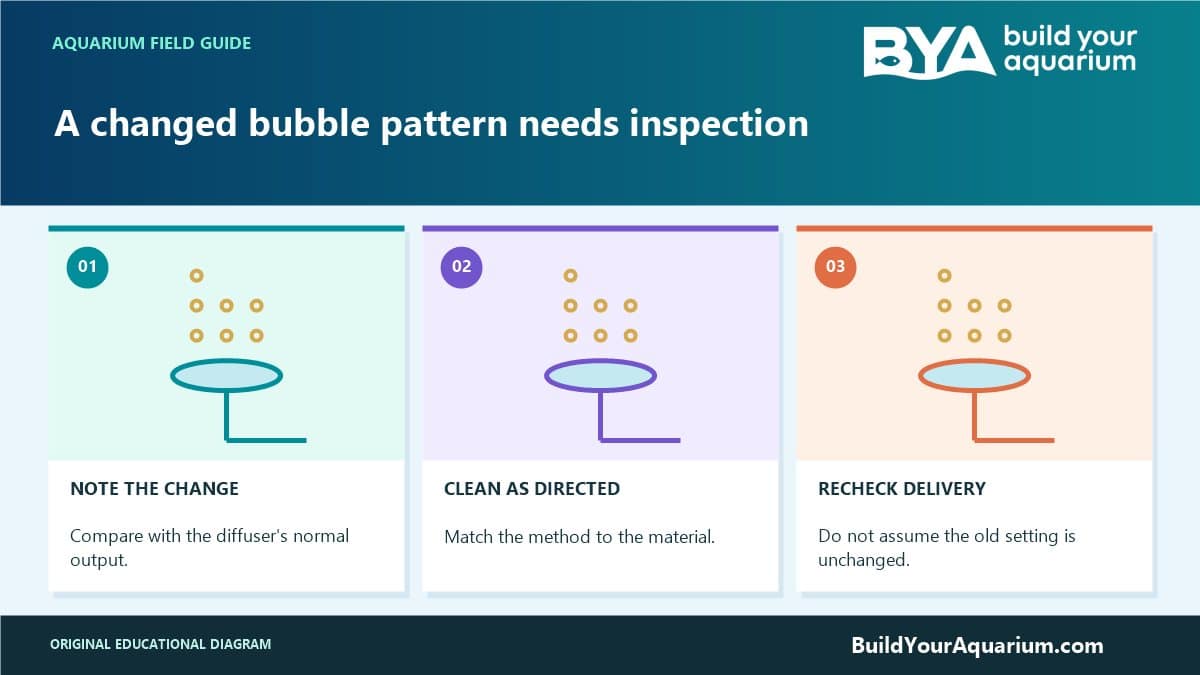
Start with the diffuser, tubing and manufacturer-specified working pressure. A different bubble pattern can reflect fouling, a damaged membrane or a connection problem; it does not identify one cause on its own.
Record the starting condition
Check when the diffuser was last serviced and whether it was moved or allowed to dry. Compare visible output with its normal behavior under the same equipment settings.
CO2Art’s cleaning guide distinguishes materials and emphasizes removing cleaning solution before reuse. Our CO2 system guide explains how delivery and dissolved concentration differ.
Use the instructions for that particular diffuser
Turn off and depressurize the relevant equipment as its manual requires before disconnecting anything. Handle glass gently and avoid forcing tubing against a fragile stem.
Use only an approved cleaning method. Do not transfer a bleach concentration or soaking time from another brand, mix cleaning chemicals, or clean with chemicals inside an occupied aquarium. Complete the specified rinsing and residue-removal process before reinstalling.
If the ceramic or housing is cracked, cleaning is not a repair. Replace the appropriate component.
Treat the restart as a new check
A cleaned disc may pass gas differently from a fouled one. Recheck output, circulation and livestock rather than assuming the old valve position produces the same result.
Keep useful surface exchange; the aeration guide covers why planted tanks still need it. If animals show respiratory distress, stop CO2 delivery, increase aeration and investigate before restarting.