

A fishless cycle establishes biological filtration before fish have to live with the waste it produces. Use a measured aquarium ammonia source, keep the filter operating, and test both ammonia and nitrite. The endpoint is demonstrated processing capacity, not a fixed date.

Why use a fishless method?
Fish release ammonia, which an established biofilter converts to nitrite and then nitrate. A new filter may not process that load. Cycling without fish avoids deliberately exposing animals to those startup conditions.
Our nitrogen-cycle guide explains the sequence. If fish are already present, do not add ammonia; use the new-tank syndrome checks instead.
Set up the tank and tests
Fill the aquarium with conditioned water and install the substrate, filter, and other equipment. Keep circulation and aeration operating. Use temperature and chemistry appropriate to the cycling method and intended aquarium.
Have tests for ammonia, nitrite, nitrate, and pH. Read their directions, ranges, and units before starting. Do not assume that all kits report ammonia on the same basis.
Established filter media from a healthy, compatible aquarium can provide a starting colony. Keep it wet, avoid taking so much that the donor tank loses capacity, and consider the risk of transferring disease or pests.
Use a measured ammonia source
A purpose-made aquarium ammonium chloride solution makes the dose easier to control than decaying food. Follow the bottle and its matching cycling method. Do not use a household cleaner containing detergent, fragrance, or other additives.
For one documented example, DrTim’s fishless protocol uses a target of 2 ppm ammonia-nitrogen and specifies when to redose. That target and its drop count belong to that product and method; do not transfer the drop count to another solution.
Track the readings before adding more
Record the dose, date, ammonia, nitrite, and pH. Ammonia can begin falling while nitrite remains elevated. Continue the process rather than calling the tank ready after the first ammonia drop.
Do not add ammonia every day without checking the method and readings. Excess accumulation can slow progress. If readings exceed the kit range, confirm them as instructed and use the protocol’s corrective steps rather than adding more.
Confirm the endpoint and prepare for fish
Use the final challenge in the selected method: supply its measured ammonia load and verify that ammonia and nitrite fall to its completion criteria in the stated interval. Simply seeing zero after a long period with no ammonia source does not demonstrate the same capacity.
After completion, reduce nitrate and prepare temperature and chemistry for the intended animals. Stop ammonia dosing before adding fish. Stock gradually, monitor the tests, and do not assume cycling permits unlimited stocking.
What about fish food or a dead shrimp?
Organic material releases ammonia as it decomposes, but its dose and release rate are harder to predict. It can also leave debris and encourage cloudiness. More rotting material does not automatically establish a better filter.
A measured ammonia product offers clearer control for a first attempt. Whichever method you use, do not combine unrelated schedules or add animals before confirming readiness.
If progress stalls
Check testing technique, conditioner compatibility, pH and buffering, temperature, and whether the filter stayed wet and running. Review the product directions before changing several conditions at once. Our cycling troubleshooting guide covers the main checks.
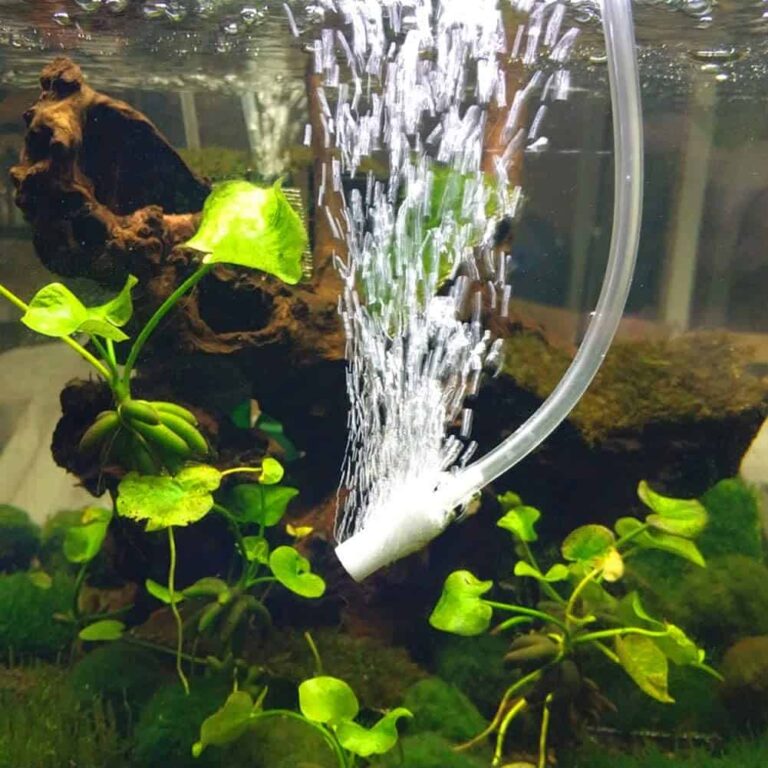

There are bacteria that feed on nitrate but they are difficult to establish in a small aquarium. They require 4-6 months to establish under ideal conditions. They are called Anaerobic bacteria and require zero oxygen to survive. Check out the DIY filters and media for establishing these bacteria.
Thank you. This was the best and most detailed info I’ve read overall, regarding fishless cycling and I’m very patient doing it this way. So again thank you.
Hi, I’m cycling freshwater aquarium with ammonia.
It has been 15 days and ammonia goes back to almost 0ppm everyday as I add to bring back up. Nitrate stuck at 2+ ppm will not move and nitrate off the charts. 55 gal. Tank…should I continue to keep doing what I’m doing…
Thankyou
Pure ammonia method is the easiest and best way to go – especially if you want to really stock your aquarium. I purchased janitorial ammonia at an Ace Hardware store for $3.00
I’ve used it to cycle all of my aquariums. Heads up wipe the bottom and sides of the aquarium before adding substrate and decor (with an old filter pad or sponge) then follow immediately with water. It helps with seeding. Bio balls, sponge, and pond matrix are great filter media that adhere lots of bacteria!
Happy Aquaria life!!
thanks i am trying to get an axolotl, and this is soooooo good for me.
I have been doing a fishless cycle for about 9 days with seeded filter media from my other tank that I put into my new hang on the back filter. I have added fish flakes and pellets and I have been adding Stability every day. Is there something wrong that I have been doing? I cannot get the ammonia to spike and my nitrites are also at 0. My nitrates are around 20 ppm. I have been testing every day with the API Master Test kit and the ammonia vial only shows bright yellow with no hint of green. The nitrites are always showing crisp light blue…no hint of any sort of purple hue. Should I ditch the Stability? Should I add an aquarium safe ammonia additive? I don’t know. I was sort of expecting to have some sort of evidence that there was a little ammonia kicking up by now.