The lights go out and the heater stops. It is tempting to think only about keeping the aquarium warm. But the filter and circulation have stopped too, and oxygen can become the more immediate concern in a heavily stocked tank.
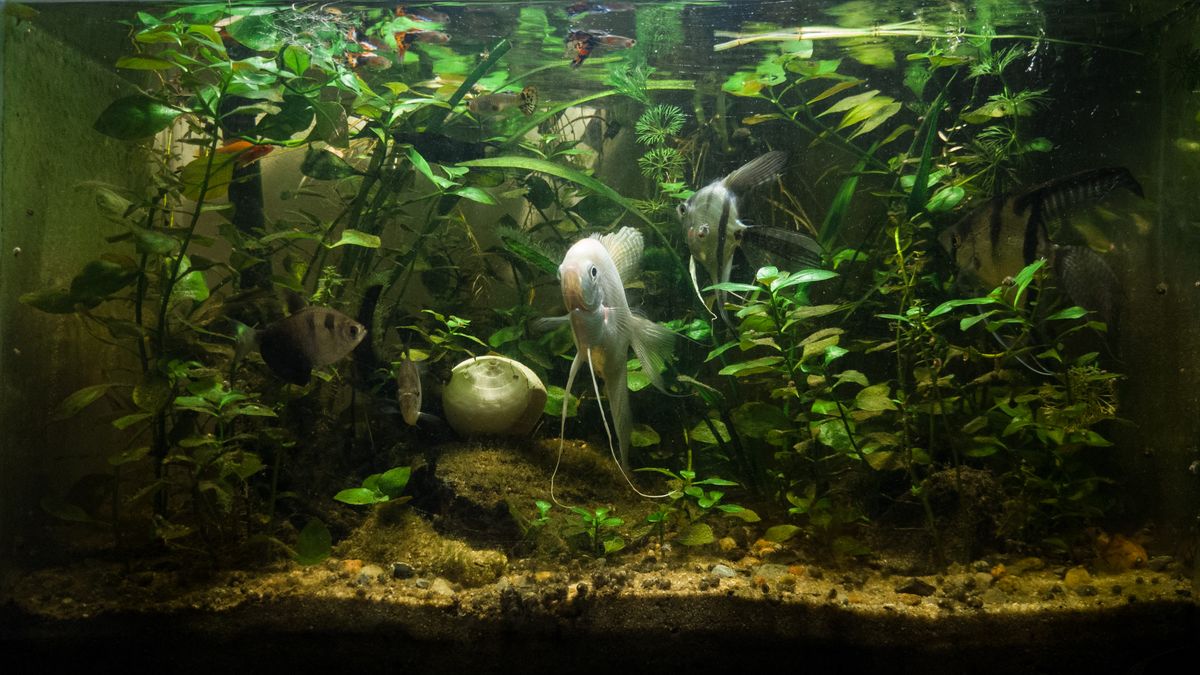
Check the animals, the thermometer and the equipment you can actually power. There is no single safe outage duration for every aquarium: stocking, temperature, surface movement and species all change the situation.
Restore useful water movement
Aquarium Co-Op’s outage guidance emphasizes emergency aeration. A battery-powered air pump can keep an air stone or suitable sponge filter moving water when mains-powered equipment is unavailable. Test the backup before an emergency and keep the necessary batteries charged.
Position it to disturb the surface, with airline protection installed as its instructions require. An air stone helps gas exchange through circulation; a display full of bubbles is not a measurement of dissolved oxygen. The aeration guide explains the role of surface movement.
Measure temperature before adding heat
Aquariums cool at different rates. Note the actual water temperature and how quickly it changes, rather than assuming it immediately matches the room. Keep the system away from drafts where practical and consider suitable external insulation without covering vents, lights or electrical connections.
Do not pour hot water into a stocked tank or put an aquarium heater on a power source that cannot safely support it. During hot weather, overheating may be the issue instead. Choose equipment and any intervention around the animals’ requirements.
Reduce the load while you wait
Fluval advises withholding food during an outage to limit oxygen demand and waste. That is a useful short-term measure for many healthy adult fish, not permission to apply the same fasting plan to larvae or specialist animals without checking their needs.
Keep biological media wet and avoid unnecessary disturbance. When power returns, check that each pump actually restarts and that water is passing through the filter. Restore equipment according to its manual; a stopped canister or sump needs inspection, not an assumption that everything resumed normally.
Test ammonia and nitrite after the interruption and continue watching breathing and behavior. For preparation, compare air pump options by backup operation and suitable output. A backup that has been tested under your conditions is more useful than an unopened device in a cupboard.