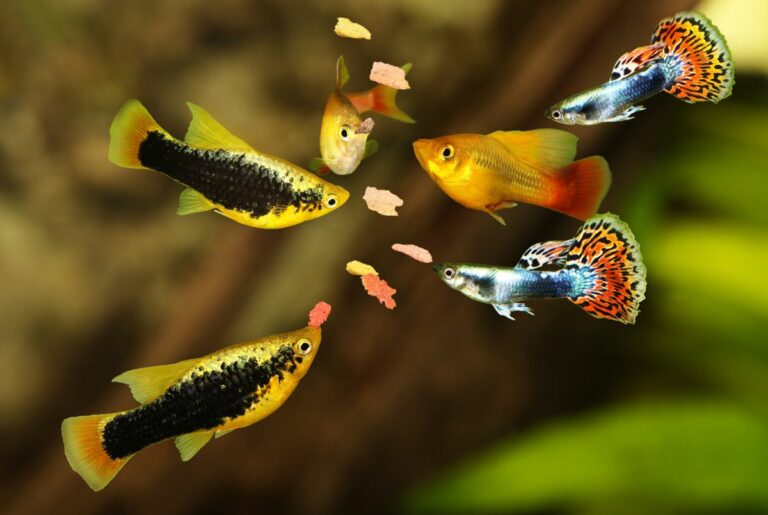
The fish-food container is still within its printed date, but it has spent months beside a humid aquarium hood. The date cannot account for every condition after the seal was opened.
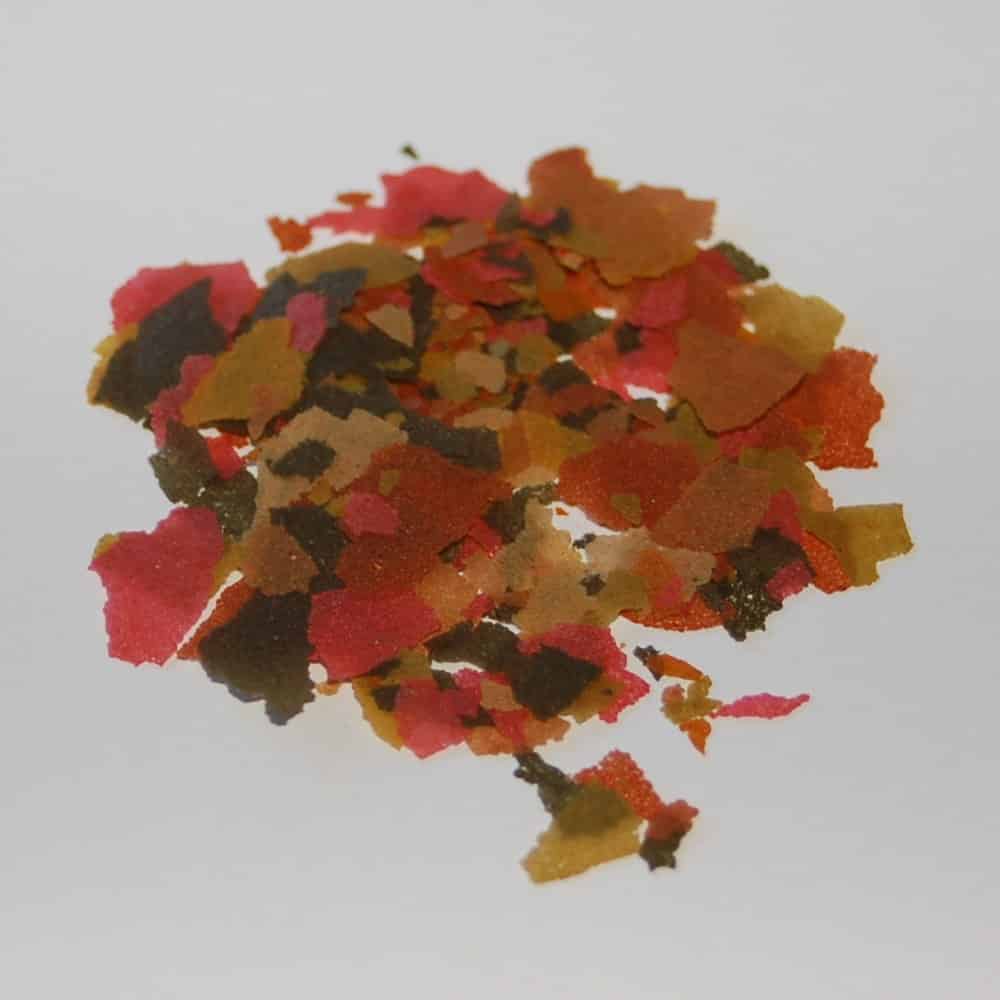
Check storage as part of the feeding routine, especially if particles clump or the container has been exposed to water.
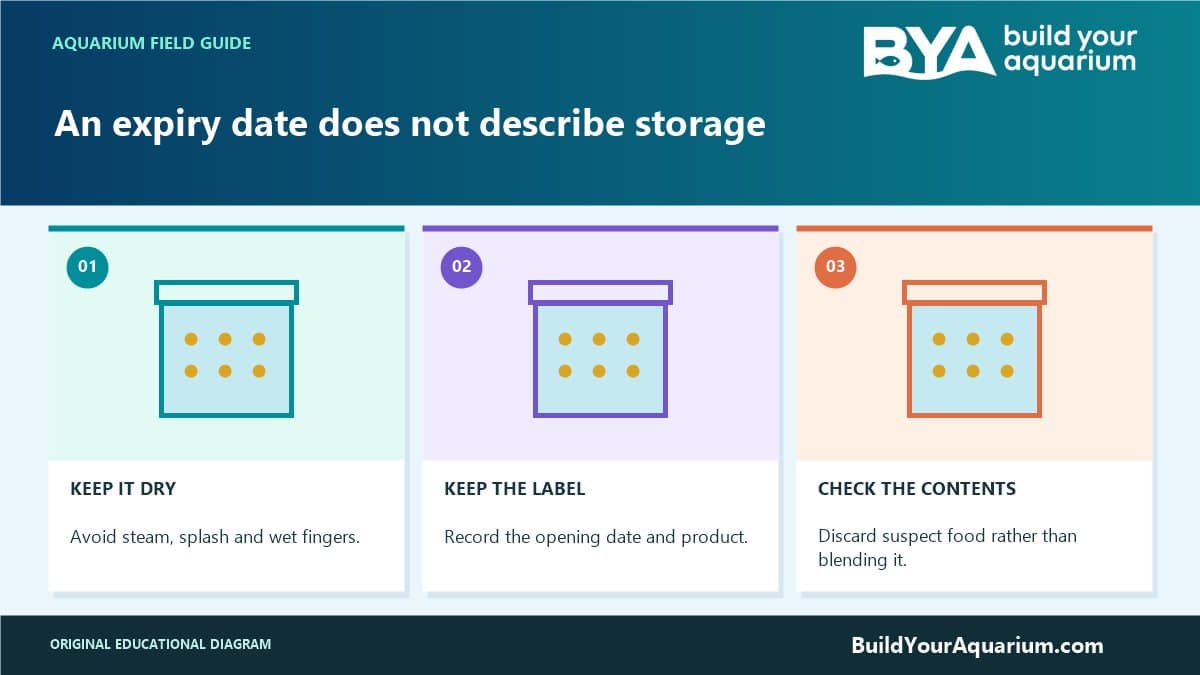
Keep moisture out at the point of use
Use dry hands or a dry measuring tool and close the lid promptly. Store the product as its label directs, away from splash, excessive heat and direct light.
Tetra’s storage guidance warns about humidity and mold, and notes the missing freshness information associated with re-bagged food. Original packaging preserves the product identity, batch and storage instructions.
Buy an amount you can use sensibly
A large tub is not automatically economical if a small aquarium takes a very long time to finish it. Match the pack size to the actual routine rather than increasing portions to use an old purchase.
Record when you opened it. There is no universal after-opening lifetime for every dry food, so follow the particular manufacturer’s advice rather than imposing one number across flakes, pellets and specialty products.
Our feeding guide covers portions and nutritional fit. Storage is a separate reason to reconsider what is in the cupboard.
Inspect before topping up a feeder
Do not mix fresh food into damp, visibly moldy or otherwise suspect leftovers. Follow the label or manufacturer when the condition is uncertain, and clean and dry the feeder as instructed.
Keep the maintenance checklist broad enough to include food and supplies. A well-maintained filter cannot make spoiled food a sensible purchase or a reliable meal.