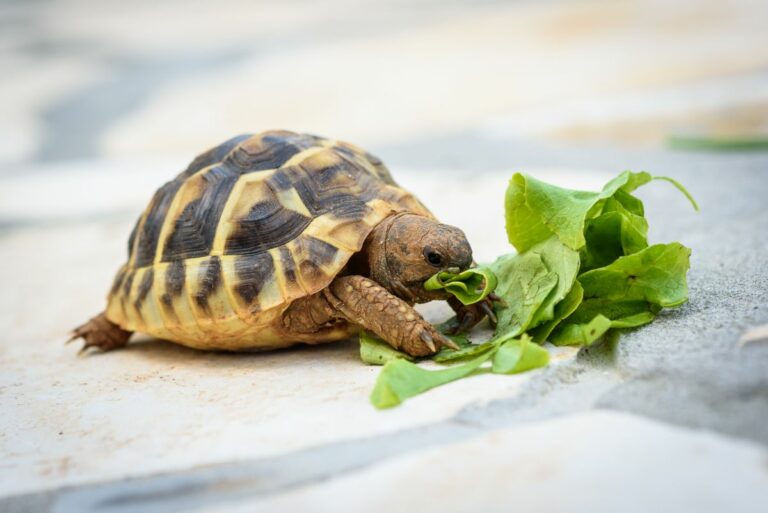
The spotted turtle, Clemmys guttata, is a small North American turtle that needs shallow, accessible water and usable land. Its size does not make it a low-maintenance pet: a small water volume can become polluted quickly, and enclosure design matters as much as filtration.

Which spotted turtle?
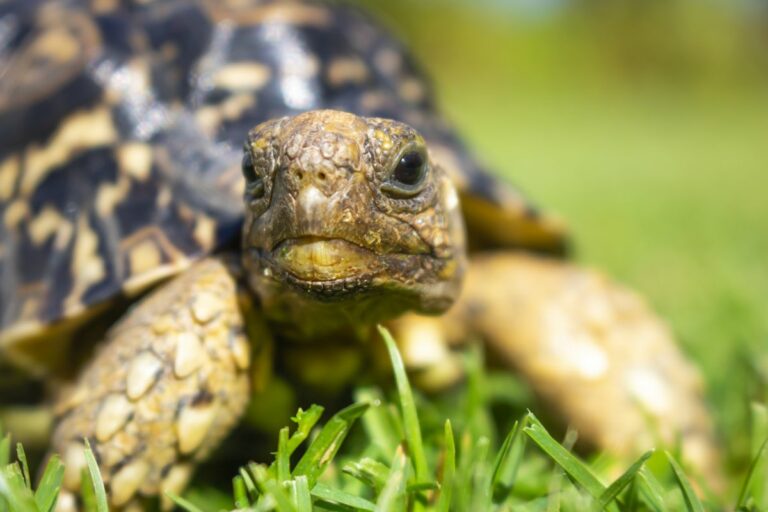
This guide covers Clemmys guttata, recognizable by yellow spots on a dark shell and skin. Adults are commonly around 3.5–5 inches (9–13 cm) in shell length. It is not the Indian spotted pond turtle, a different species, and it is not a box turtle.
The Cleveland Metroparks Zoo profile describes its appearance and shallow wetland habitat. Spotted turtles use both land and water in parts of the eastern United States and Great Lakes region.
Expect a commitment lasting decades. Before acquiring one, verify the scientific name, lawful source and local possession requirements. Leave wild turtles in their habitat.
Build around access to the surface

A broad enclosure is more useful than a tall aquarium. A 40-gallon breeder-sized footprint is a starting point for planning one adult, with larger accommodation making it easier to provide both land and water. The nominal gallon label is not the amount of swimming water available after dividing the enclosure.
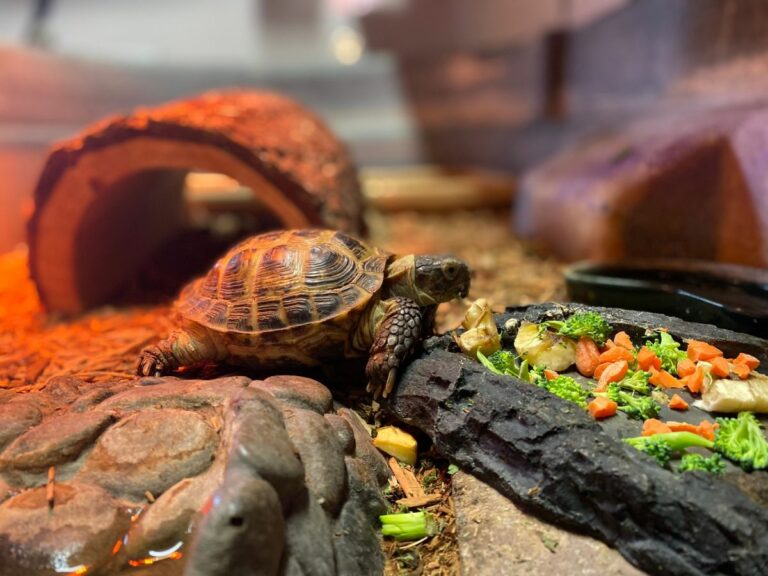
Provide a substantial land section with cover, damp digging substrate and a dry basking area. In their firsthand spotted turtle care account, keepers describe a roughly equal land-and-water arrangement rather than a tank filled to the top.
Use shallow water with stable resting places, gently sloping exits and several easy routes to breathe. Hatchlings and weak animals need particular care. Do not assume a setup suitable for a strong-swimming slider is suitable here, or put a spotted turtle into a deep koi pond as a default.
Secure rocks and branches against collapse. Check ramps, gaps and filter intakes for trapping hazards, and keep the enclosure escape-proof.
Filtration and hygiene
Install a biological filter and cycle the enclosure. Choose equipment that works at the actual water depth and volume without creating an overpowering current.
Test ammonia and nitrite, remove uneaten food and perform partial water changes with conditioned water. Less water does not automatically mean less work. Follow our cleaning guide rather than replacing all filter media whenever the tank looks dirty.
Clean water does not make a turtle free of germs. The CDC notes that healthy-looking reptiles can carry Salmonella. Wash hands after contact with the animal or its equipment, and keep tank cleaning away from food-preparation areas.
Warmth, shade and UVB

Provide a temperature gradient rather than heating the entire enclosure to the basking temperature. Water in the low 70s°F, around 21–24°C, and a warmer basking area around 85–95°F (29–35°C) are useful reference conditions. Measure the actual surfaces and water, provide cooler shaded retreats and avoid overheating.
Spotted turtles are ectotherms: their surroundings strongly influence body temperature. Provide appropriate UVB during the day alongside a suitable heat source. A household light or heater does not supply UVB.
Follow the exact lamp and fixture guidance for distance, mesh and replacement; provide shade within the enclosure. Our turtle UVB guide explains why bulb percentages and a universal mounting distance are insufficient.
Food and housing companions
Offer a varied diet with an appropriate formulated aquatic turtle food and suitably sized invertebrates such as earthworms and snails from safe sources. Include appropriate plant foods. Feed where the turtle can take food in water, then remove leftovers.
Do not reduce feeding to a fixed “75% protein” rule or assume dried shrimp is a complete diet. Adjust portions and frequency to age, activity and body condition; assess supplements against the whole diet and lighting.
Housing one turtle avoids many compatibility problems. Other turtles can bite or harass it, and fish or shrimp may be eaten. Small size and a shy temperament do not guarantee a safe mixed enclosure.