The eastern box turtle, Terrapene carolina carolina, needs a spacious land enclosure with humid shelter, shallow bathing water, warmth and UVB. Its care should be planned around usable floor space, not an aquatic turtle’s gallons-per-inch rule.

A land turtle with a closing shell
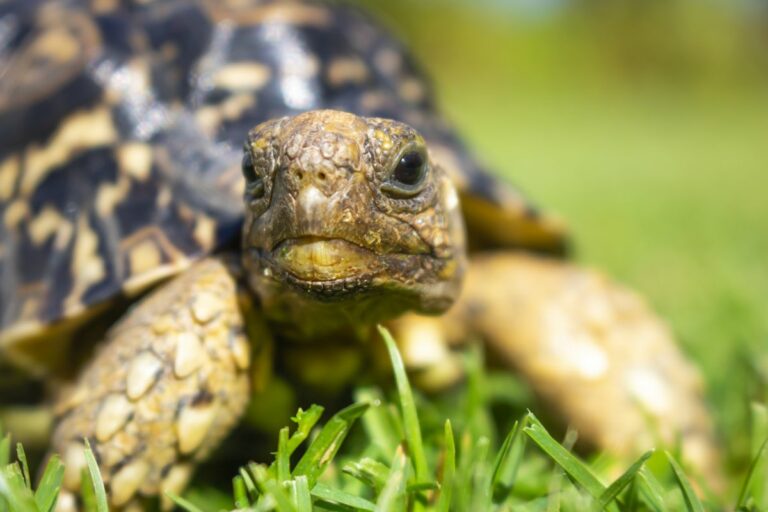
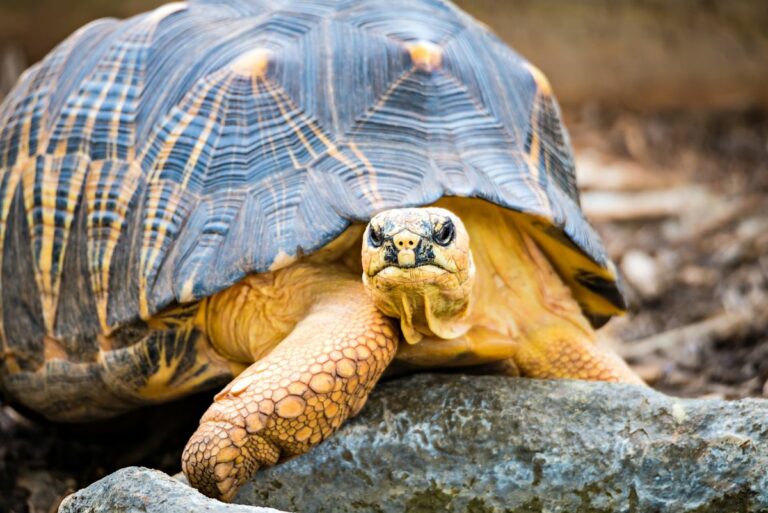
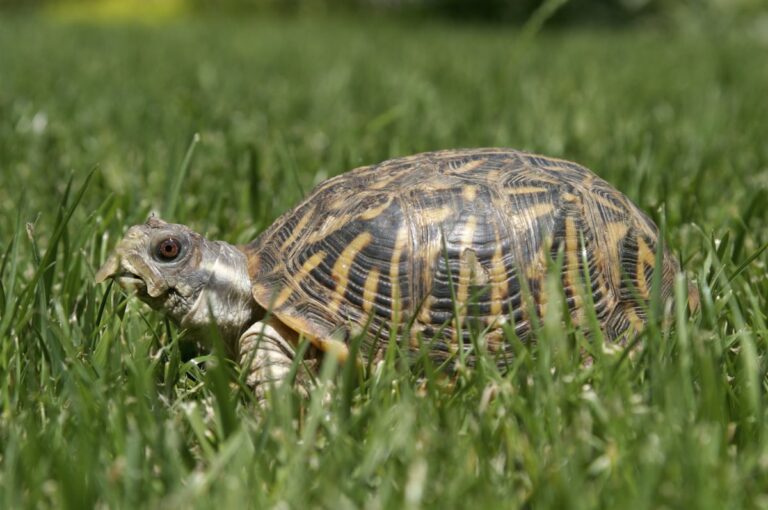
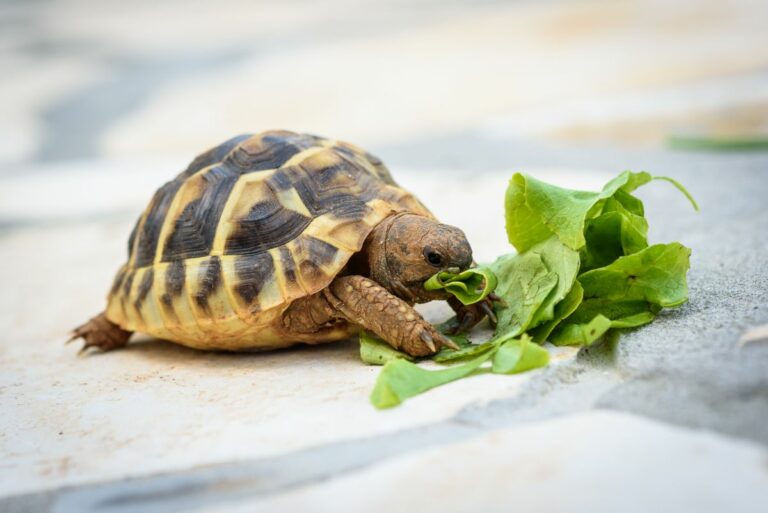
A high-domed shell, yellow or orange markings and a hinged lower shell distinguish the eastern box turtle. The hinge lets it withdraw and close much of the shell opening. A turtle that shuts itself away is asking for cover, not an invitation to pry it open.
This is a mainly terrestrial turtle from the eastern United States. The Smithsonian National Zoo profile describes its woodland and meadow habitats and varied feeding habits.
Adults commonly reach around 5–7 inches (13–18 cm), with individual variation. Plan for decades of care rather than treating an exceptional century-old record as an expected lifespan.
Enclosure and humidity

Choose a broad pen or purpose-built terrestrial enclosure. As a conservative planning size for one adult, allow roughly 6 × 3 feet (1.8 × 0.9 m) of floor space, with more room where possible. A 75-gallon label alone does not establish that an enclosure provides enough usable ground.
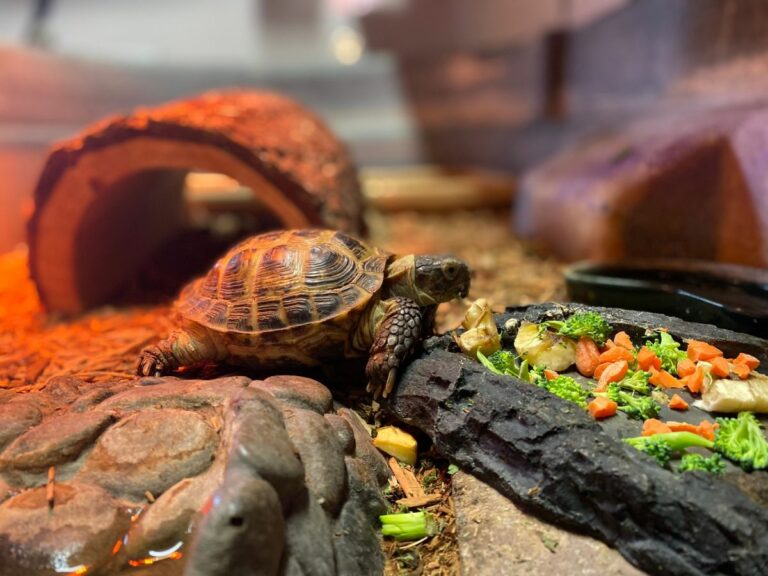
The ReptiFiles husbandry guide emphasizes floor space, digging substrate and humid retreats. Provide deep, safe, moisture-retaining substrate, leaf litter and covered resting areas. Keep a humid hide available, especially for young animals, without leaving the entire enclosure waterlogged.
Outdoor pens need shade and sun, drainage, protection from predators, and barriers against climbing and digging escapes. Outdoor housing is only appropriate when local conditions meet the turtle’s needs. Have suitable indoor accommodation ready for unsuitable weather.
Shallow water, not an aquatic setup
Provide a stable bathing dish the turtle can enter and leave easily. Keep it shallow enough for the animal to rest with its head comfortably above water, with a secure, gentle exit. Never force it into a deep pool.
Replace the water daily and whenever fouled, and scrub the dish routinely. A filter does not remove the need to deal with feces and dirty water. Our turtle enclosure cleaning guide covers equipment hygiene; the routine for a small bathing dish is simpler than maintaining an aquatic tank.
Heat and UVB
Provide a daytime basking area around 85–90°F (29–32°C), with a cooler retreat around 70–75°F (21–24°C). Measure conditions at turtle level. Do not heat the whole enclosure to the basking temperature or expose a confined outdoor turtle to uninterrupted sun.
Use appropriate UVB during the day, positioned according to the exact lamp and fixture instructions. Provide shade so the turtle can leave the exposed area. Our UVB lighting guide explains why distance, screens and reflector design matter.
Dietary vitamin D3 is not a reason to improvise lighting or supplement doses. Assess food, calcium, vitamins and UVB together. Winter brumation also needs a deliberate, species-appropriate plan with an experienced reptile veterinarian; it is not achieved by simply switching off the heat.
What to feed

Eastern box turtles are omnivores. Offer a varied combination of suitable invertebrates, greens and other vegetables, with small amounts of fruit. Appropriate formulated box turtle food can be part of the plan, rather than using a dried shrimp mix intended as a treat.
Useful animal foods include appropriately sized earthworms, crickets and captive-bred snails from safe sources. Plant choices include dandelion, endive, collard or mustard greens and squash. Avoid making one favorite item the whole diet.
The Minnesota Herpetological Society care sheet offers food examples and stresses variety. Young turtles generally need more frequent meals than adults. Adjust portions and supplements to growth, body condition and the full diet rather than promising that a generic vitamin dusting fixes every deficiency.
Handling and responsible acquisition
Support the body securely for necessary handling and keep the animal close to a safe surface. A withdrawn turtle needs patience and cover; it can still bite. Wash hands after contact and keep its equipment away from food-preparation areas.
Housing one animal avoids unwanted mating pressure and many compatibility problems. Do not assume a mild temperament guarantees safe group housing.
Leave wild box turtles in the wild. Before acquiring a captive-bred animal or adopting one, check current local possession and transfer rules. Never release a captive turtle, and do not relocate a wild turtle far from its home area.