A western painted turtle can become a substantial aquatic pet, especially if it is female. Plan for adult swimming space, a completely dry basking platform, appropriate UVB and a cycled filter before buying a small hatchling.
Adult size and identification

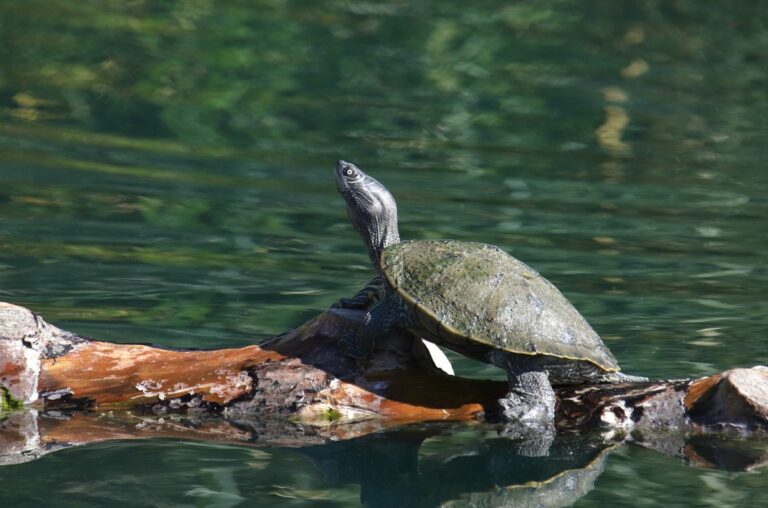
The western painted turtle is Chrysemys picta bellii. Its striped skin and brightly patterned lower shell help distinguish it from other painted turtles. It is not a general name for every painted turtle in North America.
The Calgary Zoo species profile identifies it as the largest painted turtle subspecies, reaching about 10 inches (25 cm). Males are usually smaller than females. Confirm the subspecies and plan accommodation for the larger adult possibility.
Painted turtles occupy slow-moving freshwater habitats with vegetation and basking sites. The Missouri Department of Conservation account separates the western form from the southern painted turtle, now commonly treated as the species Chrysemys dorsalis.
Tank size and layout
For an adult, plan around a broad 75-gallon enclosure for a male and roughly 125 gallons or more for a large female. These are practical starting references, not a substitute for checking length, width and usable swimming space.
The Austin’s Turtle Page husbandry account uses this scale of housing and describes painted turtles as accomplished swimmers. A 40-gallon tank is not a dependable permanent plan for every western painted turtle.
Provide open swimming room, submerged resting places and a stable platform where the entire animal can leave the water and dry. Hatchlings still need cover and easy surface access. Keep gaps and filter intakes safe, secure heavy furnishings and prevent escapes.
A mature female may need a suitable nesting area even without a male. Basking and nesting serve different purposes; one small dock does not necessarily satisfy both.
Water quality comes before appearance
Cycle the biological filter, test ammonia and nitrite, and remove uneaten food. Make partial changes with conditioned replacement water and maintain the filter without repeatedly replacing all biological media.
Choose filtration for the working water volume and turtle waste load. Clear water is not proof that the system is processing waste safely. Our turtle tank cleaning guide explains a practical routine.
Heat, UVB and shade
For a healthy adult, water in the low-to-mid 70s°F, roughly 22–24°C, is a useful starting reference. Young animals may need warmer conditions. Provide a localized basking area around 85–92°F (29–33°C), with cooler retreats and room to leave the heat.
Measure the water and basking surface rather than guessing from bulb wattage. Use protected, controlled heating equipment where needed. An enclosure should not be uniformly heated to the basking temperature.
Provide appropriate daytime UVB as well as warmth. UVB supports vitamin D3 production and calcium metabolism; it is not a substitute for cleaning or a germ-killing treatment for the shell. Follow the exact lamp and fixture instructions, including screening and replacement. See our UVB lighting guide.
Outdoor housing needs suitable weather, shade, clean water, predator protection and escape barriers. Wild winter survival does not justify an improvised captive brumation setup.
A varied diet with room for plant foods
Western painted turtles eat both animal and plant material; younger animals generally eat more animal food than adults. Offer an appropriate formulated aquatic turtle food, suitable greens or aquatic plants, and varied invertebrates from safe sources.
Useful greens include dandelion, endive, collard and romaine. Do not make spinach, fruit, bare meat or dried shrimp the whole diet. Avoid collecting feeders from pesticide-treated ground or uncertain water sources.
Young turtles generally need more frequent meals than adults. Adjust portions to growth, activity and body condition, and assess supplements against the complete diet and lighting.
Handling and long-term responsibility
These turtles are mainly pets to observe. Handle only when necessary, supporting the body, and wash hands after contact with the animal or equipment.
Housing one turtle avoids many conflicts. Similar size or shared wild basking sites do not guarantee safe cohabitation in a tank, and fish or shrimp may be eaten.
Expect decades of care. Obtain a documented lawful animal, leave wild turtles in their habitat and never release a captive turtle into a local pond.