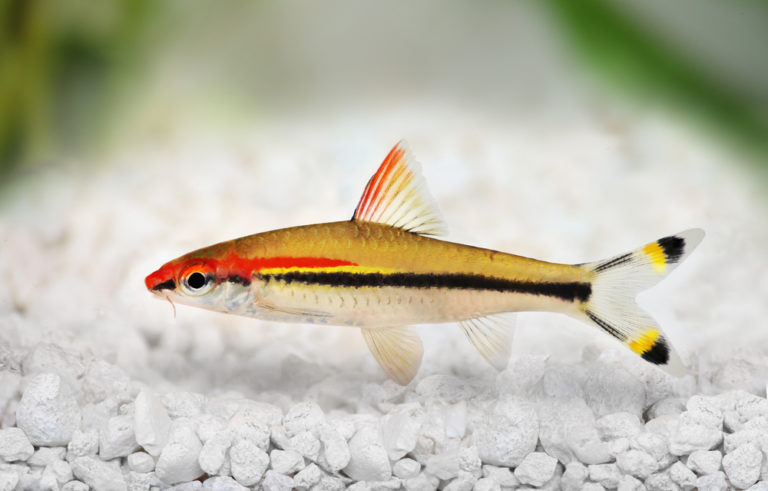
Panda cories are small, social catfish with dark patches across the eyes, dorsal fin and tail base. They are a distinct species, Hoplisoma panda, long sold as Corydoras panda—not simply a panda-colored version of every other cory.

A group and a useful bottom footprint
Keep at least six panda cories. Mixing one panda with several unrelated cory species does not provide the same social group. A 20-gallon long aquarium is a practical starting choice, with more space when adding companions.

Adults are roughly 5 cm (2 inches). Plan several years of care rather than expecting a short-lived cleanup fish. Longfin forms need the same group and habitat, with additional attention to fin-nipping companions.
ScotCat’s panda cory profile explains the current genus name and gives their Peruvian origin. Common availability in shops does not establish the status of wild populations.
Water, substrate and cover

A useful everyday range is about 22–24°C (72–75°F), pH 6.0–7.4 and soft to moderately hard water. They are not a default choice for persistently hot discus conditions. Seriously Fish’s species account discusses their relatively cool stream habitats and care requirements.
Use fine, smooth sand or a similarly safe substrate, with open feeding areas and shaded retreats. Secure wood and rocks before fish dig around them. Broad-leaved plants and floating cover can create sheltered edges without filling the whole bottom.
Complete the nitrogen cycle before stocking, maintain zero ammonia and nitrite and keep the substrate clean. Provide surface movement and oxygenation, with calmer areas for resting. A separate powerhead is not automatically necessary.
Food must reach the group
Offer suitable sinking omnivore or carnivore foods and varied small aquatic foods such as frozen Artemia or Daphnia. Watch the cories eat. They are not algae eaters, and rooting through the sand does not prove they have enough food.
Spread food between accessible areas when more dominant fish take everything. Remove leftovers and adjust portions to the group’s condition. See our general cory care guide for feeding and maintenance principles.
Companions and health

Choose peaceful small fish with genuinely overlapping temperatures and chemistry. Suitable neon tetra combinations deserve assessment; warmer-water species should not be chosen simply because they are also called tetras.
Avoid predators, fin nippers and territorial bottom dwellers. Defensive fin spines do not make a cory safe inside a predator’s mouth. Handle with care because those spines can snag mesh.
An occasional surface gulp can occur, but frequent gasping, injured barbels, poor balance or declining appetite calls for checking water quality and investigating illness. Quarantine arrivals and use diagnosis-specific treatment guidance. Breeding is possible, but a fuller female is not a reason to make repeated cold-water changes; provide stable conditions and prepare suitable fry housing first.