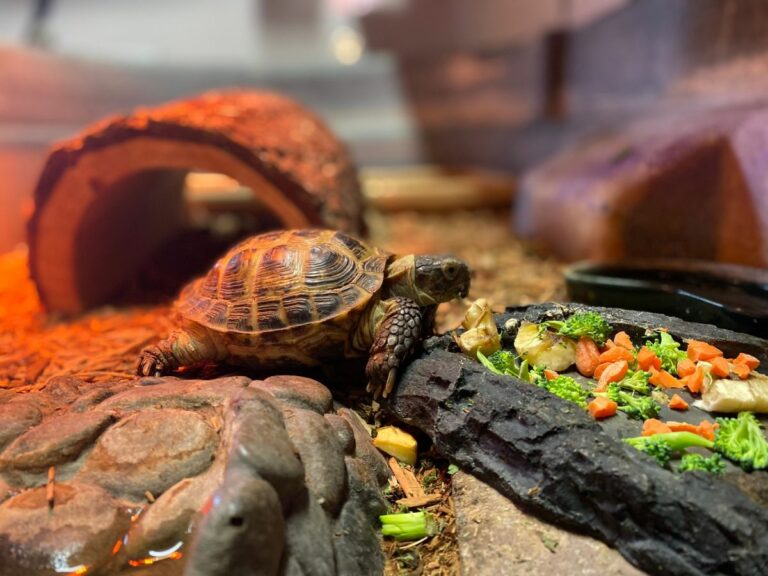
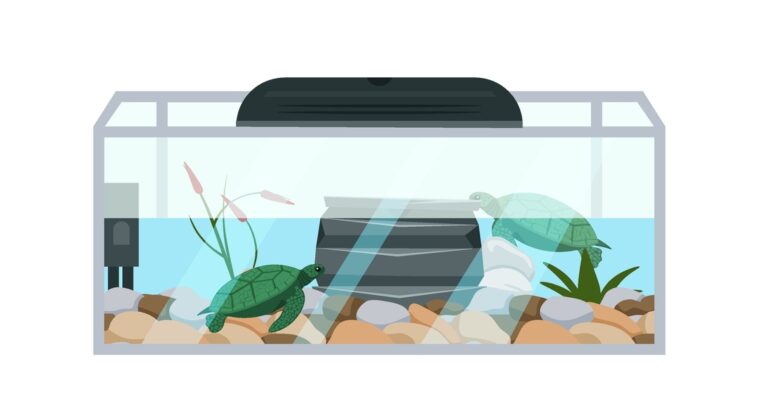
The razorback musk turtle, Sternotherus carinatus, is a small aquatic turtle with a sharply keeled shell and a preference for exploring submerged structure. It needs clean filtered water, easy routes to the surface and an accessible dry basking area. Small adult size does not make a tiny bowl or an unfiltered shallow tray suitable.

Identification and size
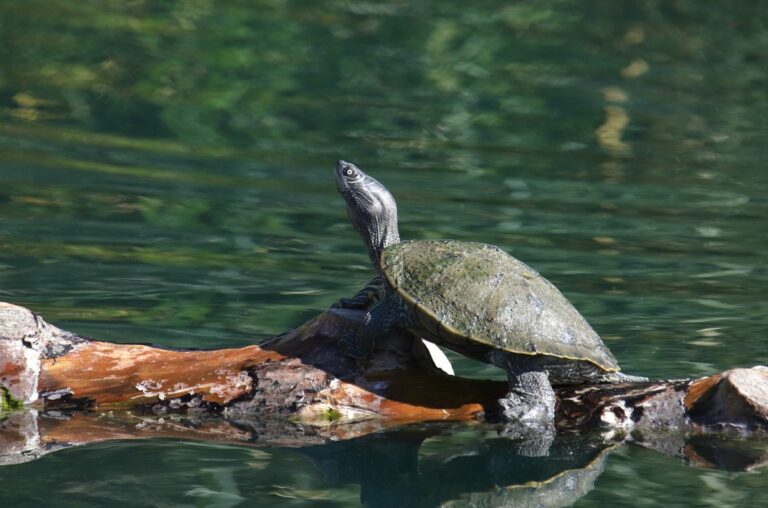
The raised ridge along the upper shell gives the razorback its name. The musk glands produce a defensive secretion, which explains the other part of the common name. Shell colour ranges through brown and orange tones, often with darker markings, while the skin may be speckled.
Plan for a shell length around 13–15 cm, with individual variation. A figure of 16 cm refers to a large animal’s shell length, not the height of its shell. This is a decades-long commitment rather than a short-lived pet.
Wild habitat and sourcing

The species occurs in south-central US drainages. The Oklahoma Department of Wildlife Conservation profile describes turtles walking along stream bottoms, sheltering under wood or rocks and using emergent deadwood for basking.

Choose a documented captive-bred animal from a responsible source. A broad conservation label does not establish that collection is permitted everywhere. Check applicable requirements before acquisition or transport, and never release a pet turtle into local water.
Enclosure size and water depth
A 40-gallon breeder-style aquarium or larger is a useful adult starting plan because of its floor area. All Pets Veterinary Hospital recommends that size for one adult. A smaller 24-inch enclosure is not an equivalent substitute merely because the turtle fits inside it.
Provide plenty of submerged resting places and climbing routes. Adapt depth to the turtle’s size, condition and demonstrated ability to surface; hatchlings and weak individuals need especially easy access. Avoid steep-sided empty tanks where the animal must swim continuously to breathe.
Razorbacks can use deeper water with suitable structure. The experienced-keeper account at Austin’s Turtle Page specifically notes this, so describing every razorback as unable to tolerate more than a few inches is misleading.

Secure wood and rocks so they cannot shift or trap the turtle. Use hides with safe exits and avoid loose stones small enough to swallow. Cover escape routes while preserving ventilation.
Heat, UVB and clean water
For a healthy normally active animal, water around 24–26°C and a dry basking surface around 31–33°C are practical starting conditions. Measure both; a lamp’s wattage is not a temperature reading. Adjust with qualified advice for age or health needs.
Provide suitable UVB with a choice of shaded areas, even if the turtle seldom basks when watched. See our UVB lighting guide for lamp distance and measurement. The ability to hide is part of the setup, not evidence the lamp should be removed.
Establish the biological filter before introduction and test ammonia and nitrite. Remove food waste, make conditioned water changes and preserve biological media during cleaning. Our guides cover cycling and routine maintenance.
Feeding a bottom-oriented turtle
Animal foods form much of this species’ natural diet, including molluscs and aquatic invertebrates. In captivity, use an appropriate nutritionally formulated turtle food alongside suitable varied foods such as earthworms and safely sourced aquatic invertebrates. Present food where the turtle can reach it.
A red-eared slider’s leafy-food proportions are not a universal musk turtle recipe. Nor is a mixture of dried shrimp and plain fish fillet a complete diet. Review calcium and other supplements against the actual food used with a reptile veterinarian; avoid stacking vitamin products blindly.
Growing young usually need more frequent feeding than adults. Adjust portions to body condition and growth, remove leftovers and consult our turtle diet overview for the distinction between staple foods and treats.
Housing alone and monitoring health

Housing one is the simplest plan. Musk turtles do not require a companion, and aggression or persistent mating pressure can injure another turtle. Fish and small invertebrates may become prey. Do not treat an aquarium full of other turtles as the default setup.
Handle minimally and support the animal securely; fearfulness does not make biting impossible. Wash hands after handling or cleaning reptile equipment.
Loss of appetite, abnormal breathing or buoyancy, weakness, wounds and changing shell condition need prompt investigation. Check temperatures and water quality while arranging reptile veterinary care. Do not diagnose all shell changes as one deficiency or assume increasing heat cures infection.