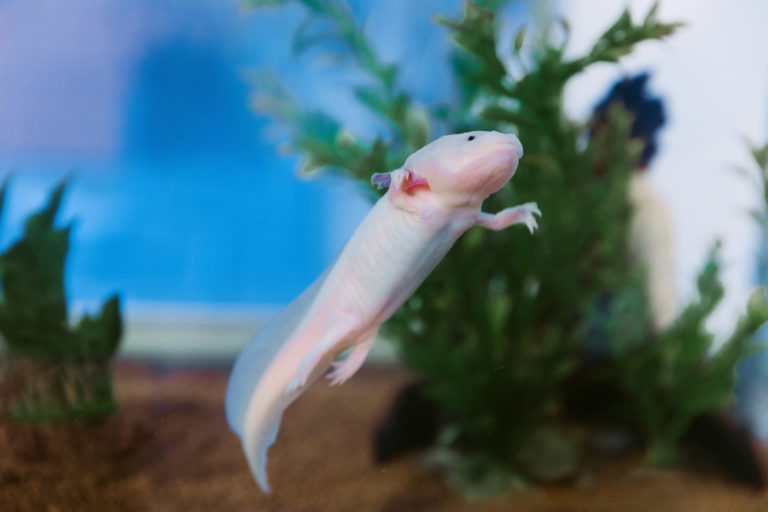
The rooted plants are growing, yet the floating rosettes keep yellowing and breaking apart. That contrast is worth investigating before you turn up the light or add another fertilizer tablet.
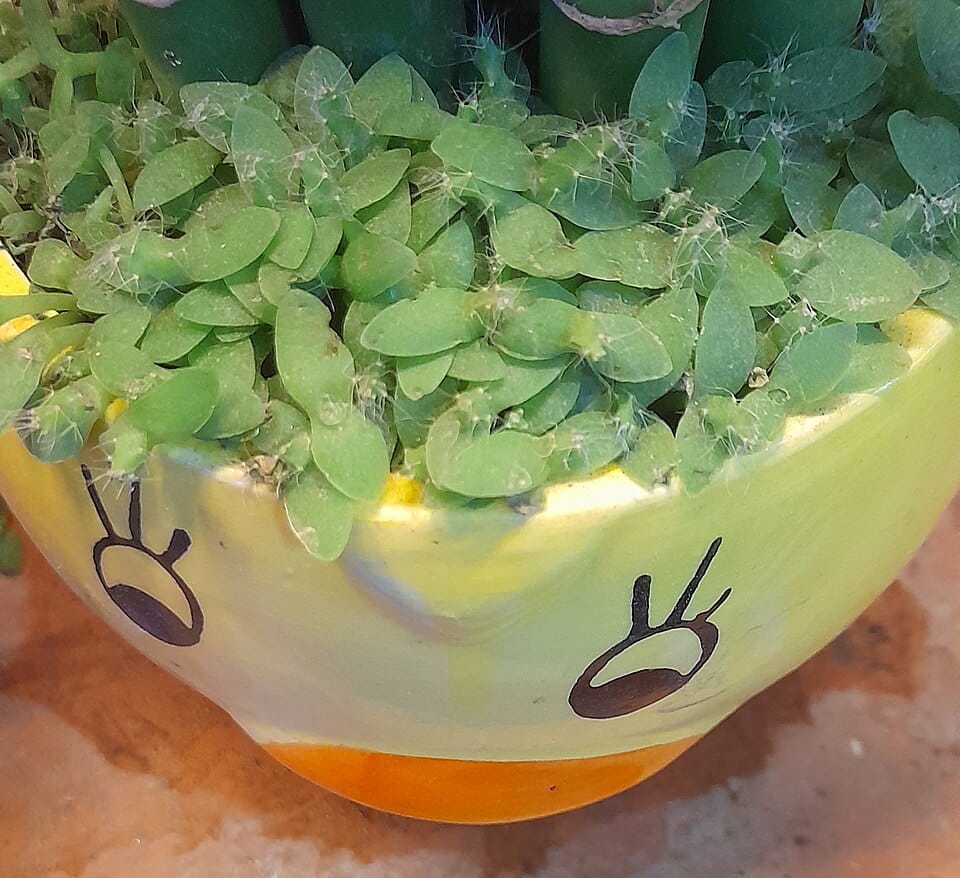
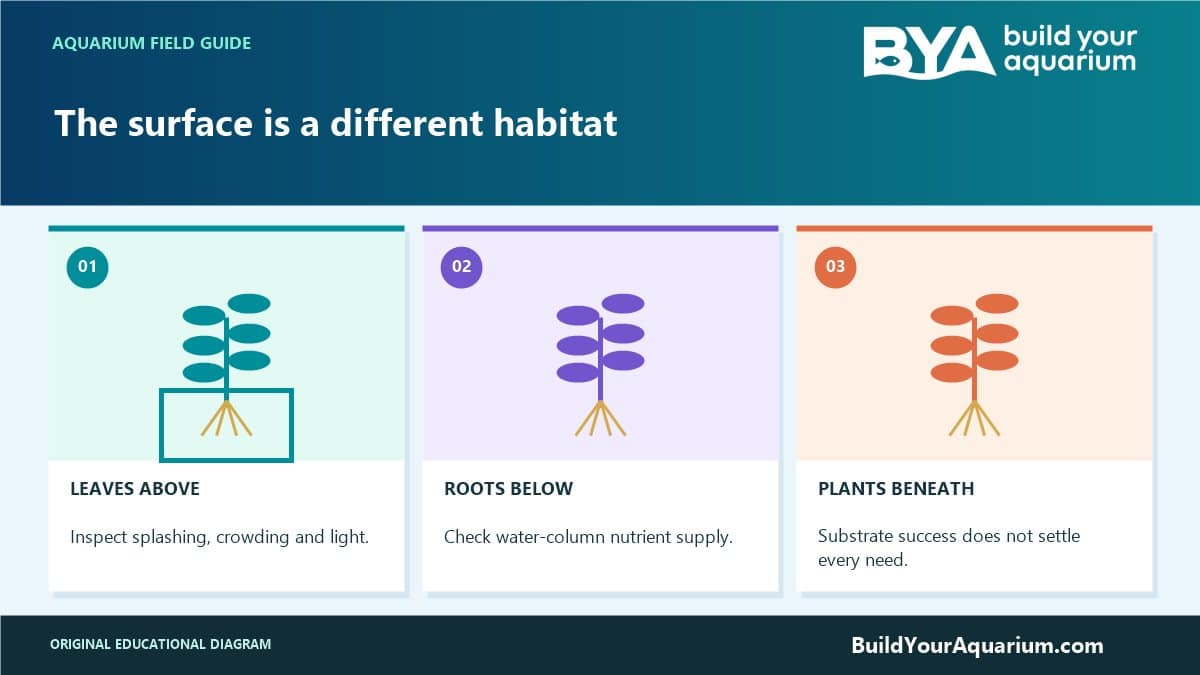
Plants sharing one aquarium do not necessarily experience the same conditions. Floaters sit where water movement, splashing, light and air meet, while their submerged roots draw nutrients from the surrounding water.
Watch a rosette through the filter’s return
Spend a few minutes following the plants as they drift. Are leaves repeatedly pushed below the surface? Do they collect beneath a waterfall or in a crowded corner? Remove deteriorating pieces and make a calmer area while preserving useful circulation and open surface access for the animals.
A ring or divider can help contain plants, provided it cannot trap livestock or obstruct equipment. Do not eliminate aeration to protect a plant. The floating plant guide distinguishes true surface rosettes from submerged plants that happen to be left loose.
A rich substrate does not settle the feeding question
Aquarium Co-Op explains that floating plants make limited use of root tabs compared with plants rooted in the substrate. Good growth below the surface does not establish that the water column supplies everything the floaters need.
Check what your fertilizer contains, how it is being dosed and what the aquarium tests show. A micronutrient-only supplement is different from one that also supplies nitrogen and phosphorus. Follow the particular product’s instructions and account for the livestock; yellow leaves alone do not identify a single missing nutrient.
Use the fertilizer guide to distinguish root feeding from water-column feeding. Adding more of an unsuitable product can leave the original shortage unresolved.
Compare new growth after one correction
Check shade from the lid, light fixture and other plants. Thin overlapping rosettes so they do not constantly crowd one another, and identify the species before assuming every floater wants the same humidity or exposure.
The contrast between successful rooted plants and declining floaters also appears in this r/PlantedTank question. It is a useful starting problem, not proof that one explanation fits every tank.
Record the change you make and watch the next leaves. Photograph the same rosettes from above and below so you can compare leaf damage with root condition, not just the total surface coverage. Existing damaged tissue may not recover its appearance. Steady new growth is a better reason to keep a correction than an immediate change in how the old leaves look.