Red aquarium plants range from relatively forgiving rosettes to demanding fine-leaved stems. Color depends on the plant’s identity and growing conditions. Choose for healthy growth first; more iron, stronger light or deliberately low nitrate is not a universal recipe for red leaves.
Ten red or bronze plant options
Alternanthera reineckii
This stem plant offers strong red and purple accents. Standard and compact forms have different space requirements. Alternanthera reineckii ‘Mini’ is a distinct compact choice, not a guarantee that every plant sold as AR remains only a few inches tall. Provide appropriate light and avoid shading its lower growth.
Ludwigia repens
A useful first colored stem plant when conditions suit it. Leaves can range from greener to redder tones. Leave room between stems and trim the group so light reaches lower leaves rather than allowing a thick surface canopy.
Rotala rotundifolia
Cultivars differ in color and growth. Choose the named form you actually want; a green cultivar should not be expected to become crimson. Provide consistent nutrition and suitable light rather than starving the whole aquarium to force color.
Red Echinodorus cultivars
Cultivars such as ‘Red Devil’ can provide a red or bronze rosette. Check the grower’s mature dimensions, as common names do not ensure a fixed size. New and older leaves may have different colors. Plan the rooting space before using several as accents.
Rotala wallichii
A more demanding fine-leaved option. Tropica identifies good light, soft slightly acidic water and substantial benefit from CO2. Choose it for an appropriately managed setup, rather than assuming every Rotala has the same easy care requirements.
Red root floater
Phyllanthus fluitans grows at the surface and can develop red roots and foliage. Manage surface movement and thinning so plants are not constantly submerged and do not block light below. See our floating-plant guide for the practical tradeoffs.
Red tiger lotus
This broad-leaved Nymphaea can become a substantial focal point. Allow space for submerged leaves and manage any surface leaves that shade the rest of the tank. It is not a guaranteed fit for every nano aquarium.
Red Cabomba
Cabomba furcata is a fine-leaved background plant better suited to a deliberately managed planted setup than a casual low-light aquarium. Check its growing requirements before purchase, and keep debris from accumulating in dense stems.
Red watermilfoil
Myriophyllum tuberculatum offers delicate red growth but needs suitable light and consistent nutrition. Treat it as a more demanding option, allowing space for the stems to develop rather than crowding a fresh bunch together.
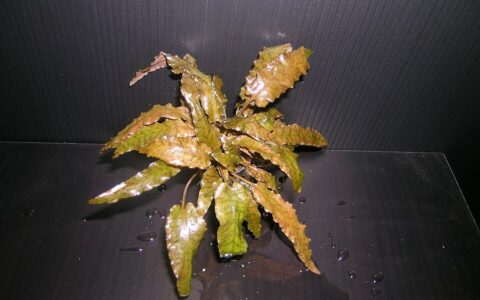
Red or bronze Cryptocoryne wendtii
These forms provide a more restrained bronze accent and can suit less intense lighting than demanding red stems. Color varies with the form and conditions. Plant once, leave room for the rosette and investigate persistent decline instead of repeatedly moving it.
Set conditions for the whole aquarium
A suitable light, balanced fertilizer routine and appropriate carbon supply matter together. Do not dose iron without considering the existing fertilizer or raise brightness rapidly to improve color.
Compare new growth over time. A redder appearance under a different lamp does not necessarily mean the plant has grown more red pigment. Use healthy form and sustained growth alongside color when judging success.