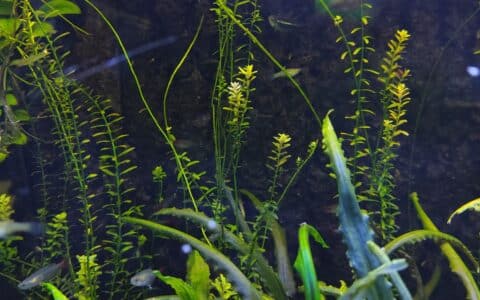
Tall aquarium plants can hide equipment, frame a layout and provide cover. Choose by mature width and growth habit as well as height: a broad sword, a ribbon-leaved rosette and a branching stem plant use very different amounts of space.
Ten options and their practical limits
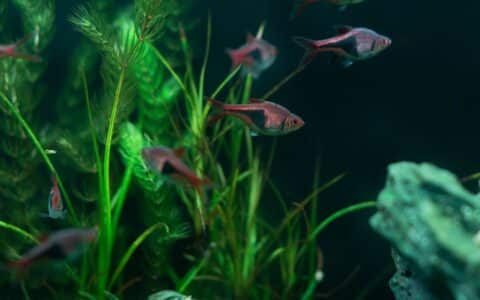
Vallisneria

Ribbon-shaped leaves and runners can create a background curtain. Identify the species or cultivar because mature leaf length varies considerably. Keep the crown above the substrate and manage runners before they crowd other plants. See our Vallisneria guide.
Giant Hygrophila
Hygrophila corymbosa develops substantial stem and leaf mass. Leave room for branching and trim and replant healthy tops when needed. Poorly lit lower stems can become bare, so do not pack the group too densely.
Amazon sword

Large Echinodorus cultivars work as a centerpiece or background plant. Check the cultivar’s mature width before planting several together. Provide a suitable rooting zone and nutrition, and expect some older emersed-grown leaves to change after submersion.
Asian ambulia
Limnophila sessiliflora offers a fine-leaved stem background. Allow light into the group and prune regularly rather than letting every stem form a surface canopy. Identify the plant correctly and check local availability requirements before obtaining potentially invasive aquatic plants.
Balansae-type Cryptocoryne
Usually sold as Cryptocoryne crispatula var. balansae, this plant has long, textured leaves. Leave room for them to arch across the background. Avoid repeatedly moving an established plant; sudden changes can trigger leaf loss without necessarily killing a healthy root system.
Crinum calamistratum
Tropica describes curly leaves reaching 40–120 cm and relatively slow growth. This is a spacious rosette, not a fast-growing stem screen. Position the bulb according to the supplier’s instructions and avoid burying it completely.
Tiger lotus
Nymphaea lotus, often sold under the name zenkeri, develops broad submerged leaves and can send leaves to the surface. Tropica recommends it as a solitary plant for larger aquariums. Plan how you will manage shading rather than treating it as a narrow background stem.
Banana plant
Nymphoides aquatica can produce floating leaves on long stalks. Its banana-shaped storage roots are distinctive, but it is not a true Nymphaea water lily. Keep those structures exposed as instructed and allow room for surface growth. UF/IFAS describes its floating-leaf habit.
Giant Anubias
Anubias gigantea is an accepted species in Kew’s database, rather than simply a giant form of A. barteri. It is a slow-growing, semi-aquatic plant from river margins. Confirm the identity and intended submerged or emersed use before choosing it as a tall aquarium centerpiece.
Hornwort

Ceratophyllum demersum can form a tall or floating mass and needs regular thinning. It does not have true roots, so burying bunches deeply is unnecessary. Keep enough open space for circulation; our hornwort guide covers placement and maintenance.
Leave room for growth
Check how much shade mature leaves will cast and whether you can still clean the glass and reach the filter intake. Match light and nutrition to the chosen plants. Avoid assuming every tall species requires injected CO2 or tolerates every plant-eating fish.