Torch coral (Euphyllia glabrescens) is a branching stony coral with long, rounded-tip tentacles. Its movement makes an impressive display, but those tentacles can damage neighbors. Plan around the expanded colony, stable chemistry and careful acclimation rather than treating a small frag as a permanent nano-tank ornament.

Choose a healthy specimen and leave room
Look for intact tissue around the skeletal branches, without unexplained recession, exposed edges or brown disintegrating material. Ask how long the seller has held the coral and request its lighting, salinity and temperature. A captive-grown frag with a known history is easier to assess than a newly arrived, unidentified specimen.
The photograph shows a hammer beside a torch; it does not establish that their tentacles can safely touch. Modern classification places hammer corals in Fimbriaphyllia, while torch coral remains Euphyllia glabrescens.
Leave generous clearance in every direction, allowing for growth and sweeper extension. Inspect the colony after dark and when flow changes. Even another torch should not be assumed compatible on contact. A fixed six-inch gap or a 30-gallon label cannot guarantee safe spacing in every layout.
Light and water movement
Match the starting position to the supplier’s conditions and increase exposure gradually using the coral-acclimation guide. PAR measurements are more useful than deciding by blue appearance or color temperature alone. Retraction can reflect several problems, so it does not automatically mean the coral needs stronger lighting.
Provide broad, changing circulation that moves the tentacles without holding them flat against the skeleton. Redirect a narrow jet if it continually bends the coral to one side. Leave the tissue clear of rocks and rough surfaces.

Keep reef chemistry steady
Monitor salinity, temperature, alkalinity, calcium and magnesium, and record consumption before choosing a dosing schedule. Water changes may meet a lightly stocked tank’s needs; a growing collection of stony corals may require measured supplementation. Adding trace elements blindly is not a remedy for every retracted torch.
Ammonia and nitrite should be undetectable. Control nutrient accumulation through feeding and maintenance, without deliberately forcing nitrate and phosphate to zero. Avoid large, abrupt corrections. A single nitrate reading does not diagnose the cause of tissue loss.
Offer food carefully
Photosynthetic symbionts supply much of the coral’s energy. Tidal Gardens reports that its torches can benefit from feeding, but may be finicky eaters. Try a small amount of suitable fine marine food and observe whether the polyp actually retains it.
Do not force food into the mouth or promise faster growth from feeding several times weekly. Remove rejected food. If flow is reduced briefly for feeding, restart it promptly; prolonged shutdown can compromise circulation and oxygenation.

Prevent injury and recognize trouble
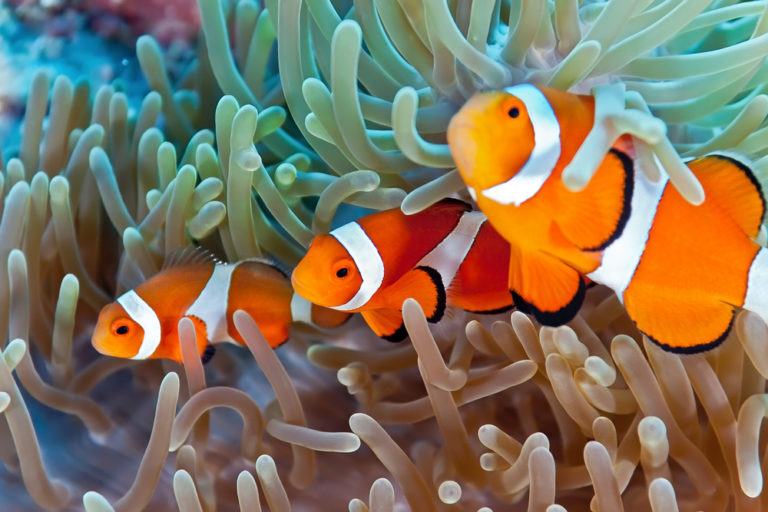
A clownfish rubbing persistently against the coral can cause irritation even when the colony is large. Protect it if tissue remains retracted or starts receding. Coral-nipping fish, opportunistic shrimp and wandering anemones also need assessment; a reef-safe sales label is not a guarantee.
For propagation, identify a healthy branching colony and cut only exposed skeleton between heads, clear of living tissue. Do not apply instructions for cutting a wall hammer to a torch. Use appropriate tools and protection, or ask an experienced propagator to perform the cut.
Rapid recession, brown material or polyps detaching from the skeleton warrant prompt investigation and isolation where practical. Polyp bailout is a stress response, not a dependable way to produce healthy frags. Avoid improvised peroxide or iodine recipes; use a product suited to the identified problem according to its label.