A pale structure rises above the Anubias leaves, looking quite unlike a new leaf. Before pulling it off as fungus, inspect where it is attached. Anubias can flower underwater.
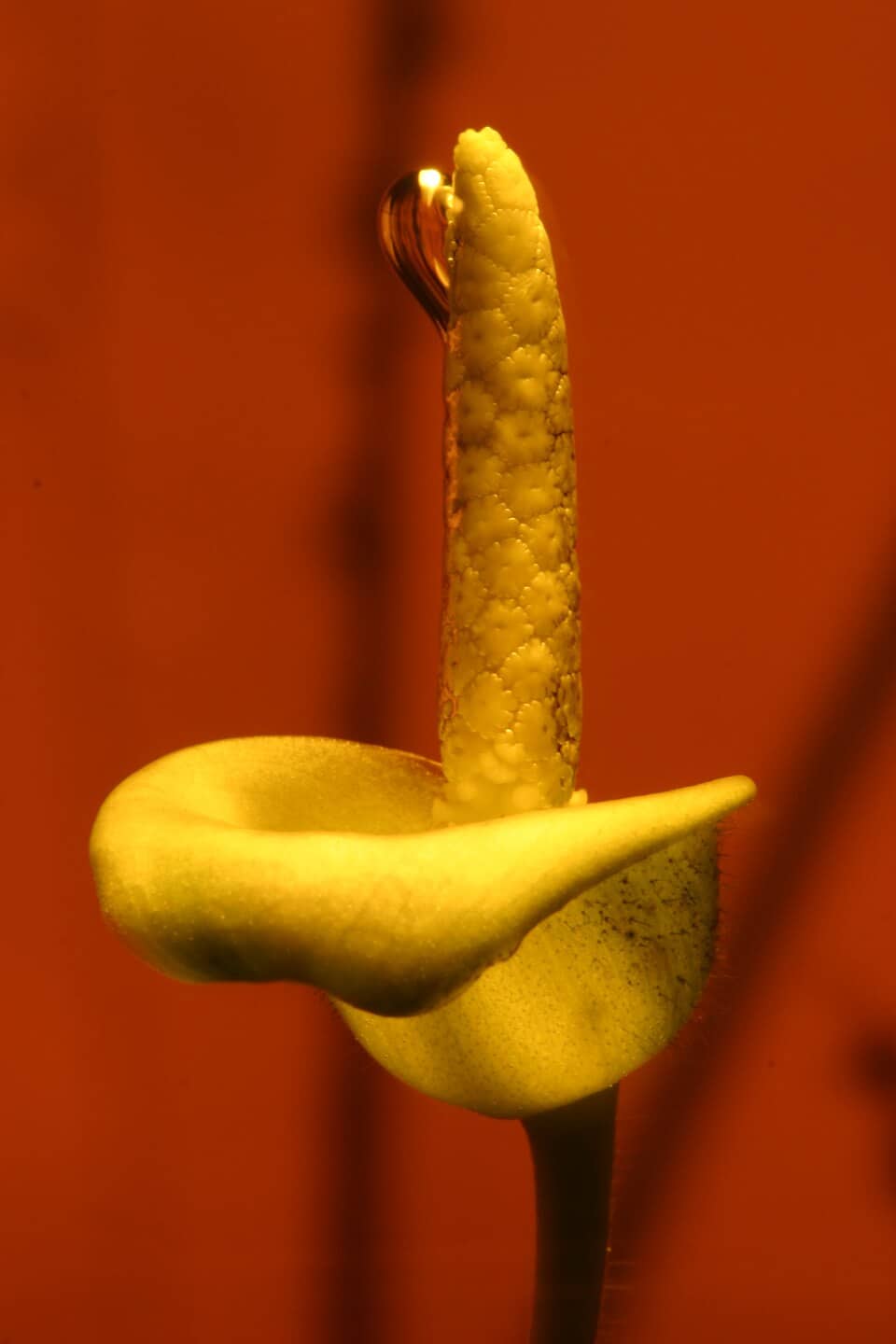
Tropica’s Anubias barteri nana profile explicitly notes submerged flowering. The photograph shows an Anubias inflorescence; an unknown white growth in your own aquarium still needs its own identification.
Look for an organized structure on a stalk
An Anubias inflorescence has a central structure associated with a surrounding modified leaf, called a spathe. Trace its stalk back to the plant without tearing at the rhizome.
That is different from a spreading cottony coating on deteriorating tissue. If you are unsure, take clear photographs from several angles and include the attachment point. A single blurred white patch is not enough for identification.
The Anubias care guide covers the plant’s normal growth form and exposed rhizome.
Keep judging the rest of the plant
Flowering does not certify that every water parameter is correct or that every leaf is healthy. Check the firmness of the rhizome, new leaves, root attachment and any ongoing decay.
Do not increase light or add an unspecified “flower booster” solely to repeat the event. Keep the established routine appropriate to the aquarium and its animals.
Let a healthy display be a display
There is no automatic need to remove an intact flower from an otherwise healthy plant. If it deteriorates, remove decaying material carefully as part of normal maintenance, avoiding damage to the rhizome.
The flowering aquarium plant guide compares other plants and the conditions in which their flowers appear. Some bloom above the surface; a flower in an aquarium does not mean every flowering species belongs fully underwater.