Freshwater aquarium salt is usually sodium chloride. It has specific uses, but adding it routinely is not a substitute for suitable water, filtration or diagnosis. It is also different from the marine salt mix used to make seawater.

Three products that are not interchangeable
Sodium chloride: freshwater aquarium salt, used for particular management or treatment purposes. It does not provide a complete seawater mineral balance or replace a freshwater GH/KH remineralizer.
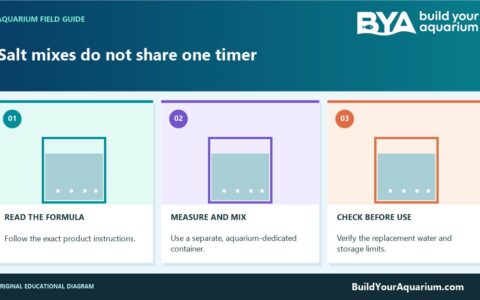
Marine aquarium salt mix: a formulated mixture for seawater. Choose a product for the intended marine system, mix it according to its instructions and measure the resulting salinity. Do not make seawater by adding half a cup of plain aquarium salt per gallon.
Epsom salt: magnesium sulfate, a different chemical. It is not a replacement for sodium chloride, and a bath is not a universal cure for bloating, dropsy or buoyancy problems.
When sodium chloride may help

UF/IFAS explains uses for salt in aquaculture, including support during certain stressful handling situations, control of susceptible external parasites and chloride management during nitrite problems. Suitability depends on species, concentration and exposure time. A brief dip and a prolonged tank treatment are different procedures.
Chloride can reduce nitrite uptake, but salt does not remove nitrite or repair an inadequate biofilter. Test water, address the cause and use appropriate water changes. Do not convert a production-pond protocol directly into a spoon-based recipe for a mixed home aquarium.
Hard, alkaline water is not the same thing as salty water. Mollies and other livebearers do not automatically need sodium chloride added to an otherwise suitable freshwater setup. Confirm the requirements of the actual species and stock.
Check every animal and plant
Salt tolerance varies. Check fish, shrimp, snails and plants before treatment, and consider a separate treatment aquarium when appropriate. API warns that some live plants are sensitive. A blanket instruction to halve the dose for every “sensitive fish” is not a reliable treatment plan.
Use the current product label and a diagnosis-based plan. Do not combine salt with other medicines without confirming compatibility. White spots, cotton-like growth and swollen bodies require different investigations; they are not interchangeable reasons to dose salt.
Measuring and preventing accumulation

Use the specified product and measure accurately. Grain size makes tablespoons an imprecise way to compare different salts. Avoid household products with unknown composition rather than assuming any cooking salt, bath salt or water-softener blend is equivalent.
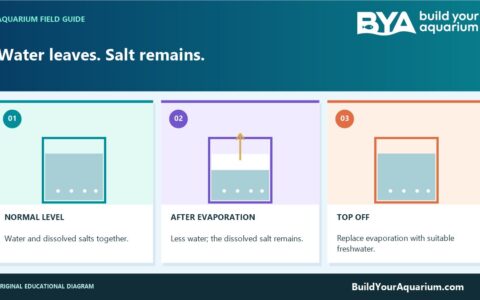
Salt remains when water evaporates. Top off with appropriate unsalted freshwater, not another full salt dose. A water change removes some dissolved salt, so any replacement must account for the treatment’s target and the amount removed. Repeated whole-tank dosing can cause accumulation.
For marine aquariums
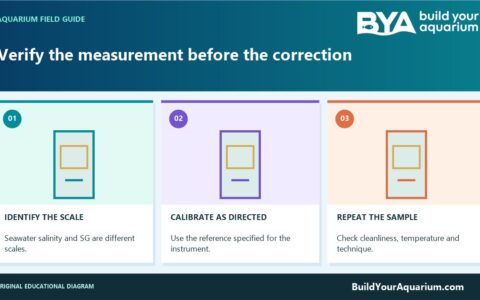
Use an appropriate calibrated hydrometer, refractometer or salinity meter; a hygrometer measures humidity. Follow the mix manufacturer’s target and the animals’ requirements rather than a universal scoop recipe. See the marine salt guide.

For a sick freshwater fish, start with water testing and a clear description of symptoms. Use a quarantine or treatment tank where suitable, and seek an aquatic veterinarian’s advice for persistent illness instead of using salt as a general tonic.