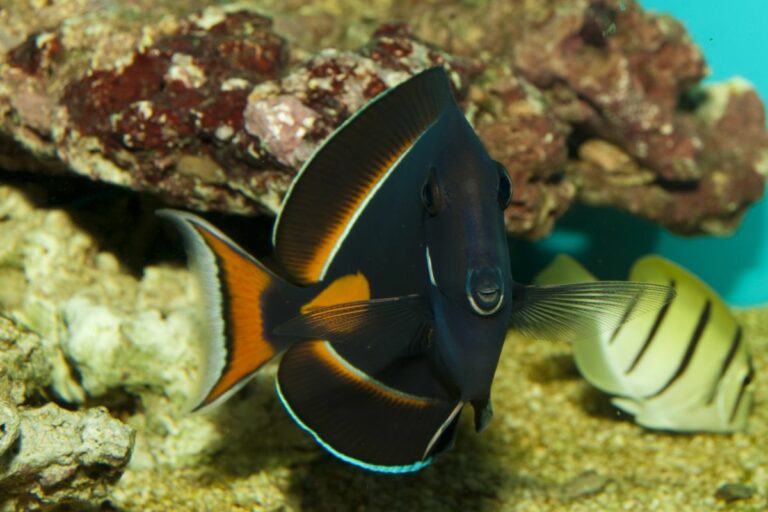
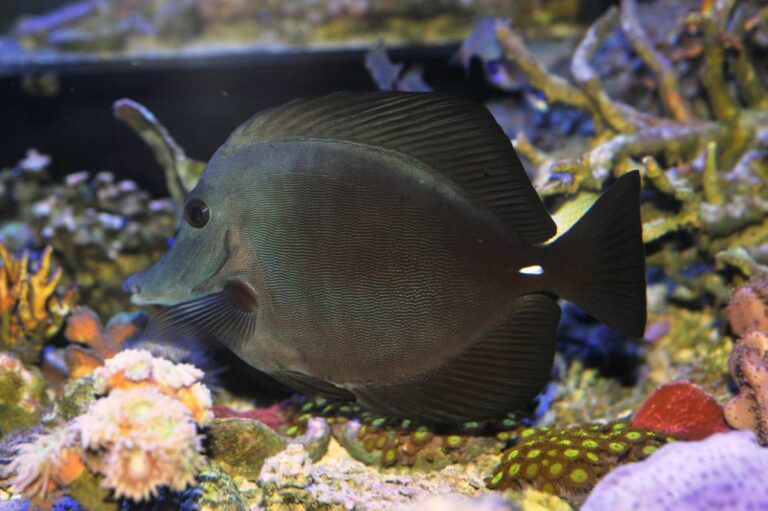
A line on the glass shows where the water was yesterday. The level has dropped, but the salt dissolved in that water has not evaporated with it. Repeatedly filling the gap with ordinary-strength saltwater can push salinity upward.
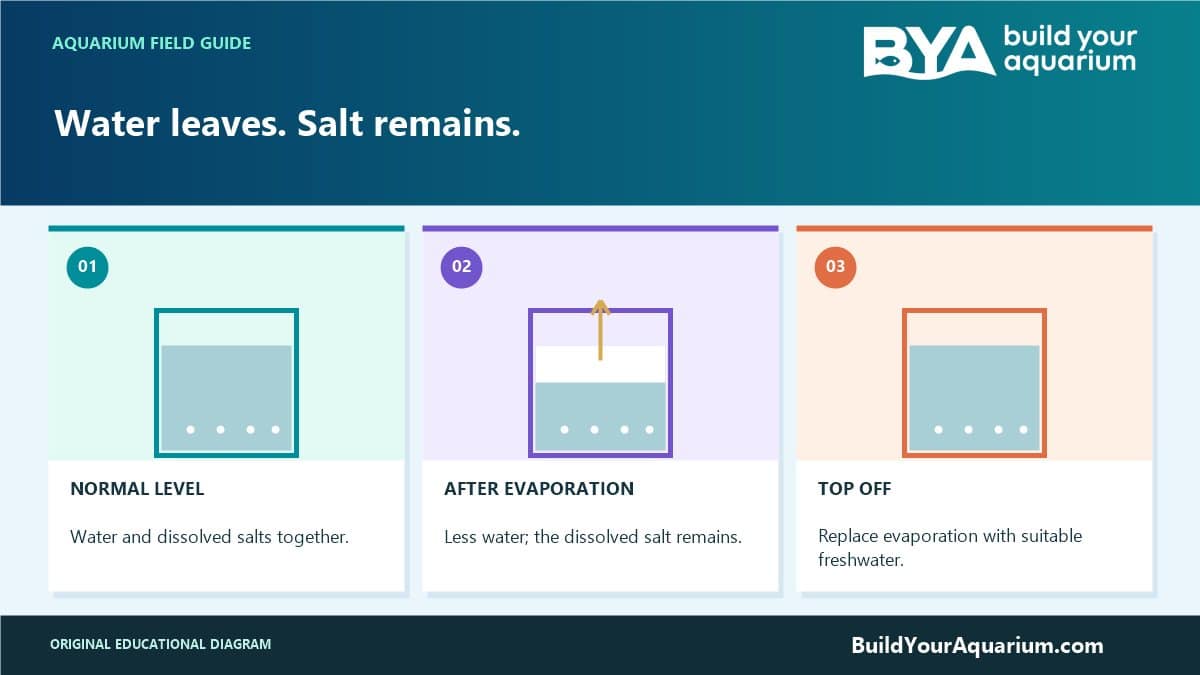
Replacing evaporation and replacing water removed during maintenance are different tasks. Decide which one you are doing before reaching for the mixing bucket.
Follow what actually left the aquarium
Evaporation removes water and concentrates the salts that remain. The Red Sea seawater chemistry guide describes this relationship. Routine evaporation replacement is therefore appropriate freshwater, commonly RO/DI water in a reef system, rather than another batch of saltwater.
A water change removes saltwater. That removed volume normally needs prepared replacement saltwater matched to the aquarium’s intended conditions. Water lost through a leak, excessive wet skimming or a spill also needs assessment; treating every falling water level as evaporation can create another error.
Mark the operating level and measure salinity
Establish the normal level with the system running as intended. In a sump system, evaporation may be most visible in the return chamber rather than the display. Check that pumps remain adequately submerged and that the top-off sensor is positioned for the correct compartment.
An automatic top-off replaces water; it does not independently prove that salinity is correct. Keep its reservoir supplied with the intended water, inspect the sensor and test the system’s safeguards. Our ATO comparison explains equipment differences worth checking.
Investigate a wrong reading before correcting it
A r/SaltwaterAquariumClub discussion about raising salinity shows how easily top-off and deliberate salinity adjustment become mixed together. Advice intended to correct an unusually dilute system should not become the everyday evaporation routine.
Verify the measuring instrument and record the result. If salinity is already wrong, plan a controlled correction appropriate to the inhabitants instead of making a large unmeasured change. Avoid adding dry salt directly around animals.
Use the reef salt guide when preparing a water change, and keep that mixing process separate from the freshwater reservoir. Label the containers with their contents, not just their purpose: freshwater for evaporation replacement, prepared saltwater for the planned water change. Keep separate measuring tools or rinse them appropriately between those jobs.