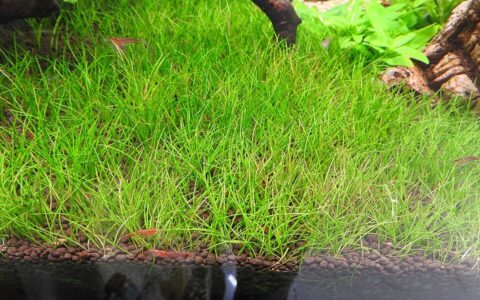
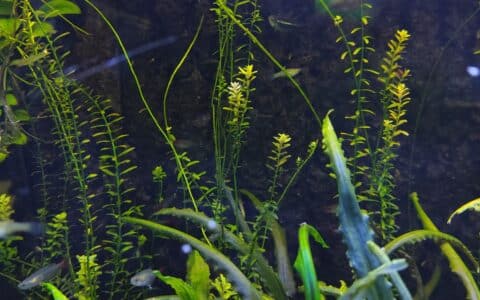
The seeds germinate quickly and cover the soil in green. It feels like proof that the advertised aquarium carpet works. The missing test is whether the plant is the named species and can maintain that form underwater.
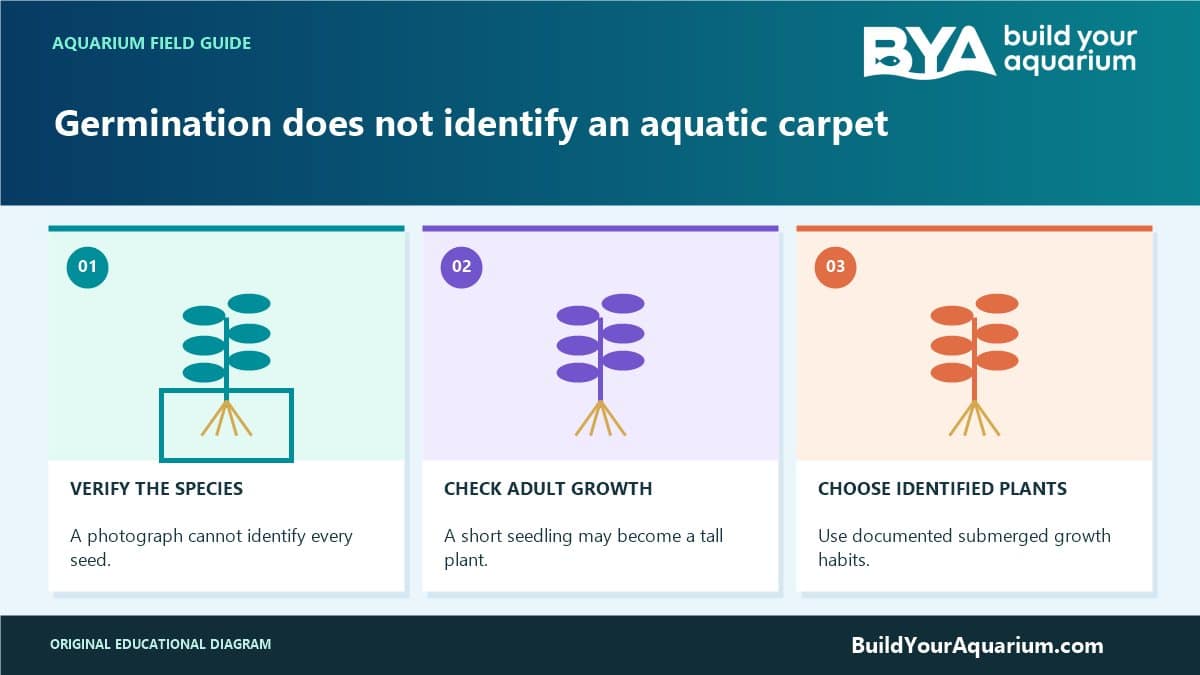
A dense layer of seedlings can look convincing before it has experienced prolonged submersion. Even an identified dry-start carpet needs a managed transition; rapid germination of an unknown plant provides less assurance, not more.
Ask for the identity, not another seedling photograph
Buce Plant’s carpet-seed warning describes products that grow into unsuitable terrestrial plants or taller stems rather than the promised carpet.
That does not mean aquatic plants never produce seeds. The issue is whether the seller supplies an identified, appropriate species with credible growing information. “Magic carpet” is a marketing label, not a botanical name.
Keep an unverified experiment away from livestock
Do not use fish or shrimp to test whether an unidentified planting survives. If existing growth starts decaying, remove deteriorating material and monitor water quality rather than assuming a thin green surface means the whole mat is healthy.
An unexpectedly tall plant is also a mismatch if you bought it for a permanent low lawn. Check the mature growth habit before spreading more through the tank.
Our carpet plant comparison distinguishes rooted carpeting species from maintained moss mats.
Buy the form you can verify
Choose identified live portions from a supplier that explains planting and submerged care. Tissue-culture cups, pots and loose cuttings each need appropriate preparation; none eliminates the plant’s light and nutrition requirements.
Use the plant-buying guide to compare identification, condition and supplier information. A slower start with a known plant is easier to plan around than a rapid germination with no reliable name.