A slimy green-blue sheet spreads over the substrate and low leaves. Buying another algae eater may not solve it. The growth could be cyanobacteria, often called blue-green algae.
The common name is misleading: cyanobacteria are bacteria. A photograph or unusual smell alone cannot establish every identification or whether a particular growth produces toxins.
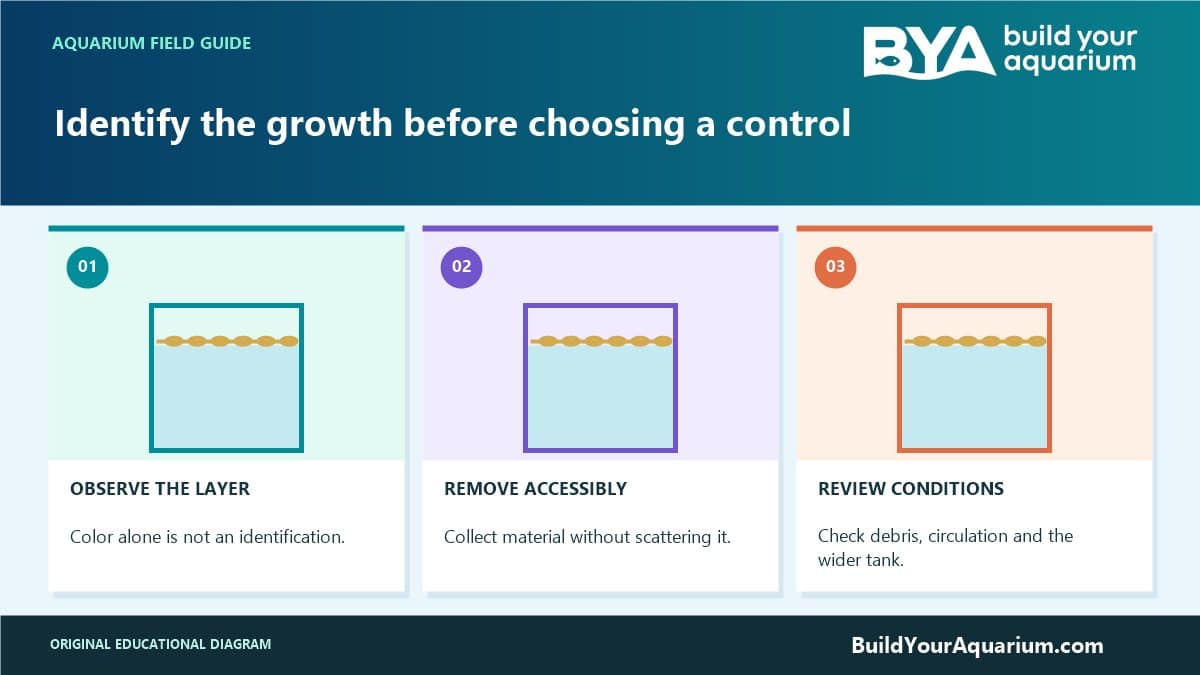
Look at how it grows
Aquarium Co-Op’s BGA guidance describes a blanket-like coating on substrate, plants and decor. Compare that form with separate threads, hard spots or suspended green water.
Record clear photographs and the conditions in which it appears. The algae identification guide helps separate common growth forms before choosing a response.
Start with accessible removal and inspection
Collect removable material carefully during suitable maintenance rather than stirring it through the whole display. Protect animals and delicate plants, and do not use your mouth to start a siphon.
Inspect trapped food, deteriorating leaves and circulation around the affected area. Improve appropriate water movement without blasting livestock or uprooting the planting. Keep testing water quality instead of treating the visible layer as the only issue. If intake flow has also fallen, inspect the guard and other restrictions rather than compensating only by pointing the outlet elsewhere.
The maintenance guide helps organize those checks.
Avoid a treatment chosen only by color
Do not add antibiotics, an algaecide or an improvised peroxide dose because someone called every green coating “the same thing.” Products and treatment plans have compatibility, aeration and filtration requirements.
If the growth keeps returning, reassess identification and the conditions supporting it. Seek informed help with photographs, test results and the maintenance history. Removing the latest sheet is useful, but repeated recurrence calls for a better explanation than simply needing more cleaners.