

Choose aquarium snails by their adult size, feeding method and reproduction, not just shell color. Nerites suit established algae-covered surfaces; mystery snails need deliberate feeding and air access; assassin snails eat other snails. None replaces filtration, waste removal or water changes.

These eleven common names include overlapping trade labels. Gold Inca and ivory, for example, can describe mystery snail colors rather than additional biological species.
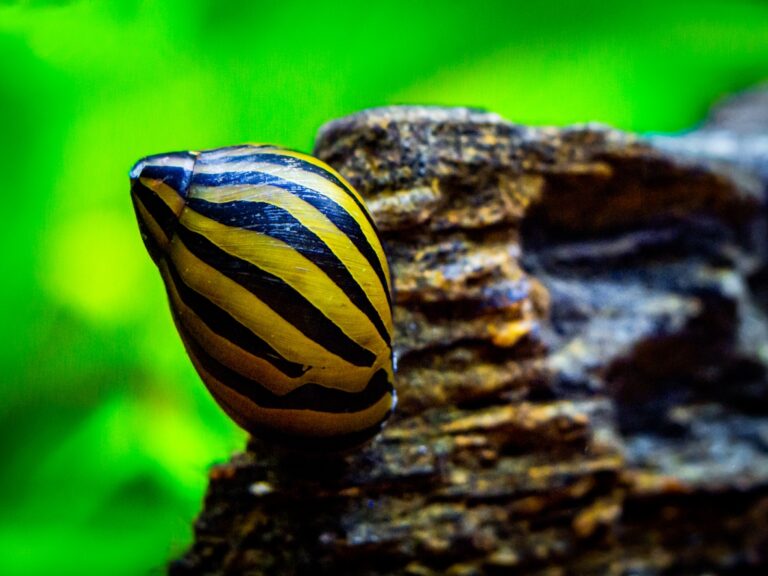
1. Nerite snails

Zebra, tiger, black racer and horned nerites are useful grazers when the aquarium has enough suitable food. Confirm that the stock is maintained in freshwater. Common aquarium forms generally do not establish offspring in an ordinary freshwater display, though females can leave hard white capsules on surfaces. See nerite snail care.
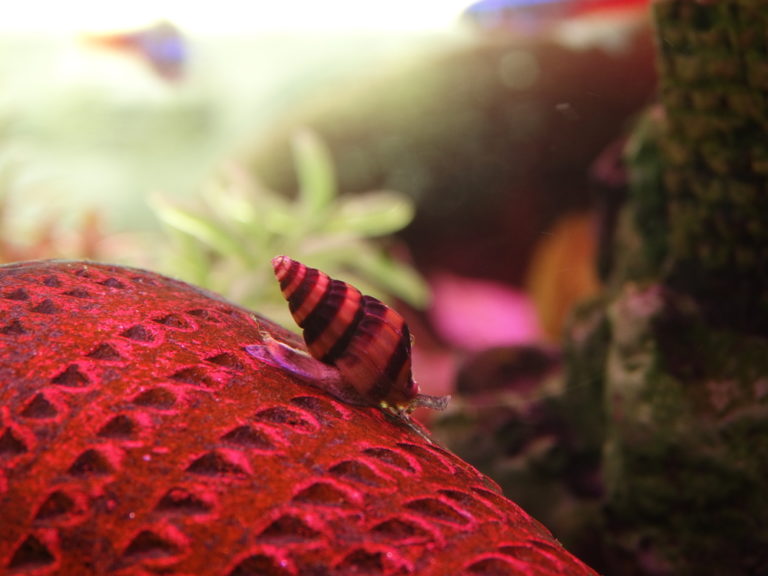
2. Assassin snails

Usually sold as Anentome helena, these predators can eat valued snails as well as unwanted hitchhikers. Plan food after prey becomes scarce. They have separate sexes and can reproduce in freshwater, so they are an ongoing livestock commitment rather than a disposable control tool. Read assassin snail care.
3. Malaysian trumpet snails

Melanoides tuberculata commonly burrow into the substrate and release internally brooded young. Some populations reproduce without mating. They can multiply readily where food is abundant, so inspect transferred substrate as well as plants. Their burrowing does not eliminate the need to remove trapped debris.
4. Gold Inca snails

Gold Inca is a sales name, often used for golden mystery snails. Confirm the species rather than assigning it a separate temperature or diet because of its color. Some larger apple snail relatives eat substantial amounts of healthy vegetation; a golden shell does not identify which animal you have.
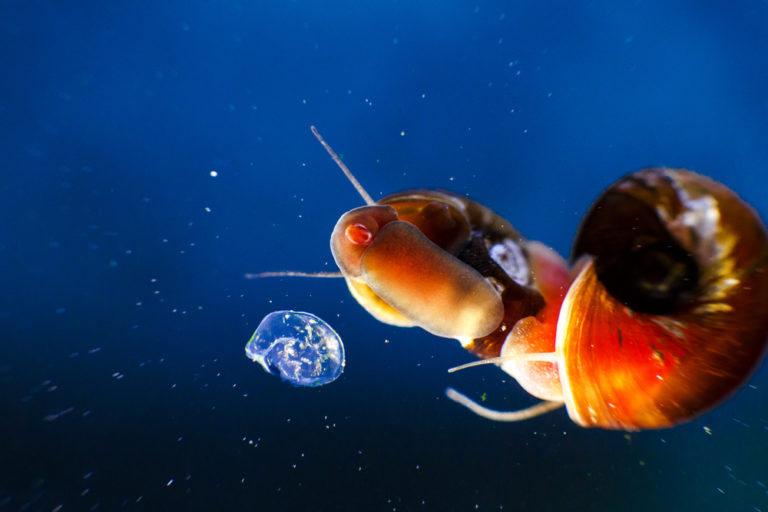
5. Small ramshorn snails

Ramshorn describes a coiled shell and covers several planorbids, with adult size and temperature varying by species. Small cultivated forms graze surface growth and consume suitable prepared food. Their underwater gelatinous egg patches can arrive on plants. See ramshorn care and population control.
6. Rabbit snails
Tylomelania from Sulawesi need care based on the actual species or established stock. Lake and river forms can differ in temperature and preferred feeding surfaces. Larger forms need floor space and deliberate feeding. The small conical snail below is a lookalike comparison, not a confirmed rabbit snail; shell shape alone is insufficient for identification.

Use the rabbit snail guide and Sulawesi Keepers’ species-focused overview before planning their aquarium.
7. Mystery snails

The colorful aquarium mystery snail is usually Pomacea diffusa, frequently sold under the broader older label P. bridgesii. It needs a secure lid, surface access for breathing and suitable minerals. Females lay clutches above the waterline; these snails do not produce one annual live-born litter. See mystery snail care.
8. Ivory snails
Ivory commonly describes a pale mystery snail color form. Apply the requirements of the identified species rather than treating it as a distinct kind with separate feeding needs. Pale coloration is not proof of poor health, and floating or resting alone is not proof of death.
9. Bladder snails
Small bladder snails often arrive as hitchhikers or eggs on plants. They can graze and process leftovers while reproducing readily when food is plentiful. Whether they are wanted is a stocking decision; their presence alone does not require chemical treatment. Inspect their underwater egg patches if excluding them matters.
10. Pond snails
Pond snail is another broad common name. Identify the stock and adult size before deliberately introducing it, especially if collected outdoors. A shell that looks familiar does not establish aquarium suitability or freedom from parasites. Buying identified cultured animals is a more controlled approach.
11. Colombian giant ramshorns
Marisa cornuarietis is an apple snail relative with a flattened coiled shell. Its strong appetite for plants makes it a different choice from a small decorative ramshorn colony. AppleSnail.net explains the importance of species identification among plant-eating apple snails. Do not choose it for a planted display on appearance alone.
Before adding any snail
Compare temperature, pH, minerals, adult space and feeding with every existing inhabitant. Use a mature aquarium, protect filter intakes and avoid predators that bite antennae or extract snails from shells. Feed intentionally and remove dead animals promptly.
For unwanted population growth, reduce excess food, remove accumulated debris and collect snails or accessible egg patches repeatedly. Aqueon’s snail overview discusses common groups and accidental introductions. The snail egg guide helps distinguish the reproductive patterns. Rehome responsibly and never release aquarium snails outdoors.
Hi, I just have a question. I found a newly born black baby snail, its size is smaller than an ant! Looks pure black. I’m not sure what type of snail it is. Please send me an email if you know.