
Most small scavenging bristleworms found in reef aquariums can be left alone. Remove an animal when identification or observed behavior gives you a reason to suspect predation or damage, not simply because it has bristles.
A worm feeding on a dead fish does not prove it killed the fish. Remove the body and investigate the loss rather than blaming the first scavenger to arrive.
“Bristleworm” is a broad description
Bristleworms are segmented annelids, not one species with one diet or adult size. The Australian Museum’s polychaete overview describes predators, burrowers and tube-dwelling filter feeders among this diverse group.
Many common aquarium hitchhikers emerge from rock or sand to collect leftover food and organic material. Aquaculture producer Sustainable Aquatics uses Eurythoe bristleworms in its broodstock systems for scavenging. Its account also notes that populations can establish and reproduce; harmless scavengers are not automatically incapable of multiplying.
When leaving them is reasonable
If the worms collect uneaten food and no associated damage is occurring, they can function as part of the tank’s scavenger community. There is no need to dismantle healthy rockwork to achieve a worm-free aquarium.
They redistribute and consume organic matter, but do not make its nitrogen or phosphorus disappear. Continue maintenance, remove dead animals when found and avoid deliberate overfeeding to support the worms.
A sudden abundance is a reason to inspect feeding and accumulated waste. Feed the intended animals appropriately, siphon accessible debris and reassess the amount reaching the substrate. Removing every visible worm without correcting the food supply is unlikely to produce lasting control.
When identification matters
The word “fireworm” is also used broadly. It is not a precise division between all harmless worms and all predators. Color, daytime activity or a large body alone cannot establish an exact species.
The bearded fireworm, Hermodice carunculata, is a genuine concern around corals. The Institute of Marine Affairs describes feeding on coral and anemone tissue as well as its irritating bristles.
Other conspicuous jawed worms may have different diets. Do not identify every worm extending from a hole as a “bobbit worm.” Photograph the head, bristles and body pattern if you can do so without handling it. Note its location and what it actually consumes, then seek a knowledgeable identification.
Repeated observation of attacks on healthy animals is stronger evidence than finding a worm on dead tissue. Check for other causes of missing fish or coral decline as well.
Controlled removal
For a confirmed problem animal, use long tools or a suitable enclosed trap rather than bare hands. Place a small amount of bait near its usual route after dark, check the trap frequently and remove uneaten bait. Guard against trapping desirable inhabitants.
Capture a visible worm gently where possible. Do not tug it apart inside the aquarium or blindly pull at something wedged deep in a crevice. If a rock must be removed for inspection, prepare a separate container of matched saltwater and protect attached organisms.
A whole-rock freshwater dip can harm the useful life and attached animals on that rock. It is not a routine first step for an unidentified worm. Avoid indiscriminate chemical treatment of the display.
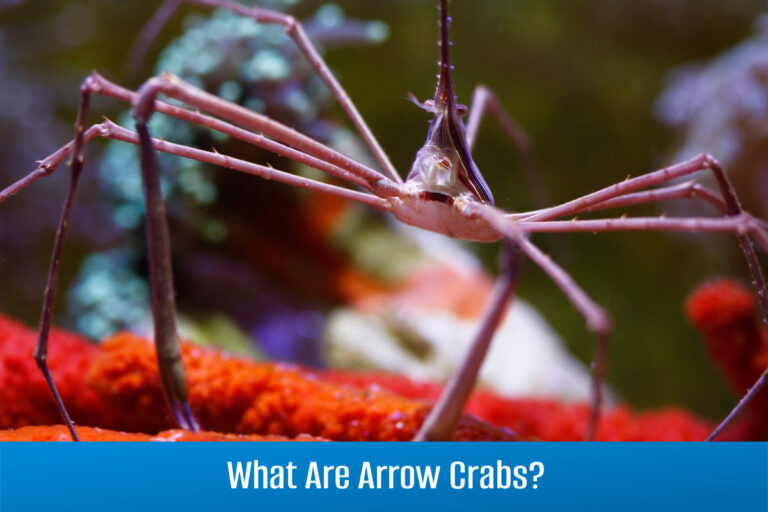
Adding a predator introduces another animal with its own needs and risks. An arrow crab, for example, may eat worms but can also threaten other inhabitants. Do not buy one solely as a guaranteed worm-removal tool.
Protect yourself while working
Do not handle bristleworms or probe unseen rock crevices with bare fingers. Use appropriate gloves and tools, recognizing that fine bristles can still penetrate inadequate protection.
Bristles can cause skin irritation, and the response varies by animal and person. After contact, avoid rubbing the affected area or touching your eyes. For embedded bristles, significant pain, spreading redness or persistent symptoms, seek medical advice; breathing difficulty or another severe reaction requires urgent help. Do not assume every exposure is a minor sting.
Reduce unwanted introductions
Inspect new rock and coral bases, and use an appropriate separate observation or quarantine setup when practical. Nighttime checks can reveal animals hidden during the day.
Observation reduces surprises but does not guarantee that every tiny worm or egg is detected. Live rock is not mandatory for every marine aquarium, nor must all life on it be removed. Decide which hitchhikers are useful and which need intervention as part of your broader cleanup crew plan.