Gouramis range from tiny, shy fish to large territorial adults. Their shared ability to breathe air does not give them shared tank sizes or water requirements. This guide compares 13 familiar choices and relatives so you can narrow the list before buying.
Color varieties are not automatically different species, and a mixed collection of gouramis is not a ready-made stocking plan. Confirm the scientific name, adult size and social behavior of each fish.
1. Dwarf gourami

Trichogaster lalius includes powder blue, flame and other ornamental strains. Plan around a calm, planted aquarium and territorial males; adding a female does not guarantee peace. Source healthy stock and quarantine additions. The dwarf gourami care guide explains practical housing and health precautions.
2. Honey gourami

Trichogaster chuna is a smaller, generally peaceful option for a quiet planted aquarium. It can be intimidated or outcompeted by boisterous companions. “Sunset” and “red honey” labels can also be applied to other fish, including thick-lipped gouramis. Confirm identity using the honey gourami guide.
3. Kissing gourami

Helostoma temminckii grows into a large adult, around 25–30 cm, with substantial space and maintenance requirements. Pink is a color form, not a dwarf species. Lip-locking does not identify a loving pair. Read the kissing gourami profile before buying small juveniles.
4. Paradise fish

Macropodus opercularis is a cooler-water labyrinth fish, not a universal tropical-community addition. Males can be strongly territorial, especially when breeding. The species reference gives about 8 cm standard length and emphasizes careful housing. An unheated aquarium is suitable only if its actual seasonal temperatures are appropriate.
5. Snakeskin gourami

Trichopodus pectoralis is a large, usually peaceful species that can reach around 30 cm. A docile temperament does not make a 30-gallon aquarium suitable adult accommodation. Plan a much larger aquarium with turning space and enough filtration for the waste load. Check adult-size information rather than assuming the fish will stay small.
6. Pearl gourami

Trichopodus leerii is a good candidate for a suitably spacious, calm planted community. Adults are medium-sized, and males may defend nests or harass females. Do not assume disputes cannot cause injury. The pearl gourami care guide covers space, feeding and companion selection.
7. Three-spot, blue, gold and opaline gouramis

These familiar colors belong to Trichopodus trichopterus. Buying different colors does not avoid competition between the same species. Adults can reach about 15 cm, and temperament varies: territorial individuals can disrupt an otherwise peaceful community. Use planting and separate retreats, and have a removal option if chasing persists.
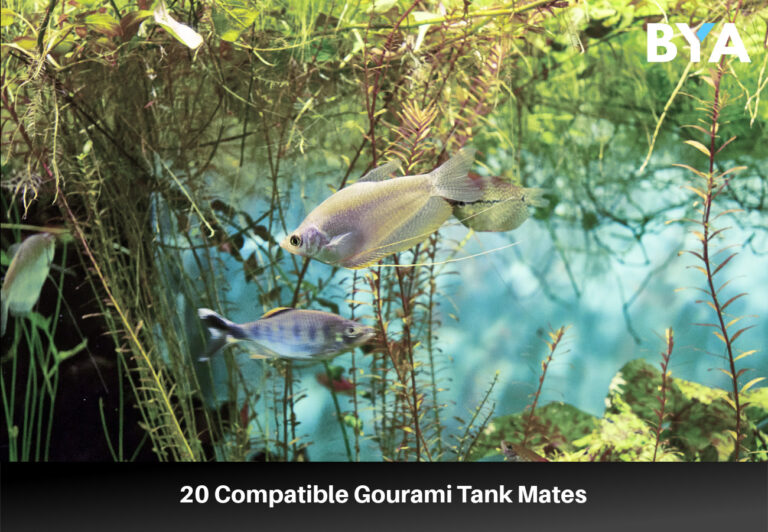
8. Moonlight gourami

Trichopodus microlepis reaches about 15 cm and needs a spacious planted aquarium with open swimming areas. Its long pelvic feelers are vulnerable to fin nippers. Check species-specific conditions; neither a small tank nor a group of fast-swimming companions is justified by its generally quieter reputation.
9. Licorice gouramis
Parosphromenus includes several small specialist species. Establish exact identity, suitable very soft acidic water and a dependable supply of appropriate small live foods before purchase. Bottled tannins do not turn hard tap water into suitable blackwater. Consult the Parosphromenus Project’s water guidance and species records rather than using one recipe for the entire genus.
10. Chocolate gouramis

The commonly discussed chocolate gourami, Sphaerichthys osphromenoides, is a small specialist that needs very soft, acidic water and careful feeding. Its female mouthbroods rather than building a bubble nest. The photograph above is labeled S. acrostoma, the giant chocolate gourami, a different species with different temperature requirements and paternal mouthbrooding. Compare the common chocolate and giant chocolate profiles before buying.
11. Sparkling gourami

Trichopsis pumila is a tiny fish for a quiet, covered, well-planted aquarium. Territorial interactions and food competition still need attention; a three-gallon container is a poor default recommendation. It can produce audible sounds using modified pectoral structures. See the sparkling gourami guide for practical care.
12. Giant gourami

Osphronemus goramy can reach around 60–70 cm and is a long-term commitment requiring exceptional space and filtration. A small shop juvenile is not suitable for a normal community aquarium. Adult-size information should guide a purpose-built housing plan before purchase. Do not rely on finding a new home after it outgrows the tank.
13. Betta fish

Betta splendens is a close relative in the family Osphronemidae. Keep domestic males separately from one another and do not treat a female group as a routine low-risk alternative. Bettas need warm, filtered water, surface access and suitable food; air breathing does not make poor water safe. Start with the betta care guide.
Choose by the aquarium you can provide
For a calm planted community, investigate honey or pearl gouramis first. For specialist blackwater breeding, research a precisely identified licorice or chocolate species. For very large gouramis, secure permanent adult accommodation before buying. Avoid mixing species simply because the shop calls them all gouramis.