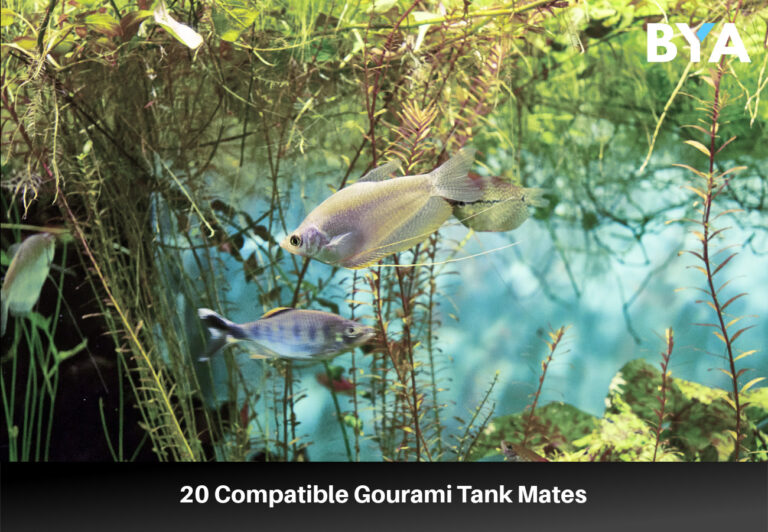
Sparkling gouramis (Trichopsis pumila) are tiny labyrinth fish best appreciated in a quiet, well-planted aquarium. Their small adult size—around 4 cm standard length—does not make a crowded desktop tank a good home. They need cover, surface access and food they can eat without competition.

Start with a planted aquarium
Seriously Fish gives a 45 × 30 cm starting footprint for a pair or small group. A 10-gallon aquarium or larger is a more practical home starting point than a three-gallon container; choose extra space for companions or additional territories.

Provide shaded cover, gentle circulation and a secure lid with an air gap. Keep some surface open for breathing. Dense planting should create separate retreats, rather than block every swimming route. Java moss and other suitable plants can add structure without needing intense flow.
Water and daily care
The species reference lists 22–28°C, pH 5.0–7.5 and 1–12 dGH. Choose stable, appropriate conditions after testing your source water and checking the supplier’s. “Warmer is better” is not a useful rule, and breeding does not justify uncontrolled heating.

Use an established filter and keep ammonia and nitrite undetectable. A gently running sponge filter can suit the setup. Clean water still matters even though these fish can breathe air, and plants do not eliminate maintenance.
Feed tiny foods and observe swallowing

Offer suitably small frozen or live invertebrates and an appropriately sized complete prepared food that the fish recognize and accept. Do not assume an offered pellet has been eaten because it disappeared among plants. Check individual appetite and condition, especially after purchase.
Feed away from fast competitors and remove leftovers. Small mouths require small portions; a whole large bloodworm or an oversized granule may be unsuitable even if the fish investigates it.
Companions and social behavior
A pair or small group can show interesting interactions, but spawning territories and individual aggression still need monitoring. Persistent chasing, hiding and missed meals require more separation or a different arrangement. Do not assume that disputes cannot cause lasting harm.
Quiet, small fish such as an appropriately housed chili rasbora group may be suitable when water and space requirements overlap. Avoid large, boisterous or predatory companions. Dwarf shrimp, particularly juveniles, are potential prey; keep a shrimp breeding colony separately if preserving offspring matters.
The croaking sound
These gouramis can produce audible sounds during interactions. The mechanism involves modified pectoral fins, not the threadlike pelvic feelers. Research on male Trichopsis documents this acoustic behavior. Hearing croaks is not, by itself, proof that a pair is spawning.
Breeding needs very small fry food
The male builds and tends a bubble nest, often under cover. Prepare microscopic fry food in advance and protect young from filter intakes. Begin feeding when fry are free-swimming and their yolk reserve is exhausted, then increase food size with growth.
Watch parental behavior rather than assuming every family can remain together safely. Keep replacement water matched in temperature and chemistry, remove waste carefully and have separate rearing space ready.