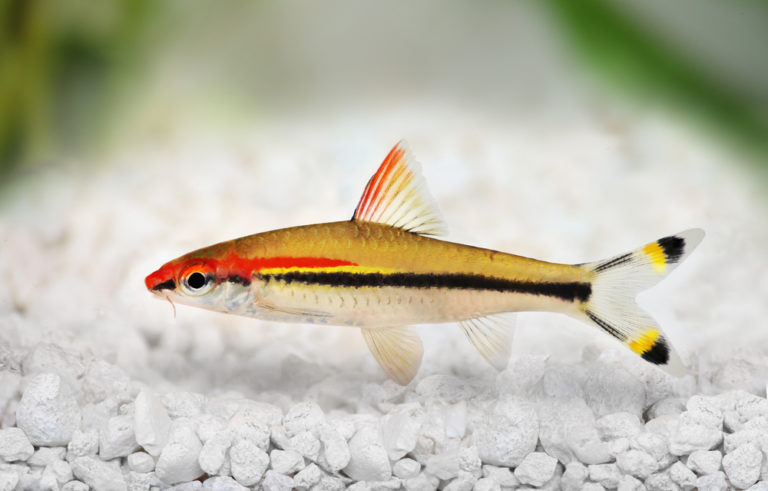
White cloud mountain minnows, Tanichthys albonubes, are small shoaling fish that suit a cool, filtered aquarium. Adults reach around 4 cm (1.5 inches). Their main requirements are enough swimming length, a proper group and temperatures that stay comfortable through summer as well as winter.

Tank size and group
Choose a tank at least 60 × 30 cm at the base; a 20-gallon long gives a group more useful swimming room. Keep around 10 or more when space allows. A 5-gallon aquarium is a poor permanent choice for an active shoal.
Plant the margins and leave a clear swimming area. Hornwort, Java moss and suitable other cool-tolerant plants can provide cover. Use a secure lid, protected intakes and filtration with surface movement, without forcing the fish to swim constantly against a powerful outlet.
Temperature and water quality
A stable aquarium around 18–22°C (64–72°F) is a practical target for ordinary captive-bred stock. The species profile gives a broader 14–22°C range and cautions against permanent warm conditions. An unheated tank works only when the room maintains suitable water temperatures.
Monitor summer peaks. Keep the aquarium away from direct sun and hot windows, maintain oxygenation and make any cooling adjustments gradually. Cold tolerance is not a reason to subject fish to sudden temperature changes.
Many aquarium stocks tolerate pH around 6–8 and moderately mineralized water. Ask about the supplier’s conditions instead of repeatedly adjusting pH toward exactly 7. Complete a fishless cycle first, maintain zero ammonia and nitrite, and control nitrate through regular partial changes and sensible feeding.
Compatible companions

Choose peaceful fish with comfortably overlapping temperature and water requirements. Some danios or appropriately chosen cool-water bottom-dwellers can fit a larger aquarium, but each social species needs its own full group and space.
Hillstream loaches need mature grazing surfaces, oxygenation and suitable circulation; they are not an automatic cleanup addition. Shrimp may coexist, though very small juveniles can be eaten.
Avoid predators, fin nippers and fish requiring sustained high temperatures. Goldfish can eat minnows as they grow. Bettas and warm-water dwarf cichlids are also poor default choices. Browse the cool-water fish guide for candidates, then compare individual requirements.
Feeding
Offer a suitable complete small flake or micro-pellet that every fish can swallow. Supplement with modest portions of appropriate frozen or cultured live foods, such as Daphnia and Artemia. Vary foods rather than feeding only one treat.
Aquarium Co-Op’s firsthand guide describes ready acceptance of small prepared foods. Still check the actual fish: captive-bred origin does not guarantee immediate acceptance of every product. Remove leftovers and investigate persistent weight loss or refusal to feed.
Breeding and fry

Mature males are usually slimmer and display brighter fins; females often have fuller bodies. White clouds scatter eggs among fine plants or spawning mops and provide no parental care. Some young may survive in a mature species aquarium, but survival is less predictable in a community.
For controlled rearing, use a separate cycled setup and move the spawning medium or adults after spawning. Do not rely on adults never eating eggs or fry. Hatching takes roughly a few days depending on temperature.
Have microscopic live foods ready when fry begin feeding. Offer larger foods, including newly hatched Artemia, only as their mouths and feeding behavior allow. Use gentle filtration and careful small water changes.
Outdoor containers
Seasonal outdoor keeping can work with secure containment, suitable water temperatures, predator protection and adequate oxygen. A shallow tub in direct sun can overheat quickly. Plan seasonal moves before extremes arrive, check local restrictions and never release aquarium fish, plants or water into natural waterways.