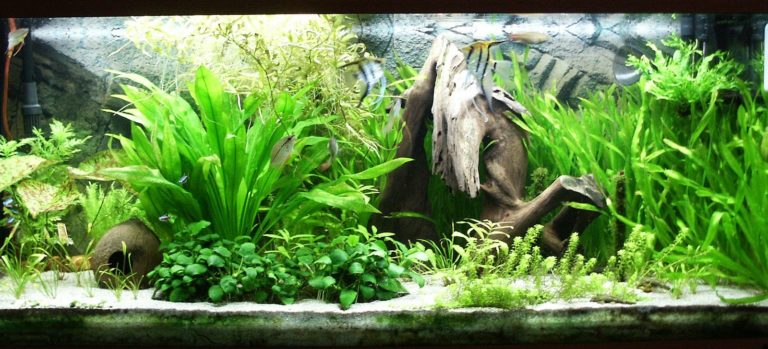
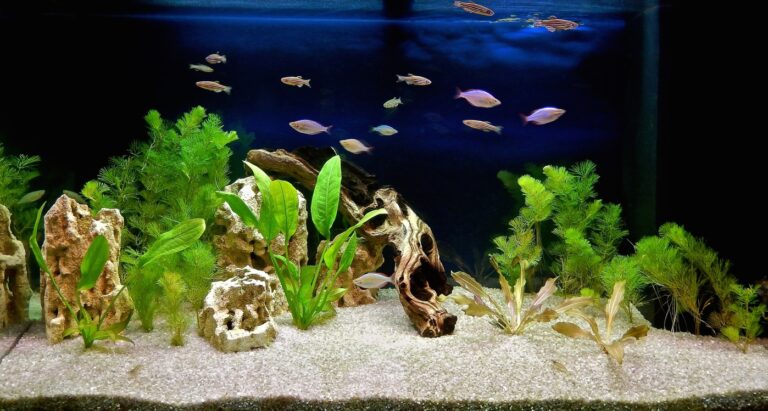
Plants in an axolotl tank must fit the animal’s cool water, gentle flow and shaded retreats. Do not warm the tank or remove cover to improve plant growth. Live plants are optional; safe artificial foliage can provide shelter if it is smooth, stable and cleaned regularly.

Design around the axolotl first
Keep ammonia and nitrite at zero with a mature filter and regular maintenance. Plant growth can use nutrients, but it does not guarantee safe water. Remove decaying leaves, avoid swallowable gravel and leave open routes between resting places and the surface.
Start with a few plants and monitor them at the tank’s actual temperature. Cool water can slow growth, and vigorous axolotl movement may uproot new plantings. Dim conditions do not mean complete darkness: plants still need usable light, while the animal needs shade and a consistent day/night cycle.
Ten options, with different limitations
Hornwort — Ceratophyllum demersum

A useful cool-water candidate that can float or be loosely anchored. It has no true roots, so do not bury a stem as if it were a rooted rosette. Remove shed needles before they collect and decay. See our hornwort guide.
Java fern

Attach the rhizome to smooth, secure hardscape rather than burying it. Growth may be slow in cool water. Choose a position where the plant receives light while a hide remains shaded. Our Java fern guide covers attachment and maintenance.
Java moss — Taxiphyllum barbieri

Attach small amounts to safe surfaces and trim before dense mats collect excessive debris. Avoid exposed loose thread that might entangle an animal. Moss growth does not replace waste removal; see the Java moss profile.
Red root floater — Phyllanthus fluitans
A conditional choice because it may struggle in colder or very dim setups. It is a flowering plant in Phyllanthaceae, as documented by Kew, rather than a floating fern. Do not increase heat to maintain its color.
Sweet potato vine — Ipomoea batatas
A terrestrial plant for an external or above-water growing arrangement, not a fully submerged aquarium plant. Keep leaves and shoots above water, support the plant securely and prevent a decaying tuber from fouling the tank. This is a more involved option than an attached aquatic plant.
Sagittaria

Identify the species and use a suitable planting area. Rooted runners may spread once established, but new plants can be dislodged. Do not add unsafe gravel or unneeded lighting intensity solely to produce a dense carpet.
Duckweed

Can provide surface shade and grows rapidly when conditions suit it. Thin regularly and keep open water accessible. A complete mat is unnecessary and can hinder inspection and gas exchange. Dispose of unwanted growth responsibly.
Anubias

Sturdy attached plants can work, with rhizomes exposed and roots securing to hardscape. Growth may remain slow. Never heat an axolotl tank just because an Anubias would grow faster in warmer water. See our Anubias care guide.
Amazon frogbit

A floating flowering plant commonly sold as Limnobium laevigatum; Kew treats that name as a synonym of Hydrocharis laevigata. Long roots and spreading leaves need thinning. Check local plant restrictions and actual cool-water performance.
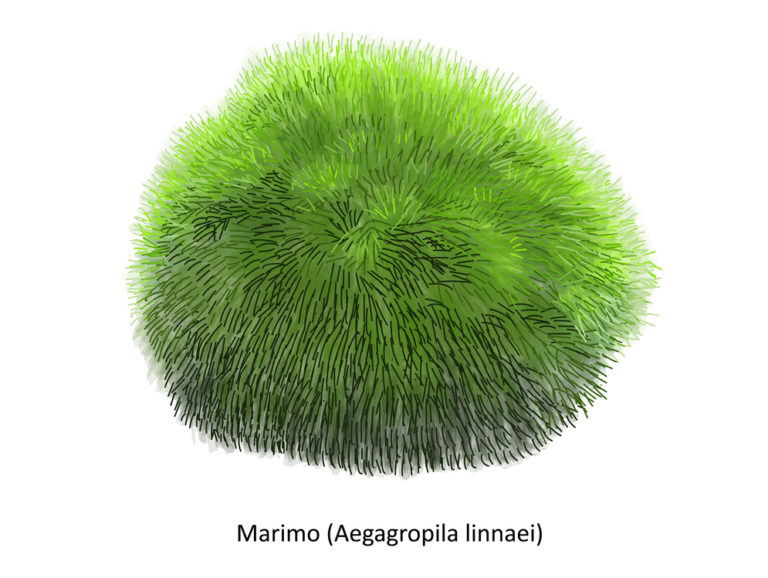
Marimo — Aegagropila linnaei

An algal growth form, not a moss. Cool water can suit it, but small balls or fragments may be swallowed. Use only responsibly sourced material and check current invasive-mussel guidance before purchasing. Our marimo guide explains these concerns.
Introduce clean, inspected plants and remove unhealthy material promptly. A modest planting that fits the animal’s conditions is more useful than a display that forces unsuitable husbandry.