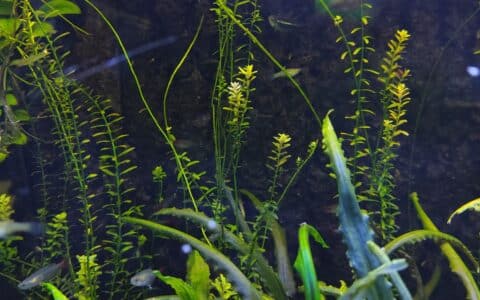
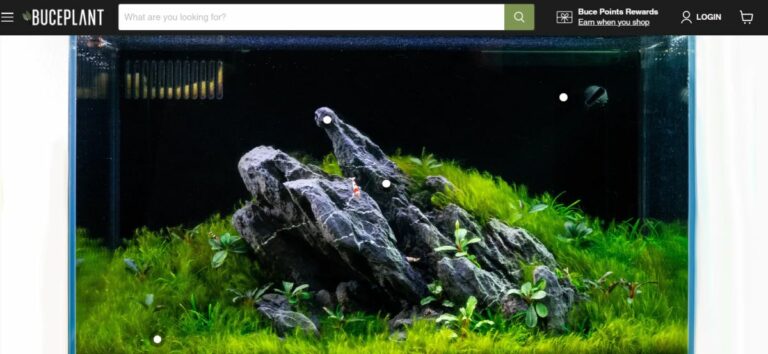
Vallisneria spiralis is a rooted freshwater plant with ribbon-shaped leaves and spreading runners. It works well as a background planting, but it can grow tall enough to shade much of a small aquarium. It does not require injected CO2 to be useful in a beginner setup.

Choose the right plant and space
“Eelgrass” is a common name shared with unrelated plants, including marine seagrasses. Buy a labeled freshwater aquarium plant rather than assuming anything sold under that name has the same care.
Cultivar names also matter. Tropica’s account of V. spiralis ‘Tiger’ describes an easy plant with dark leaf markings that can exceed 60 cm in height. It is not reliably a compact 12-inch foreground plant.
Place it along the back or sides with room for runners. Floating leaf ends can provide cover, but thin the planting when it blocks too much light or surface access.
How to plant it
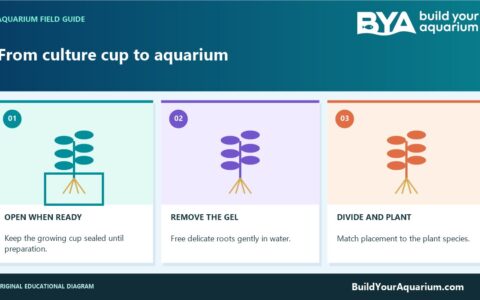
Remove the pot and gently work away packing material without tearing the roots. Separate individual plants where practical, place the roots in the substrate and keep the crown—the junction of roots and leaves—at the surface rather than deeply buried.
Leave space between plants so new growth is not crowded immediately. Avoid repeatedly uprooting a newly planted clump to inspect it.
Light, nutrients and water
Moderate aquarium lighting is generally sufficient, and suitable low-light setups can work. Tropica classifies ‘Tiger’ as not requiring high light or injected CO2, and notes its preference for carbonate-rich harder water.
Provide balanced nutrition. In an inert substrate, aquarium root tabs can help feed established roots; follow the product’s placement and dosing directions. Iron alone is not a complete fertilization plan. See our planted substrate guide for the differences between nutrient-rich and inert options.
Do not chase a precise pH or add a homemade CO2 system simply to make an otherwise healthy plant grow faster. Keep water conditions suitable for the livestock, and adjust light and nutrients gradually.
Pruning and spreading runners
Remove damaged or unwanted outer leaves near their base, taking care not to cut the crown. Repeatedly chopping every leaf across the middle leaves damaged ends rather than restoring a compact growth habit.
Aquarium Co-Op’s Vallisneria guidance recommends removing dying leaves at the base and notes how tall growth drapes across the surface. This is a plant to thin and manage, not a lawn to mow.
Once daughter plants have developed their own roots and healthy leaves, the connecting runner can be cut and the new plant moved. Remove unwanted runners before they fill open swimming areas.
Why leaves sometimes melt
Check recent planting disturbance, a buried crown, abrupt changes and any newly dosed product. Remove decaying leaves and look for healthy new growth rather than assuming the entire plant is dead.
Seachem reports Vallisneria leaf damage with higher Flourish Excel doses, while its trials found normal maintenance dosing better tolerated. Avoid overdosing or treating liquid carbon products as interchangeable with injected CO2.
For more undemanding planting options, compare our low-light aquarium plants. Never release unwanted plants into waterways; check local rules before buying or transporting aquatic plants.