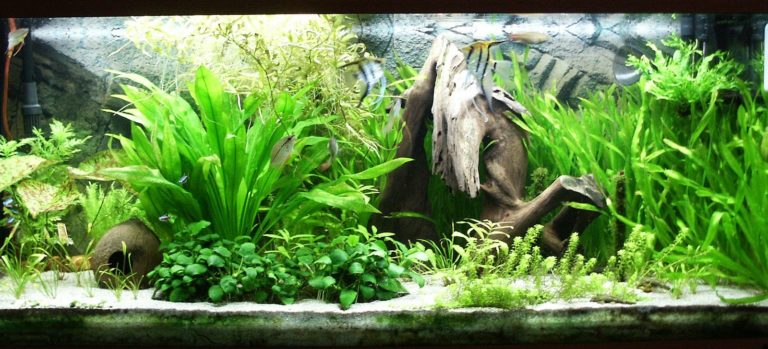
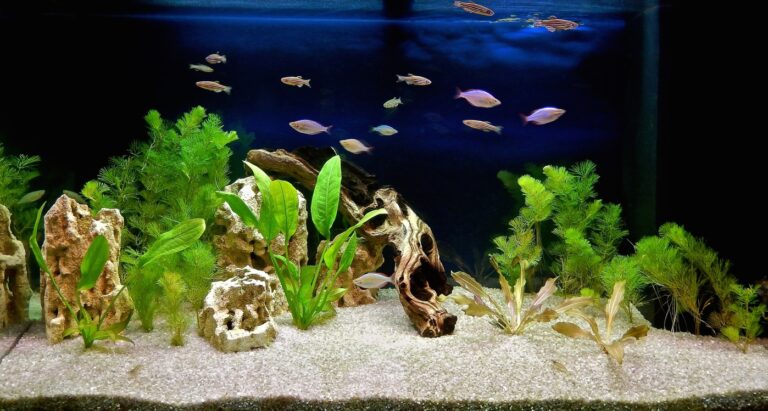
Many aquarium plants grow in gravel, but plain gravel does not provide a complete nutrient supply. Choose a suitable grain size, plant without burying crowns or rhizomes, and supply nutrition according to the plant and the rest of the setup.
Choose gravel that can hold the roots
Very large pebbles leave gaps that make fine stems difficult to anchor. Smooth, appropriately sized aquarium gravel is easier to work with. Check whether the material changes hardness or pH; a decorative label does not prove it is inert.
Aqueon’s plant guidance distinguishes suitable planting material from excessively coarse gravel. Use the actual plant’s root needs rather than treating every bag of gravel as equivalent.
Provide the nutrients the gravel lacks
Inert gravel mainly anchors roots. Root-feeding plants such as Amazon swords may benefit from an appropriate aquarium root fertilizer. Place it below the surface as directed rather than leaving it exposed to curious fish.
Other plants obtain nutrients from the water as well. A root tab does not guarantee that moss, floaters, and attached plants have everything they need. Choose the fertilizer routine for the whole planting and follow its instructions.
Plant by growth type
- Insert individual stem cuttings with space between them and keep their lower leaves above the gravel.
- Spread rosette roots into the bed, leaving the crown at the surface.
- Attach Java fern and Anubias to suitable hardscape or keep their rhizomes exposed.
Reduce flow that keeps uprooting fresh cuttings. Avoid repeatedly pulling a plant out to check its roots; judge establishment from its hold and new growth.
Clean the accessible gravel, not the entire root zone
Debris falls between gravel grains even when the surface looks tidy. Siphon accessible waste during water changes, working around established roots. Do not leave food to decay as a substitute for a controlled fertilizer supply.
Use the cleaning sequence to remove waste without turning each maintenance session into a replanting project.
Decide whether gravel fits the animals too
Burrowing or sand-sifting species may need a finer, smoother bed, and digging fish can uproot plants in either material. Choose substrate for their behavior as well as the planting. A mixture of sand and gravel is not automatically better; mixed grains can settle and separate over time.
Compare the sand option and the wider substrate choices before replacing a functioning bed.