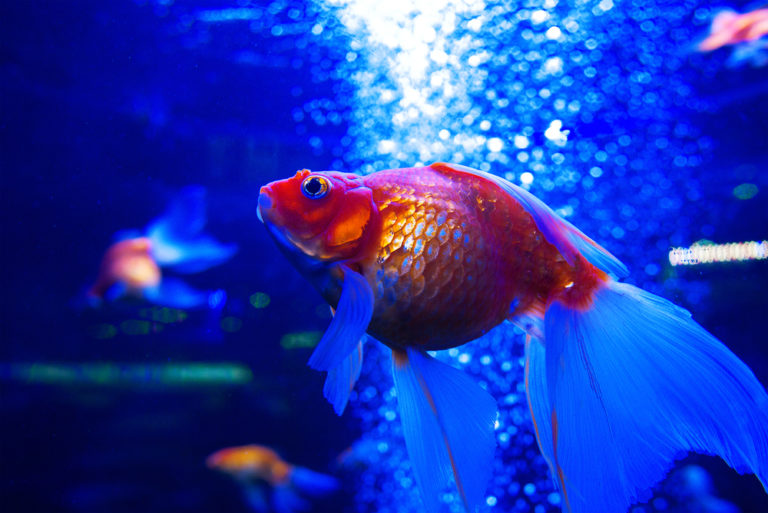
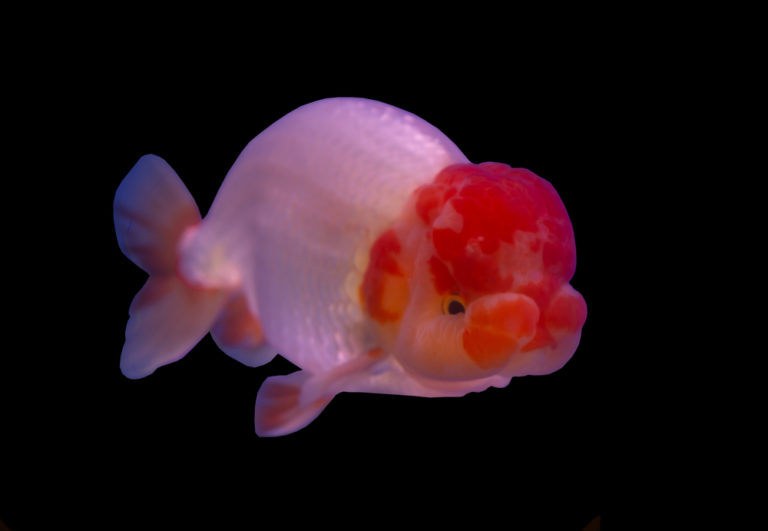
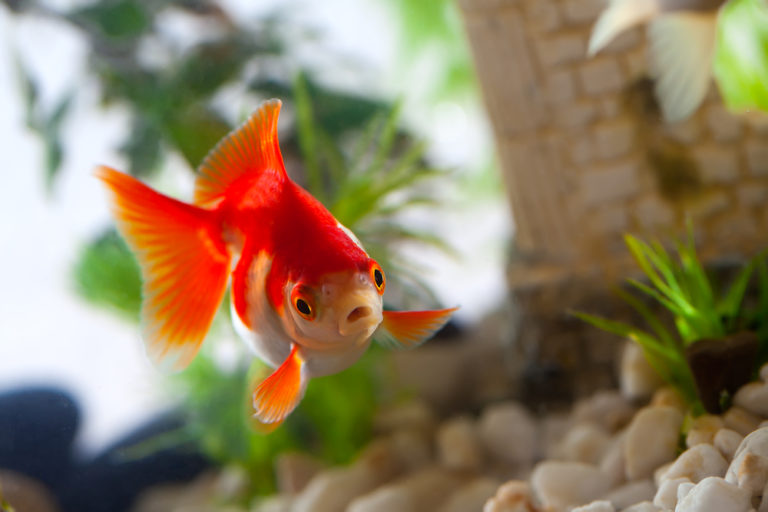
Black moor goldfish are dark-colored telescope-eye fancy goldfish. Their protruding eyes are the feature that matters most when planning care: avoid injury hazards and make sure each fish can locate food before faster companions eat it.
Choose a safe aquarium
Use a spacious, mature aquarium with a broad footprint and open turning room. A bowl or 5–10-gallon tank is not permanent adult housing. OATA’s fancy goldfish guidance starts at 100 liters for one adult and another 50 liters for each additional fish. Large individuals and groups may need more space.
Inspect ornaments at eye level. Remove sharp rocks, rough plastic plants and narrow gaps. Cover hazardous filter intakes and distribute the return so the fish is not pushed around. Catch and move the fish carefully; a projecting eye can be injured by rough handling or caught in netting.
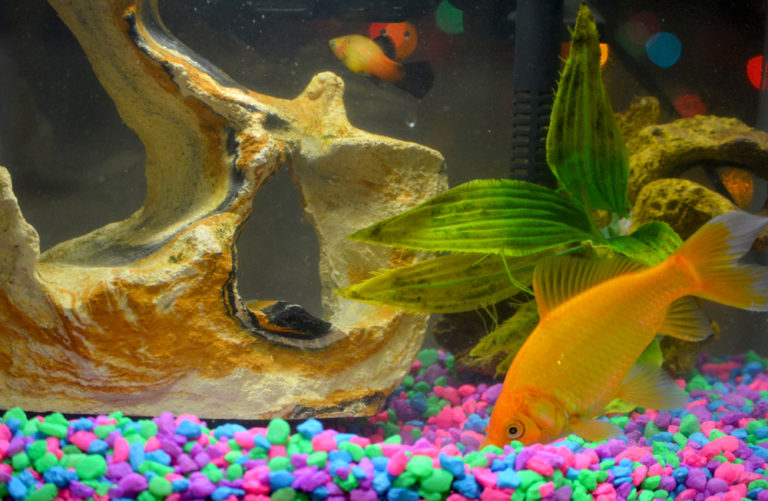
Keep the layout simple enough for the fish to navigate. If using gravel, avoid pieces that can lodge in its mouth; keep any substrate free of accumulated waste. Anubias attached to a smooth support is one planting option, though goldfish may still damage plants.
Water quality and temperature
Use an established biological filter, adequate aeration and regular partial water changes. Ammonia and nitrite should be zero. Monitor nitrate to check whether maintenance is keeping pace; clear-looking water is not proof that it is safe.
Stable indoor conditions suit these fish better than exposure to outdoor winter extremes. OATA lists 15–23°C (59–73°F) as an optimal range for fancy goldfish. A heater may be useful in a cold or unstable room, but avoid sudden temperature or pH changes. Condition tap water before use and match replacement water temperature.
Feed the individual, not just the tank
Use a complete goldfish food as the staple, with suitable vegetables or small frozen-food portions for variety. A slow-sinking food can be easier to offer in a predictable location. Watch the moor actually find and swallow food; scattering pellets and leaving is not enough if another fish eats them all.
Keep portions small, remove leftovers and track body condition. Persistent difficulty feeding needs investigation rather than extra food left to decay. Do not treat unexplained floating, swelling or appetite loss with a vegetable alone.
Companions and color changes
Compatible fancy goldfish with similar swimming and feeding ability are the simplest companions when space allows. Fast common goldfish and comets may monopolize food. Avoid fin nippers, territorial fish and algae eaters that attach to a goldfish’s body. A small fish being quick does not guarantee it cannot be swallowed.
Some moors lose black pigmentation and become bronze or orange as they mature. This does not by itself diagnose an illness. Check water quality and look for other signs: rapid breathing, appetite loss, sores or abnormal swimming. See goldfish color changes and health checks.
When the eyes need attention
The breed’s normally protruding eyes are different from a new swelling, cloudy surface, bleeding or damage. Seek a fish veterinarian for an injury or sudden change; do not puncture a swelling or try to remove tissue yourself. Improve any hazards in the enclosure while arranging help.
Plan for years of care. Breeding is optional and requires separate established rearing space, because adults eat eggs and fry. Choosing fish that can see, feed and swim effectively is more useful than buying for extreme eye size.