Blood red fire shrimp (Lysmata debelius) need a mature marine aquarium with shaded shelter, stable water and food delivered where they can reach it. Their red bodies and white antennae are conspicuous, but the animal may remain under an overhang through much of the day. Buy one because you enjoy its behavior, not because you need a guaranteed visible cleaner.

Space, shelter and water
Adults reach roughly 5 cm in body length, with antennae extending farther. A 20-gallon mature aquarium is a practical starting plan for one, with more space for companions or additional shrimp. Provide several caves or overhangs rather than removing cover to force the animal into view.
LiveAquaria’s species account describes nocturnal activity and preference for shaded shelter. A shrimp hiding after introduction or during a molt may be behaving normally; confirm feeding and water quality before assuming there is a problem.
Maintain stable tropical marine water around 24–26°C (75–79°F), pH 8.1–8.4 and specific gravity around 1.025. Check the supplier’s conditions and measure salinity with a calibrated instrument. Protect filter and pump openings while maintaining good circulation and oxygen exchange.
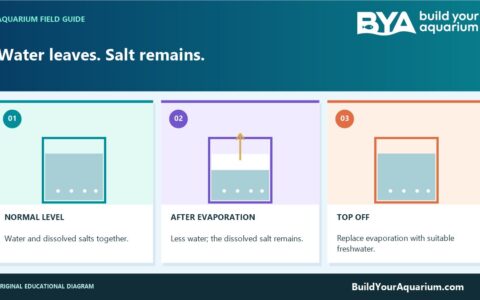
Keep ammonia and nitrite undetectable and nitrate controlled. Prepare water-change saltwater outside the tank, and top off evaporation with appropriate freshwater. A cycled aquarium still needs testing and waste removal after stocking.
Feeding and cleaning behavior

Offer small amounts of suitable marine shrimp food, sinking prepared food and appropriate thawed aquarium foods such as mysis. Place food near the shelter and verify that the shrimp takes it, especially when fish are fast feeders. Remove leftovers instead of leaving a large portion hidden behind the rockwork.
Fire shrimp may clean fish, but they also scavenge. Cleaning behavior does not prevent every infection, replace quarantine or make a predatory fish safe. Do not count on them to eradicate Aiptasia; peppermint shrimp are a different stocking decision with their own limitations.
Companions and molting
Choose peaceful fish that cannot easily swallow or injure the shrimp. Some wrasses, hawkfish, triggerfish, puffers and other predators pose risks. A video showing one shrimp cleaning an eel is not a compatibility guarantee for another aquarium.
Additional fire shrimp need space, multiple shelters and observation. Territorial interactions are possible, and adding two together does not guarantee a compatible pair. Corals are generally compatible, but monitor food theft and irritation during feeding rather than assuming every interaction is harmless.
Provide secure retreats after molting, when the new covering is soft. An empty molt is not automatically a dead shrimp. Investigate repeated failed molts by reviewing water stability, nutrition and possible contamination; do not add iodine or calcium blindly. A salt mix and water-change schedule do not prove every element is always correct.
Check the actual compatibility of every treatment. Copper-based medication belongs outside an invertebrate display, and a product targeting worms is not automatically harmless to every other inhabitant.
Breeding needs larval culture
Lysmata have an unusual reproductive system: individuals begin in a male phase and later can function in both reproductive roles. Research on the genus’s sexual system explains this distinction from a simple permanent male-to-female change. It does not mean one shrimp can self-fertilize or every pair will coexist peacefully.
Egg-bearing adults release swimming larvae. Raising them requires protected culture conditions, appropriate live feeds and active water-quality management. Research including L. debelius found species-specific larval feeding requirements. A generic green-water container is not a complete rearing protocol.
For other choices and feeding roles, compare marine shrimp and cleanup crew planning.