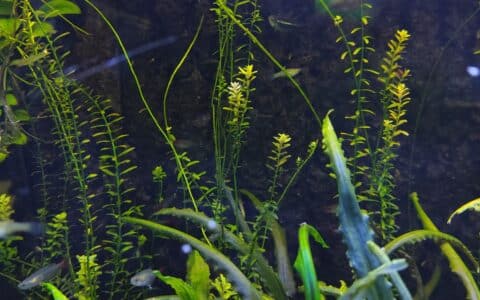
Injected CO2 can improve growth in a planted aquarium, but it is optional for many plants. A tank of Anubias, Java fern and other undemanding species can succeed without an injection system. Choose plants, light and maintenance demands together before buying equipment.
What CO2 does, and what it cannot replace
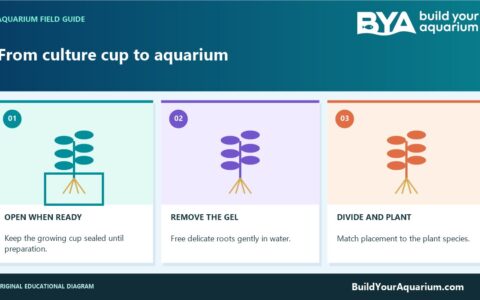
Plants use carbon during photosynthesis. Added CO2 can relieve a limitation, but it cannot replace adequate light or balanced nutrients. Tissue-culture packaging does not make a plant inherently dependent on injected CO2: the species and growing conditions matter.
A high-light carpet is a different project from a low-light attached planting. Begin with the layout you can maintain rather than increasing light and gas simply to chase faster growth. Injection also does not eliminate algae or make poor water quality safe for fish.
Choosing a system
Pressurized CO2: use a cylinder and compatible regulator, with a needle valve for fine adjustment. A solenoid controls the on/off schedule; it is a separate function from reducing cylinder pressure. Confirm the valve connection, regulator, tubing, backflow protection and diffuser compatibility. A bicycle cartridge is not automatically interchangeable because it looks similar.
Biological or chemical generators: output and operating pressure depend on the design. Follow its complete manual. Fermentation continues when the lights go out: never clamp a gas-producing bottle shut to stop nighttime delivery. See the precautions in the DIY CO2 guide before attempting a homemade system.
Liquid products sold as “carbon” supplements are not equivalent to controlled dissolved CO2 injection. Use their own labels and compatibility guidance.
Delivering and monitoring the gas
A diffuser breaks gas into bubbles; an inline atomizer or reactor uses a different arrangement to dissolve and distribute it. Match the device to its required pressure and water flow. Do not feed gas into a filter intake unless the equipment manufacturer permits that installation.
A bubble counter shows delivery rate, not the aquarium’s dissolved CO2 concentration. There is no universal safe bubbles-per-second setting. Green Leaf Aquariums explains that drop checkers respond with a delay, commonly around one to two hours. Their color is an estimate, not an immediate guarantee of safety.
Use the indicator specified for the checker and allow it time to respond. Position it away from direct diffuser bubbles. Check water circulation and livestock behavior alongside the reading rather than repeatedly increasing gas while waiting for a color change.
Timing and livestock safety
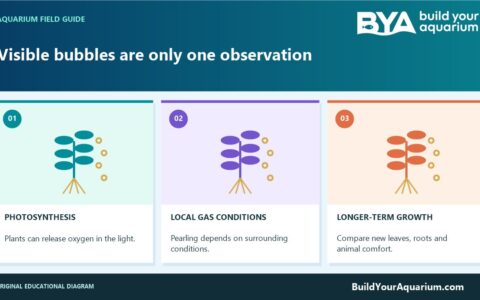
Coordinate injection with the light period. Plants also respire in daylight; at night photosynthetic oxygen production stops. A timer does not guarantee that all remaining gas has been consumed when the lights switch off.
If fish gasp or become distressed, stop CO2 delivery and increase aeration immediately. Investigate before restarting. Keep filtration and appropriate surface gas exchange operating.
Secure cylinders upright in a ventilated location. Follow the regulator’s startup and depressurization procedures, leak-test correctly and never loosen a pressurized fitting. Stable, conservative operation is more useful than targeting a particular color at any cost.