Convict cichlids (Amatitlania nigrofasciata) can defend territory vigorously, especially as a breeding pair. They are not routine community fish, and adding equally aggressive companions can make a failing arrangement more dangerous. Keeping a pair in its own properly sized aquarium is often the more manageable option.

Space and water come before companions
The convict breeding guide covers suitable pair housing, filtration and fry management. A ten-gallon container is not a normal permanent pair recommendation, and a modest 20-gallon aquarium does not become a safe community simply because the fish are small.

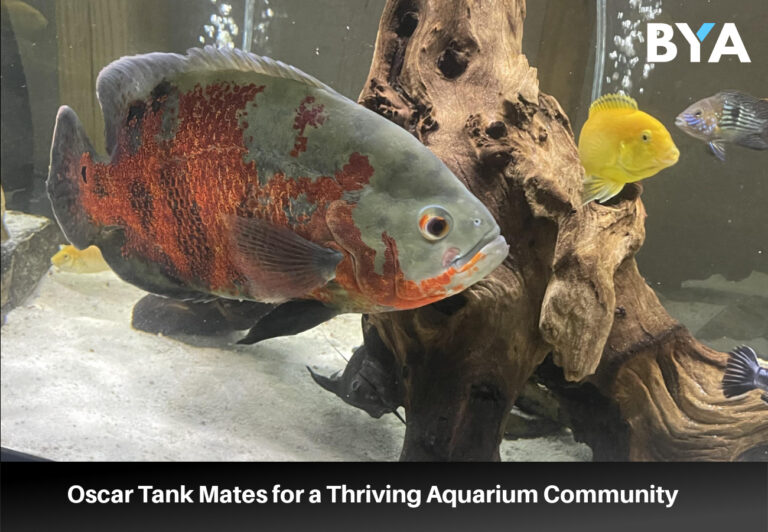
The mixed display pictured above illustrates why appearance alone is a poor stocking guide. A visually attractive aquarium is not evidence that every pictured fish shares appropriate adult space, water or social requirements.
Establish biological filtration before stocking and keep ammonia and nitrite undetectable. Convicts should not be used as test fish for an immature filter. Do not overstock a tank as a default way to distribute aggression; additional fish also need space and add waste.
1. Giant danios

Giant danios need a proper group and ample open swimming space. Their speed does not make them immune to chasing or predation. Assess actual fish sizes, temperature and feeding competition, with room outside the convict’s defended territory.
2. Firemouth cichlids

Firemouths can be intimidated despite their impressive displays. A similar region of origin does not ensure equivalent aggression or identical water needs. A mixed pair setup requires extensive floor space and separate retreats, particularly when either species spawns.
3. Jack Dempseys

Jack Dempseys grow substantially larger and introduce their own territorial risks. A convict may attack a larger fish, yet can also be badly injured itself. Do not rely on raising juveniles together to ensure adult compatibility.
4. Pictus catfish
Pictus catfish need social companions and a long aquarium with open swimming space. They are not single bottom scavengers for a 20-gallon tank. Their nocturnal activity can bring them into conflict with nest defense, and tiny fry can become prey.
5. Plecos: identify the species

The photograph shows a bristlenose type. Common plecos and bulldog plecos are different housing decisions. Bristlenose care includes direct feeding and shelter, while many Chaetostoma need cooler, highly oxygenated flowing water. A generic “rubber pleco” label is insufficient.
Do not assume armor makes harassment harmless or algae a complete diet. Check that the pleco can rest and feed without repeated attacks.
6. Clown loaches

Clown loaches become large adults and need a proper group. Their lifelong space requirements make them a major stocking project. Speed and defensive spines are not substitutes for compatible behavior, and a juvenile is not a convenient cleanup addition.
7. Salvini cichlids

Trichromis salvini, formerly often sold as Cichlasoma salvini, has substantial territorial potential. Combining it with convicts is a high-risk choice, particularly during breeding. Do not add another aggressive species simply to counter a dominant convict.
8. Tiger barbs

Tiger barbs need a suitable group and may nip fins. Adults and juveniles present different predation risks. Their activity and willingness to nip do not establish a safe match with a pair defending fry.
9. Mbuna: a poor general recommendation

Lake Malawi mbuna have species-specific water, diet and social requirements. A convict tolerating moderately alkaline water does not make it an ideal addition to a crowded Malawi setup. Avoid importing a blanket overstocking strategy from one type of aquarium into another.
10. Redeye tetras

Redeye tetras need a proper group and room to swim. Their size and speed do not guarantee safety from a mature or breeding convict. Do not reduce the decision to whether the cichlid appears able to swallow the largest tetra on the day of purchase.
Know when to separate fish
Quarantine additions and observe all fish feeding and resting. Persistent chasing, hiding, fin damage or declining body condition mean the arrangement needs changing. Reassess when fish mature or spawn, and have established replacement accommodation ready.
A cave or extra food may change behavior, but neither guarantees a solution. If adult space and a separation option are unavailable, keep fewer fish rather than waiting for injuries.